
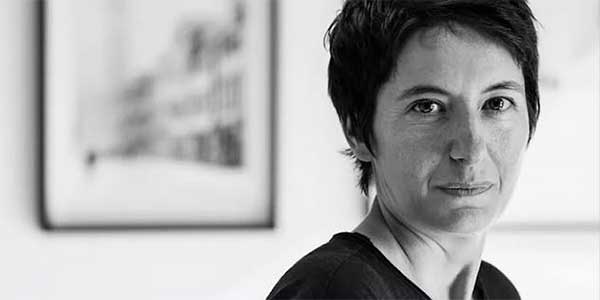
Olga Karlovac Introduction: A Poet’s View
“For what is this shadow of the going in which we come, this shadow of the coming in which we go, this shadow of the coming and the going in which we wait, if not the shadow of purpose, of the purpose that budding withers, that withering buds, whose blooming is a budding withering”.
Samuel Beckett : Watt
Croatian photographer Olga Karlovac was born in Dubrovnik and is now a resident in Zagreb. She is unquestionably one of the most inspiring and influential photographers working in the contemporary world of photography now.
A photographer whose work once seen is never forgotten, it curls up in the imagination and stays there for all time.
My poetry inspired by Olga’s photography is testimony to this being a reality.
Let’s speak again of shadows.
I render here the ‘shadow poem’ of the Romanian poet Paul Celan because he, like Samuel Beckett, is an interpreter of the images such as those created by Olga Karlovac.
They decode and interpret the magic and all becomes real and takes flight in the imagination. But having already conjured up the words of Beckett let me call up the shard poems of one of the greatest poets of the Twentieth Century Paul Celan as he contemplates shadows.
It feels so relevant to me, writing about and interviewing Olga Karlovac.
Speak, You Too by Paul Celan
Speak, you too,
speak as the last one,
have your say.
Speak —
But do not separate the no from the yes.
Give your saying also meaning:
give it its shadow.
Give it enough shadow,
give it as much
as you know to be parceled out between
midnight and midday and midnight.
Look around:
see how alive it gets all around —
At death! Alive!
Speaks true, who speaks shadows.
But now the place shrinks, on which you stand
Whereto now, shadow-stripped one, whereto?
Climb. Feel yourself upwards.
Thinner you become, unrecognizable, finer!
Finer: a fathom
along which it wants to descend, the star:
to swim down below, below
where he sees himself swimming: in the swell
of wandering words
Paul Celan
Olga often couples short highly evocative pieces of writing to accompany her images.
It’s as if the words could be whispered out of sight by ancient Sages and gods or poets of the urban shade with faces stretched by a G Force of darkness as if stifling a cry, scream or maybe just a plea to let us know that though nameless and unidentifiable they/we exist.
Even in passing the evocation is unforgettably beautiful.
Unique and singularly gifted with the use of blurred transient images Olga is able to beguile – almost hypnotise us/the viewer with momentary glimpses of the street or the faces melting into the landscape of darkness and shadow.
Just as Beckett says in the extract from his novel Watt – we are never ‘still’ but held in the grasp of the ‘shadow of purpose’. How could we forget?
It’s as if Cinema Noir had taken on a different beauty where a frozen frame captured existence, and not the shady fugitives or the guilty fleeing, but shadows that hide our identity gifting us with anonymity, so we can escape definition, float dreamily past life and the constraints of exactitude, the bounds of life are broken and we find freedom.
In the interview with Olga I wanted to talk about not only photography but about books that she has read and influenced her. I was so glad we were able to share that experience together, as well as listening to Olga speak about her life and the discovery of the art we all can now share in her books, images online and in the world of International exhibitions.
Olga is the innovator and instigator of dream photography and the master of the narrative of the shadow and its accompanying mystery.
Landscape becomes a film negative taken of a Giorgio de Chirico painting rendered in darkness and fading light – or the giant monuments in black that tower above us in the paintings of Franz Kline – Olga perhaps heard with a soundtrack as atmospheric as Debussy, as bold as Stravinsky and as brooding as Mahler music fills the air as I/we look on.
Now internationally recognised, Olga Karlovac is the author of five books of photography and the subject of exhibitions across Europe and her photography is seen across the world.
I’m truly grateful that I had the opportunity to conduct the interview/conversation and share it with you. Please read on.
Malcolm Paul
- If you don’t mind me asking how do you feel about giving interviews in general? Can you actually enjoy them?
Well, I don’t mind. I can enjoy it; it all depends on the time and situation. Sometimes I prefer not to answer the questions. But I think I manage.
- How do you react when it comes to talking about yourself? Do you find it intrusive?
As long as I can draw the line when it comes to something I’m not comfortable about, I don’t have any issues with it. But I do consider myself to be quite a shy person.
- Are you a very private person in general?
I think I am.
- Does being an internationally recognised photographer, who has published four books and exhibited widely, put you in the spotlight?
I don’t have that feeling, just occasionally I realize that a lot of people know about my photography and follow my work. So far, I don’t see it as a spotlight, but sometimes I feel a certain responsibility about it.
- And how do you feel about the commercial side of being an artist? You’re a trained economist. Does that make you feel pragmatic about that side of the process?
Well, I feel privileged when my images get exhibited or when I sell a book, or get a compliment for my photography. Being an artist is about creation and expression and not about money. But finding ways to sell your work becomes a necessity in order to keep doing your art. So it can become tricky sometimes.
I am not a huge fan of the economics profession😊. Maybe that helped me along the way, but I feel this was more of a given situation where you need to learn how to handle it. And it still is.
- Was there any particular reason you chose Economics as a subject for study and later your career, instead of perhaps going to an Art School or a Studio?
Those were quite different times in Croatia if you compare it to the situation today. It was the war and post-war period, very difficult times. Going to study economics seemed quite a safe bet. Art was something very elusive for me then. I never thought life would take me in this direction in the future…
- Do you still work as an Economist? Or are you able to live and work freely as a photographer now?
I try to live mostly from selling my books, and from things related to photography. But the art world is what it is, and you never know. At the moment I’m rethinking it all …
- I read you don’t like talking shop when it comes to cameras and the technical side of photography – which is good news to me because I’m not a photographer and consequently know next to nothing about cameras. Was it easy to cut to the chase, and just say – I’ve found what I need to take the kind of photographs I want?
Yes, very easy.

- You say you are happy with digital photography. It made me think of the artist David Hockney who, at the age of 88, abandoned painting on canvases and made an almost seamless transfer to working on a digital sketch pad. I think he probably set an example to a lot of younger and older artists by not being superior about the medium an artist should experiment with. I get the feeling that for a committed artist it doesn’t make a big difference what medium you use, as long as you can get down to a surface of what you want to say/express.
Yes, I’m OK with digital photography, and I agree that being able to express yourself regardless of the media is the most important thing.
- Do you enjoy the experimental side of photography or does everything just come to you naturally?
It’s connected. I think my photography is very intuitive and experimenting comes naturally, so it’s all kind of related. I do enjoy the experimental part as well, of course.
- You say you prefer to talk about the ‘poetic’ side of your art. That sounds good. I’m a poet and I enjoy that side of life and expression. I see that you also write pieces of poetry to accompany your images like below:
in the blink of an eye
in the moment between day and night,
somewhere at the edge of darkness and light
walking down an empty road below the mountain of memories
while strong winds from the north carve your marks all over my skin
i feel your breath
and i imagine…

Do you do creative writing as well as photography?
I prefer to talk about the artistic side and emotion and all kinds of things that my images stir when people look at them – most of all, imagination. Regarding poetry, well, I don’t consider myself a writer but when I make my books I do like to add a touch of writing to complement the images.
- Can you give examples where you have worked in this way? I read somewhere “I also write a bit with every chapter.” Could you say something about what you write please? Is it similar to what I quoted above?
Yes. That quote is from the Escape book. In my books I do have these small patches of my writing, as well as quotes from some of the writers/poets I love.
I was recently asked to review a book of drawings by a retired teacher, and he had made a pencil & ink sketch of a ‘part’ of nature every day for one month: a leaf, a husk, twigs and seeds. It is a beautiful piece of work and this man, Chris, has written above each drawing a quote from the Portuguese poet Fernando Pessoa’s The Book of Disquiet. It just worked so well. It was a perfect artistic relationship.
Sounds lovely.

- Do you think you could have been a writer if you hadn’t taken up photography at the age of 14?
I don’t think so. I think my talents are more with photography 😊
- When you speak of those early memories it seems like it was such an overwhelming experience using a camera for the first time. As if you had discovered the art form that most suited your needs and that was it.
Looking back, it was an important moment but I was not aware of it at the time. I didn’t take it seriously, it was excitement and joy, it was a toy for me as a child… So playing was the name of the game.
- You have said that you stopped taking photographs when you went to University and resumed after you graduated and into your thirties as a way of dealing with stress in your life. A lot of people would find that hard to understand. I don’t. In my twenties I gave up writing and went into Health and Social Care and didn’t return until I recently retired.
I just felt, I was able to pick up where I left off.
- I have time and it keeps me sane/occupied. And I enjoy feeling something new in the way I approach my writing as opposed to when I started out and my feelings were totally different. Did you feel the same way? Could you reflect on that for the readers?
I did come back to photography at the suggestion of a friend, to help me express myself and cope with life. I do feel that it all just came back to me and I felt at home with cameras and, as you mentioned, it gave a certain purpose and something that occupies the brain while you’re into it. And in a very creative way. That’s what’s often lacking in everyday struggles. [smiley face emoji]
- Was it a peaceful handover or was it quite a dramatic life-changing transformation? Without being too inquisitive I suppose I’m asking if it was a form of crisis?
Well, looking back now, I believe I just needed a change at least for a while, and it turned out it was a big and quite a lasting change😊
- A form of sanctuary? Therapy?
I think photography helped a lot as it gave me inner sense and inner peace, and so many ideas came one after the other… It opened a new world that was so much more pleasant and creative than the one I was generally faced with. So it would be fair to say it was therapeutic.
- I was interested to see that you once mentioned Paul Auster as an influence. I’ve read most of Auster’s work, and I think it’s fair to say that Paul uses writing as a form of therapy, something he acknowledged in the light of the many tragic events in his life. He has been linked to Lacan and psychoanalysis.Did you find that connection in Paul Auster’s writing?
Well, I love his books, and of course I did feel a connection. I do believe art in general has a therapeutic side to it and can be a help to overcome the difficult times we all sometimes face. I’m still waiting for his novel 4321 to be translated in Croatian.
- People write a lot about the poetry of your imagery, which they think is magic and that the blurring creates the visual poetry. How do you feel when you hear that people are having that experience?
It is a great compliment for me and of course I feel fulfilled when I hear or read comments like those.
- I think the emotional authenticity is the component that makes it so special and unlike any other photographers’ work.
Thanks, this is a big compliment.
- Olga, how would you respond to a book like this? Do you think it would help up and coming photographers?

Why It Does Not Have To Be In Focus
( Modern Photography Explained – Thames and Hudson)
- Do you think philosophising about authentic nature has any value/meaning? Or is it best to avoid this type of book when starting out? Perhaps it’s a distraction when it comes to being close to your subject matter. Would you agree?
Of course photography as a way of expression does not necessarily need to be sharp etc , there are many possibilities, layers and ways to find connection and emotion in photography.
Regarding the book, I did not read it so I can not speak more about the book but would probably read it when time allows.
- Olga, I believe you teach photography workshops. Do you find that rewarding? If so, in what way?
I don’t teach much, just occasionally online I try to help photographers find their own way of expression and to maybe create a book or something… It’s individual and it really depends on the person.
- Do you feel a strong personal connection with the people you are teaching – is it deeper than just imparting knowledge?
Well, it does become deeper sometimes. And sometimes not. We are all different, so we connect in different ways, but I do think at the end there is a certain benefit from the classes.
- These three books are simply a written and visual statement, a reflective, abstract and imaginative memory – a symbol. A reminder and journal of my life and the emotion that kept me going along this path. – Olga Karlovac
Olga, at what age did you start reading books, and can you remember which books they were and how they might have influenced you?
Well, with reading and me, it is a strange story. I had periods of reading and periods of not reading. At school, I never liked the pressure of having to read certain books and I was not a good reader back then. Later I found what I liked and I was reading as much or as little as I preferred, just with no pressure of having to read and being checked if I read the books in school. As with photography, for me reading is a passion and freedom. I still remember how a fantastic book like The Stranger by Camus ruined my Christmas holidays, because even though I enjoyed reading Camus and other realist writers, it was a terrible system that made me read to a deadline. These days I love Murakami, Auster, Niccolo Ammaniti, Kazuo Ishiguro, Zafon, Kafka, and many many more…
- Can I ask you what – Croatia?/former Yugoslavia? – was like, when you were growing up? Were you in any way personally affected by the ‘break up’ of Yugoslavia in the early 1990s and the Declaration Of Independence of Croatia in 1991?
Well, I remember things were OK in Dubrovnik (my home town) at the very end of Yugoslavia, in the late 1980s just before the Croatian war of independence started. After that it was terrible, as you can imagine – under constant attack, without food, water or electricity, fearing for your life every day, living underground in a shelter. Those were very difficult times, but we do need to learn to let go of the traumas and live today and for the future.
I travelled through the former Yugoslavia in the 1970s. It was a very interesting experience. I was able to visit most of the country and speak with as many people as I could when not confronted with a language barrier and restrictions on freedom of speech under Tito.
I travelled by hitchhiking and there weren’t a lot of major roads and cars so it took a long time to finally end up in Greece,Turkey and beyond. I was in the former Yugoslavia for several months in total – so many different identities and cultures – but with a lot of tension beneath the surface.I have visited the former Yugoslavia several times since and I was in Dubrovnik a few years ago with my partner. We visited the War Photo Museum. It was a very moving experience to stand in front of all those powerful emotive photographs – unforgettable.
I have read quite extensively about the history of the region over the years. On my shelf there are: The Ministry of Pain by Dubravka Ugrešić, and Cafe Europa and As If I Am Not There (A Novel About The Balkans) by Slavenka Drakulic plus many others, but these are some of my favourites and they happen to be Croatian.
- Do you read poetry at all? If so, which poets do you enjoy reading?
I do read poetry, but to be honest it has been a while now since I read my last poetry book. Regarding Croatian poets, I like Danijel Dragojevic, Vesna Parun and many more…
We can find Croatian poets mostly in anthologies or in the few places where they have been translated into English. I have dozens of poetry books so I would have to check. I’m sure I would find amongst them: Kresimir Magic, Slavko Mihalic, Sibila Petlevski and many more. We have had to wait too long for European/Balkan/International poets to appear in English. Perhaps we can have this conversation another day.
- While you are reading or working with your photography, do you listen to music?
I prefer silence while I shoot, but when for example I work on a book and sequence my images, usually there is some music streaming in the background.
- If music has been part of your life and you still listen, what type of music do you enjoy the most?
That really changes, I can listen to almost anything, and it really depends on my mood, quite often it becomes a radio station without commercial breaks or people talking.
- Would you say that listening to music like reading is an influence on your photography?
I think it is an emotional connection as well and of course sometimes it can influence my photography.
- Can we talk about the books that you created after the smaller one you published in the beginning. Trilogy: ‘Before Winter’, ‘The Disarray’, ‘Escape’, and now ‘Elsewhere’.
When you describe the sequence of books you’ve published you describe them more as staging posts, as you travel through life rather than a sequence of say, development and a plan for a way forward. You did say that out of ‘Before Winter’ the germination of the ideas came into fruition in ‘The Disarray’. Does that mean it’s more like a ripple effect rather than opening new doors of discovery?
I never thought about it in that way. When I finalized Escape I felt that I’d ended a chapter. The Disarray was the hardest book to finish, as I was haunted all the time by the feeling that this book had not been completed.
- Do you think becoming successful and being considered an original innovative artist, renowned and widely exhibited changed you in any significant way?
It is hard to say as life just happens and even without realizing sometimes you change…especially as my images to me are more of just how I see everything around me and quite ordinary mine.
- If it has changed you in any way, do you see that as a positive life-changing experience?
I think so.
- Has all the success taken you by surprise and not having to wake up to the apartment full of unsold books you once dreaded evaporated from your memory?
It has taken me by surprise for sure, but I still, very much, have many doubts about selling each time when I consider re-editioning some of my books and the pressure as I have to finance it on my own all over again. The story in some ways comes back to me and haunts me. But I accept it if it works. I will try my best.
- Are you happy with the way things have turned out in your life? And what do you see as the advantages?
I am, I think. I experienced a lot. A lot of great memories.
- As you said once, it was a difficult question to answer when you were asked what direction you might take in the future and whether you might change your style to meet new challenges. Perhaps you could dream what comes next – would that be possible?
Always it is possible to dream, but it is just a dream😊

.
For readers seeking more information on Olga Karlovac her life and photography please check out
the link and the social media sites listed below.
https://www.olga-karlovac-photography.com/site/ my web page
olga.karlovac for instagram
olga.karlovac for facebook
olgakarlovac1760 for youTube channel
* Many special thanks to Michel ( Faber) for his support with the editing.
Malcolm Paul