

Ellis Sharp is the author of sixteen novels (including two works of autofiction – Lamees Najim and the lockdown journal Twenty-Twenty), seven collections of short fiction and a collection of reviews and critical essays drawn from a now defunct blog, The Sharp Side. His fiction is predominantly anti-realist and experimental in form, playing with established narrative traditions and genres, and using devices favoured by a diverse range of modernist and post-modernist writers.
Sharp grew up in Sussex and Hampshire, the son of a father who served in the British army around the world, including the Middle East. After leaving grammar school he joined the civil service, working for the Department of Employment.
On the Dislocated Space blog, SCG argues that ‘the novelist can explore ideas and realities in a vibrant, imaginative and exciting manner’, and notes that ‘Ellis Sharp pushes the boundaries of what readers have come to expect from literature.’ This boundary pushing can be problematic though, with Macdonald Daly suggesting that ‘[s]ome experimental writers really do seem to write as if there is nothing but language and puritanically purge their work of many available affective and narrative elements.’ Ellis Sharp, however, is acknowledged as an exception to this. Daly states that he has always considered Sharp’s strength as a writer of fiction to derive from his unerring ability to deploy experimental techniques (in some cases inventing them) while never forgetting that fiction is not primarily read as a manual in post-structural linguistics.
However, Sharp’s fiction remains provocative, not simply because it is ‘experimental’ but because of its critical and political content. Daly closes his article about ‘The Fictions of Ellis Sharp’ by declaring that
It is not the kind of writing that is calculated to endear Ellis Sharp to the wider audience that, nonetheless, the future will bring him. Those who believe that postmodernist fiction disavows serious purposes or is politically inept will want to urgently read him. Those whose experience of overtly political fiction is of stylistically despondent realism will find him a revelation. And those who want to laugh with more hope than despair should give Sharp a try. He is the funniest advertisement the politics of postmodernism has had for years and looks set to go on being so.
Daly is not the only person to have reviewed and written about Sharp’s work. The Modern Novel website contains reviews of several of Sharp’s books, noting that although Quin Again ‘is a strange novel/collection of stories’ it is also ‘a thoroughly original piece of work and one that shows the chaos, the insanity and the grimness of life’. The reviewer concludes by suggesting that ‘Sharp is not going to make it easy for his readers but he is going to give us another excellent book to read and think about.’
This idea of difficulty, which is at odds with my own experience of reading Sharp’s books, was also raised on the same site in a (presumably) earlier review of Unbelievable Things with the suggestion that ‘Post-modernist novels, you either love them or hate them. I can see why some readers might find this novel difficult.’ The same unknown author then counters this with their own take on the book:
Sharp not only addresses serious issues, not only subverts the novel form and makes us think very clearly about what it is and what it means and why it might be no longer relevant to the contemporary world and not only keeps us both laughing and wondering throughout, he tells a good story or, rather, several stories.
Sharp’s delight in language as a medium for playful experiment, as well as his commitment to new ways to explore ideas and narratives, along with a critical consideration of his own and other work has kept me engaged with his wide-ranging and formally innovative books. I believe his work deserves more attention and am glad to be able to publish this interview with the author.
Rupert Loydell (RL): Nicholas Lezard suggests that in your work you can ‘smuggle in both avant-gardism and political awareness to great, and sometimes greatly comic effect’, whilst in an interview in The Short Review you suggest that your ‘readers will likely be people who enjoy satire and have an interest in left politics, avant-garde literature and movies’. That’s quite a heady combination isn’t it?
Ellis Sharp (ES): It might be. Although I’d have thought there was a large swathe of the population which regularly watches movies, is politically on the left and enjoys satire – or at least comedy. The missing link is avant-garde literature. British readers still prefer realist fiction. Most of the new novels you see on display in shops like Waterstones are deeply conventional in form and language. The Victorian novel and storytelling – a twisty plot, suspense, drama – and rounded characters reign supreme. I’m always surprised that no one ever talks about the baleful influence of literary agents in all this. Publishers gave up on their slush piles decades ago and handed the job over to agencies. They operate as the gatekeepers of literary culture. And of course all they are really looking for is the next bestseller. I’ve met several literary agents over the years. They have zero interest in serious, difficult literature. They are often surprisingly ignorant of classic fiction. Their priorities are strictly and exclusively commercial. They want a bestseller. But of course there’s a lot of churn. The magic formula is hard to find. And there’s a huge amount of imitation. Bestsellers shape the formula of the moment. And nowadays of course we have the creative writing industry in higher education, with increasing involvement of talent-spotting agents. Some agencies like Curtis Brown even run their own how-to-write-a-novel courses.
And of course commercially approved writers need to have a USP (unique selling proposition) – something ethnic or sexually distinctive, perhaps – and be preferably photogenic, as well as fluent and confident. The successful published author is expected to do book signings, interviews, appear in magazine profiles, maybe appear on TV, as well as public readings and answer questions at literary festivals. In the end it becomes all about product, brand and marketing. It’s a long, long way from literature as an engagement with form and a struggle to express a new perception of the existing world. But no one wants to say so, do they? These days writers dream of commercial success. But of course the writing that survives is usually written against the grain of the commercial and the fashionable.
RML: Can you talk about your use of intertextuality? Where does alluding to another text (be that film or novel or an actual event or person) become a lazy kind of shorthand rather than something which adds to your text? I’m thinking of Alice in Wonderland and Nic Roeg’s Don’t Look Now in relation to your book Alice In Venice, especially because I missed the Alice reference when I reviewed it.
ES: As I answer your questions I’m listening to the recent
Lana Del Rey album, Did You Know That There’s a Tunnel Under Ocean Blvd. On it she references Ella Fitzgerald, the Beatles, the Red Hot Chilli Peppers, the folksong ‘Froggie Came-a Courtin’, John Denver’s ‘Rocky Mountain High’, the Eagles and ‘Hotel California’, Harry Nilsson’s ‘Don’t Forget Me’, the films Paris, Texas and Carlito’s Way, and Angelina Jolie, in addition to her own song ‘Venice Bitch’. Is that lazy shorthand or does it add to the texture of the album? Perhaps it depends on the listener. It works for me. It seems to me she’s signalling her awareness of what’s gone before and choosing to incorporate it into her effects/meanings. For example, I was previously unaware of the Nilsson song she cites. Now it forms part of my appreciation of the Del Rey album. It’s there as an echo. The Nilsson citation supplies extra resonance/depth.
Regarding Alice in Venice, the Lewis Carroll echo isn’t much more than that – a faint, teasing indicator that what follows isn’t going to be realism. It doesn’t matter at all if the reader doesn’t spot the allusion. But it seems valid as an analogy in so far as Venice, as a city, is both a wonderland and a warren. But even that echo is a kind of echo in so far as Robert Coover – a writer who inspired me at the start of my writing career – wrote a novel called Pinocchio in Venice.
In one sense Alice in Venice is unique in my oeuvre in that it rests upon and requires an interest in another creative work, in this case Don’t Look Now. I reached a point when I wanted to write a Venice novel and I was aware that novels set in Venice are practically a genre in themselves. I was acutely aware of the weight of that tradition. One way of writing a Venice novel is to produce a narrative full of elegant evocations of the city’s unique atmosphere and then set against its background a drama involving a number of rounded characters, with a plot and a resolution. To do this conventionally involves ignoring all the other novels and stories which have already done this. As a good postmodernist I wanted to do something different.
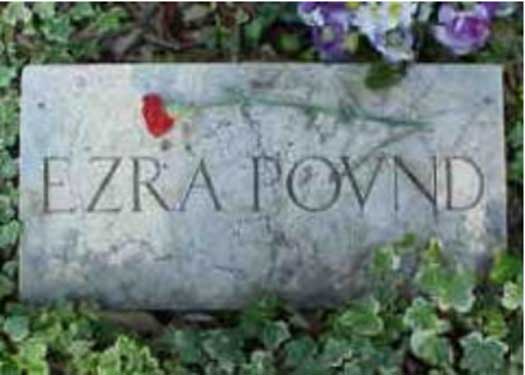
I’ve only been to Venice once and I very much doubt if I will ever go again. I only went there to visit the locations used in Nicolas Roeg’s film which, for me, is one of the greatest movies ever made. I had zero interest in visiting St Mark’s, or visiting art galleries or churches. As I like staring at writers’ homes and graves I checked out where Ezra Pound lived and his grave, although I wasn’t at the time very interested in Pound. His work has never affected me the way T.S. Eliot’s work has. I took a couple of hundred photos of that visit, which occurred during a very misty November. It was only several years later that it occurred to me that I could base a novella with embedded photographs on that experience. I decided to focus on the Roeg tour. I could have written an alternative narrative – autofiction – based on that experience. I wasn’t alone and one or two of the photographs I used surreptitiously show that. But I decided against autofiction, as I wanted something richer, with other dimensions than the purely personal. I preferred to focus on a fictional character and then overlay it with sampled dialogue. So I suppose in that sense this use of intertextuality was a distancing device – an attempt at a different kind of fictionality.
RML: A very literal form of intertextuality is collage or mash-up, which incorporates other texts. Daly suggests that your work ‘could almost be said to be hypertext in its inclusion of conventionally divergent discourses, and the transilience with which it switches between them’ and in several different places lists some of your source material. Although he uses the term ‘transformative appropriation’ in relation to your work, he is also of the opinion that your stories ‘store up cultural references, as desperately as guests at a dinner party rein in their flatulence.’ Can you talk about how you use collage and cutup in your work, and what it brings to it?
ES: Daly’s analysis was published 25 years ago and refers to my earliest writing. My later work, I think, is rather different. My first novel, The Dump, is more or less all collage – sentences wrenched from a diverse range of sources, often newspapers and magazines. News reports. Adverts. But also fiction and non-fiction books. The title has two meanings. The landscape of the book is a rubbish tip, so it has a literal meaning. But the narrative is also a dumping ground of already existing text, mashed up. What holds it all together is the voice of the narrator, wandering through trash. That voice is peevish and satirical. I suppose this assemblage of material it could be a kind of metaphor for writing. Everything has already been written: novelists recycle old forms and themes.
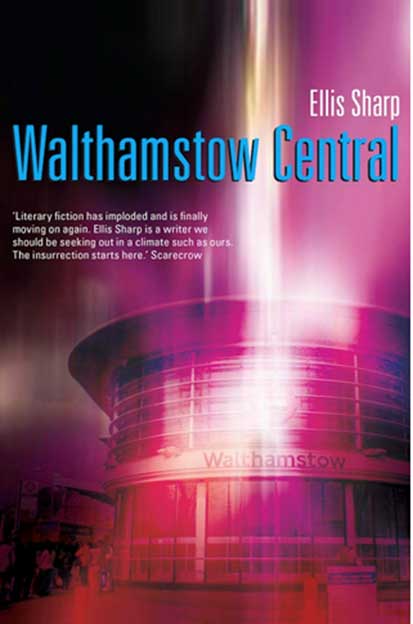
RML: I’m very interested in some of the textual devices you use in Walthamstow Central. For instance, when time starts slipping you use a kind of stutter in the language of your sentences, with words repeating; and, of course, the book is out of order chronologically or sequentially, which I think Alice In Venice also is. How do you decide upon using these kinds of effects?
ES: By instinct, I suppose. I don’t think about these things in advance, there are simply moments when it seems right to stretch or somehow break up what’s happening. That might be through the repetition of individual words, or phrases. It might be snapping off the narrative flow mid-sentence and then leaving either a void, or picking it up again in the next sentence. Stuttering is a good way of putting it. But there’s also vibration. This kind of device partly originates in my distaste for the kind of novel you see raved about in the review pages of the corporate media. Irrespective of the subject matter, when you examine the prose it’s all highly processed, like junk food. Stuttering resists smooth flow. It calls attention to itself. It expresses a struggle to articulate a meaning.
RML: Are your fictional worlds hyper-real, fantastical or incoherent ones?
ES: I hope never incoherent. My earlier writings are fantastical and surreal. Lately I’m more interested in the hyper-real – or at least the not-straightforwardly-real. Although of course realism is in its own way hyper-real in so far as it is essentially bogus. No conversation was ever like the dialogue in a novel.
RML: Your characters are often very self-aware of themselves as characters. In Walthamstow Central they start demanding alternative plots and relationships. Why do you constantly want to remind readers that they are reading fiction? Is it fair to ask readers to so much work when they read your books? John Herdman, reviewing Unbelievable Things in Textualities, suggests that your book’s ‘freedom from the conventions of linear, naturalistic narration gives a wide-ranging and erudite mind the scope to do all kinds of unexpected things, which delight the sympathetic reader.’ What about the unsympathetic ones?
ES: Every writer inevitably has unsympathetic readers. Most writers who matter have a strength and a weakness. Bad critics seize on the weakness. Nabokov ruined Dostoevsky for me for years by noting his vagueness in describing the interior of rooms or the clothes that his characters wear. He convicted him of inattention. But although Nabokov’s fiction attends to these things in the end it’s the older Russian whose writing seems more important. Someone who likes Ian McEwan’s fiction plainly isn’t going to like the work of Ellis Sharp. I don’t worry about that. I don’t write with an imaginary reader in mind.
As for stressing the fictionality of fiction, that’s simply part of engaging with the tired conventions of modern narrative. Corporate fiction is smooth, fluent, flowing towards a conclusion designed to satisfy the reader. I prefer to disrupt, reflect, mock, enquire about alternatives. It’s the same with cinema. Linear movies can be very entertaining but I feel it’s directors like Nicolas Roeg who get closer to the complexities of human experience, by fracturing narrative. Godard, too, of course. But that kind of innovation is much harder for a director, who is subject to all kinds of constraints, not least financial ones. Whereas writers really do have the freedom to write what they want.
RML: I find your books very playful. Part of that is because of the way you are able to get away with the use of odd, sometimes even irrelevant, terms, often derived from specialist language, that you somehow manage to slip past the reader, almost as they realise you are basically appropriating terms and winging it. I mean, thank goodness you avoid info-dumps and explanations, but isn’t it taking a huge authorial risk? Readers often reject books which don’t persuade or simply get things wrong.
ES: Again, I don’t worry about the kind of reader who recoils from playful content. Many readers want escapism. They don’t want to have to think. They have no shortage of mainstream novelists to supply the candy that nourishes them.
RML: Where do you place your work, with reference to other authors and genres? Zoran Rosko surprisingly – to me – includes Swift, Gogol and Proust in the title of his blog entry, along with Joyce, and in the same interview you mention John Updike’s stories and praise Patricia Highsmith. In your emails to me you mention David Lynch alongside Nic Roeg, as well as Tom McCarthy and Steven Hall, note that Alain Robbe-Grillet ‘is probably the major influence over’ Alice in Venice and confess to ‘an early enthusiasm for William Burroughs, before adding that ‘Conrad and Beckett lurk there somewhere…’. Meanwhile, Stephen Mitchelmore at This Space suggests that your novel Lamees Najim ‘appears to a response to the public success of Karl Ove Knausgaard’. That’s quite a mixture!
ES: I don’t think about situating my work in relation to any particular writer. If I feel an affiliation it’s with any writer who is outside the mainstream – Anna Kavan, Elizabeth Smart, novelists like that. The oddballs and the marginalised. That doesn’t mean I’m directly influenced by their prose or their subject matter. Ann Quin interests me more than most. But I also draw nourishment from a handful of much older writers such as Joseph Conrad and Malcolm Lowry. Kafka never loses his freshness.
If I have any kind of critical reputation after I’m long dead I’d hope it would be as an interesting minor oddball – a maverick who wrote against the dominant strain in British fiction of the past 30 years.
RML: If we move away from individual authors and think about how you write, or how others perceive your writing, the Jungle Key website describes you as ‘the author of ten books of absurdist metafiction’, Mitchelmore uses the term ‘selective randomness’, and in response to an article of mine I sent you , talking about remixing text, you say ‘the words that jump out at me from your piece are polyglossolalia, playfulness and ekphrastic’. Can you unpick that terminology in relation to your work? What Daly calls ‘Sharp’s idiosyncratic randomizing techniques.’
ES: I think it would depend on the text. The Dump (is very different to The Riddle. What I do try to do is make the next novel very different to the one that preceded it. I’m interested in the way Ann Quin did that. I lurch from wildly experimental texts (‘An Interview with Nietzsche’s Moustache’ and Unbelievable Things) to relatively conventional ones such as The Orwell Girl. Some, like Walthamstow Central, seem to me to lie between the two extremes.
RML: B.S. Johnson said in his book Alberto Angelo that ‘telling stories is telling lies’, which sits comfortably within the postmodern world where we are suspicious of the idea of Truth and more inclined towards the possibilities of multiple versions of things, indeed truths plural. Can fiction help us understand this? Or are you more interested in how language works than any content or message?
ES: Again, it depends on the text. Intolerable Tongues is about a reality rooted in history which is the opposite of the perception conveyed by the narrator. Whereas Alice in Venice embraces multiplicity and jostling alternative realities. But Alice in Venice is not a political novel. It is not a condition-of-Venetian-society novel. It blanks the reality of climate catastrophe, which is very bad news for Venice. I am not a relativist in the sense that although historical narrative is determined by the ideology and politics of the historian, historical interpretations are not equal. Some are more valid and persuasive than others. The same applies to fiction. Henry James’s fiction is cosmopolitan in its technique but provincial and insular in its politics. But this really only shows when he is dealing with social issues. I’m interested in form and how to move on from the last novel I’ve produced. The subject matter determines the language used and the narrative techniques employed. But this is not something necessarily thought out in advance. Writing, for me, is a visceral, experimental matter. Too much self-consciousness is very bad for a writer, I believe. A writer with a highly developed awareness of theory is in danger of producing something bloodless and mechanical.
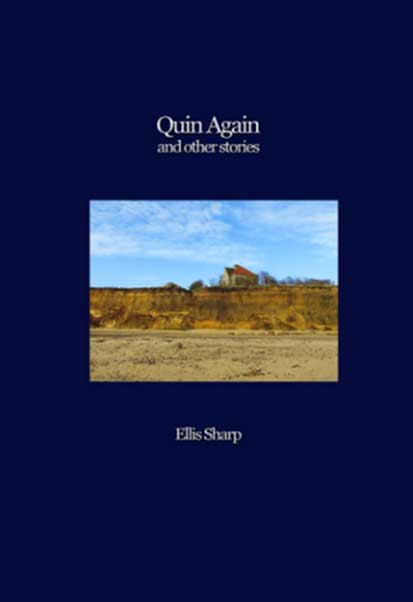
RML: We’ve previously discussed in emails the post-war cluster of writers that includes B.S. Johnson, Alan Burns, Eva Figes and Ann Quin. One of your books, Quin Again and other stories, acknowledges and showcases her influence and you state that you ‘have a very high regard for Quin, who seems to me by far the most interesting British “experimental” writer since Laurence Sterne – and also by far the most interesting of the 1960s experimentalists.’ I share your interest in that loose group of authors, yet their work seems innovative in the quietest and most gentle ways compared to other authors from the same time. If you think about early Burroughs cut- in relation to Alan Burns’ cut-up novels, such as Europe After the Rain and Babel, there are few points of similarity. One is drug-fuelled and chaotic, the other much more careful and organized. I like Burns’ work a lot but why do you think this group adopted the approaches they did?
ES: There is something about English fiction that often seems cramped and timid. Whether that is because of the personalities of the authors or the pressures of commercial publishing is an open question. One of the greatest twentieth century novels produced by a British writer is Malcolm Lowry’s Under the Volcano. But that kind of modernist text required a journey out of England, literally, emotionally and intellectually. Burroughs likewise went far from his origins to create a work like Naked Lunch. I think some kind of extreme alienation is probably required to produce interesting avant-garde work. That might be at the level of personality and involve drugs, drink or sex. It might be rooted in politics or religion. But it also requires knowledge of mind-expanding literature. It’s always fairly random how this occurs. Ann Quin seemed to travel this route. She was perhaps more of an outsider than her associates. But we still don’t have a biography, so it’s still a little obscure what her key influences were.
RML: I guess I must also ask why you think mainstream publishers continues to produce books that offer a diluted and mainstream parody of experimental writing? We get praise heaped on the likes of Ian McEwan’s clunky Atonement whilst actual experiment and reinvention is either online or published by transitory and hard-to-find small presses. You suggest that this kind of work ‘gets shunned by the corporate media’ and that ‘social media is full of cliques and mutual praise.’ Is that you sulking about a lack of recognition or sales, or is it a genuine problem? Isn’t cultural worth better than financial value? Why has the ‘realist novel’, itself an authorial and cultural invention, lasted and dominated popular fiction for so long?
ES: Publishing has changed enormously over the past decades. A figure like Tom Maschler at Jonathan Cape had enormous freedom to choose who the company should publish. Now the industry has retreated behind the gatekeepers of literary agencies, who select what should be submitted. It seems to have become like Hollywood, where accountants wield enormous power. Agencies exist to find the next bestseller and publishers exist to make a profit. Nobody wants to find the next James Joyce. They want to find the next Lee Child. All the old independent publishers have gone, mostly swallowed up by the corporate houses. Old-fashioned publishing permitted the occasional weird work to slip through. William Styron describes this process at the start of Sophie’s Choice. But at the other end of the spectrum there are scores of little presses publishing scores of novels. But the praise heaped on safe, conservative fiction by the corporate media is matched by social media, where everybody’s new novel is saturated in the glitter of extravagant praise. It’s very hard to know what really is good and what is simply favours being returned. Too much of what passes as literary comment in the media is simply lifestyle gossip.
RML: Thank you for your time and interest in answering these questions.
.
Rupert Loydell
.
Thanks
Will read – and the interview made me want to!
Frederic Jameson argues, I think convincingly, that postmodernism is essentially a continuation of modernism – and the poets first identified as postmodern (Olson and the Black Mountain gang) would certainly fit this description
Comment by Steven Taylor on 1 June, 2026 at 7:20 am