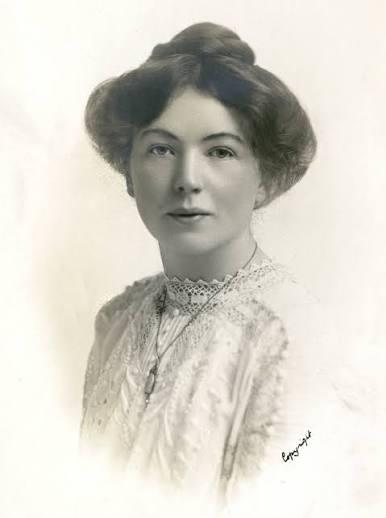
 Christabel Pankhurst
A handful of women involved in a poetry speaking competition at Oxford one hundred years ago had a significant influence on the future of speech and drama, as well as votes for women and equitable rights in the Arts.
By all accounts The Oxford Recitations (1923-29) held throughout the 1920’s was an exciting place for a young person to be. Elsie “Fogie” Fogarty, the pioneering vocal coach and founder of The Royal Central School of Speech and Drama believed that 1924 was the most exciting year of all, later writing, “It is difficult to describe those early days at Oxford. The place itself with its majestic gravity, tempered for space by the glow of youth in summer gaiety, such a jolly do!”
Fogie had answered the call of the future Poet Laureate John Masefield, “to find England’s most beautiful speakers,” by entering the cream of her students into his spoken word competition. Masefield, recovered from his war efforts, was enlisting the help of Oxford dons, fellow poets and playwrights to judge the speakers, who came from all over the world to recite the finest English poetry and plays, some especially written by the judges.
Diana Homer
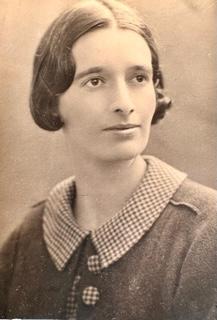
Inside his richly annotated copy of the 1925 Time Table, the war poet Laurence Binyon, best known for For The Fallen (1914) marked my then 18 year old grandmother Diana Homer (above) as a favourite speaker, with a reminder to buy matches scrawled on the cover. His scoring of the women’s recitals reveals a close competition between Miss Diana Homer 89, Miss Margaret Rawlings 85, and Miss Ray Litvin 84 in the first round of the dramatic poetry class, Rawlings being the eventual winner. (More about these two women later).
After a long day of speeches the hopeful contestants flocked to the results board at The Schools on the High Street for the names of the winners of the individual classes posted every evening, Diana would have been excited to see, “Praised by all the Judges” written beside her name. Her voice had left quite an impression on the judge and future Poet Laureate John Masefield.
In his Manchester Guardian review of August 1st 1924, The Oxford Recitations: A New Feeling for Poetry, Masefield described Diana as a speaker of rare promise and rare achievement who attracted the judges whenever she spoke. “Had there been a consolation prize it would have gone (among the women) to Miss Homer,“ he wrote.
At the competition the following year, true to his word, Masefield awarded her with The Oxford Prize for The Best and Most Beautiful Individual Piece of Speech, presenting Diana with £200 in today’s money and a signed copy of his epic poem Reynard The Fox (1921).
In July 1926, the BBC sent out scouts to hear Masefield’s beautiful speakers for potential radio broadcasts. Diana’s winning recital, part of Milton’s Samson Agonistes was amongst one of first poems ever to be recorded for His Master’s Voice (HMV) catalogues of 75rpms. However, the Oxford Recitations speaker on the record was Fogie’s ‘star’ student Clifford Turner.
Diana Homer (1906-1941) was the provincial daughter of a Unitarian minster, a religion popular with poets, writers and scientists, for instance Sylvia Plath, Mary Wollstonecraft and Charles Darwin. Her grandfather Frederick Augustus founded a Band of Hope, and a Ragged School & Mission, and spoke against the Truck System which paid workers in tokens they could only spend in the company store instead of money wages, for which he was fined.
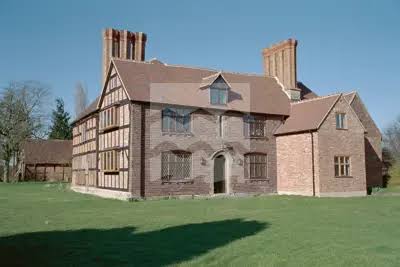 Her forefathers were once listed in Burke’s Peerage as landed gentry granted lands in Dorset in the 12th century. Several centuries later a family dual led to one branch of the family moving to the West Midlands. There, Squire Homer acquired the Tudor Bag End Farm (left) in the village of Dormston in Worcestershire, which had found its way into the hands of JRR Tolkien’s aunt Jane Neave by the 1920s.
It was to Bag End the young Tolkien went to recuperate in 1923 after a long illness, and where he fell under the spell of the Worcestershire countryside. Tolkien, who later befriended John Masefield and recited at his Oxford Diversions, would also famously use Bag End meaning cul-de-sac or bottom of the bag for the name of Bilbo and Frodo’s home in The Hobbit and Lord of the Rings.
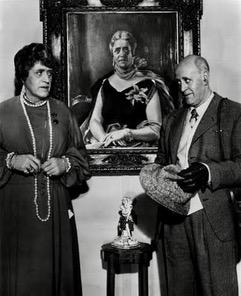 During those heady summers in the electrically charged atmosphere of Oxford Diana battled through days of elimination classes to reach the women’s class finals. Her greatest success came in 1928 when she won the coveted bronze medal for second place in thewomen’s Oxford Prize Class. This was the year the esteemed Scottish actor Alistair Sim (below, in his dual role of Miss Fritton and cousin Clarence in St Trinians), then a drama teacher at Edinburgh, won the Men’s Class 1 for his recital of a part of Chaucer’s The Nun’s Priest’s Tale.
Sadly, Diana died a young woman in 1941, so there is no knowing what else she would have done.
Ray Litvin
Rachel ‘Ray’ Litvin (1890-1977) came from a family of Lithuanian Jewish refugees that fled the Estonian Pogroms towards the end of the 1800s. She grew up in Glasgow and by 1915 was a regular actor with the Lilian Baylis Old Vic Theatre in London. Ray entered the Oxford Recitations in 1923, and again in 1924 when she was placed joint first in the finals of the women’s Class 5. She was recognised by the judges as being a very good speaker.
Masefield praised Ray in his 1924 Guardian review: “Miss Litvin in the Scots ballad class spoke with an intense and quiet thoughtfulness. She persuaded to beauty where others compelled. She took the second place among the women and won one of the medals for Scotland.”
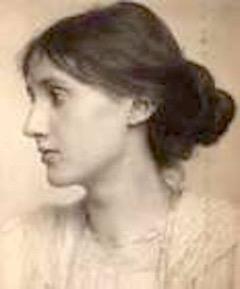
In contrast, Virginia Woolf (above) was less than kind about Ray’s mode of speech. She wrote in her diary for part of her activity on 14th May 1925: “The Phoenix [Theatre] Ray Litvin’s miserable big mouth and little body.” Since Woolf’s diary entered the public domain in 1953, Litvin was blissfully unaware of her hurtful comments inside its pages at the time. Besides, she had gained the approval of Masefield’s circle, all capable of promoting her theatrical ambitions. But tragedy struck one year later when she became profoundly deaf after contracting typhoid fever, throwing her into a lifelong depression, her acting career all but over.
Diana Homer and Ray Litvin were keenly aware of each other’s presence as competitors and winners during the early years of the Recitations. And, as I have discovered, the connections between the two women and their ancestral lines have persisted. However, it is unlikely that Diana, or anyone else involved in the competition would have known about Ray’s six year old daughter Natasha, who at that time was fostered out to a trio of strong female friends and relatives.
In 1919 Ray had embarked on a love affair with a married writer, the result of which was a daughter Natasha. Her father was Edwin Evans, a well known music critic whom she only met once whilst running an errand for her mother to ask him for money. In 1941, Natasha married the poet Stephen Spender whose literary circle included W.H. Auden, Christopher Isherwood, T.S. Eliot and Isiah Berlin.
Natasha inherited a talent for music from both her parents and grew up to achieve fame in her own right. She became a successful pianist and gave a concert for the survivors in the Bergen-Belsen concentration camp hospital at the end of the Second World War. In 1947 she became the first ever soloist to be televised by the BBC from The Last Night of The Proms at the Royal Albert Hall.
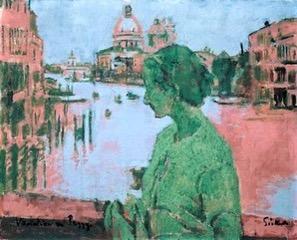
She also co-founded The Apollo Society pairing poetry and classical music with Dame Peggy Ashcroft (a politically motivated Oscar winner, portrait by Walter Sickert, below) and Cecil Day Lewis (the father of Daniel) who succeeded John Masefield as Poet Laureate in 1967. Later in life she became an acclaimed gardener known for her indomitable spirit. Natasha’s daughter Lizzie Spender was the fourth and last wife of Barry Humphries the actor and comedian whose persona was Dame Edna Everage, the wonderfully funny self-styled “Australian Housewife/Superstar.”
Margery Bryce
Margery Bryce (1891-1973) was an actress and a campaigning member of the women’s Suffrage movement competing in Oxford in 1927. Her recitation from Laurence Binyon’s translation of Dante’s Purgatorio Canto II was praised bythe judges, coming second to Diana Homer in the women’s Class 3.
The following year 1928 was the momentous turning point for the women of Britain finally being granted the vote equal to men. The heroic deeds to get to that point had taken decades and many of the women and men involved in The Recitations had tirelessly supported the campaign.
At the age of 19 Margery Bryce had joined the Women’s Social and Political Union (WSPU). She was struck by the description of leading Suffragette Christabel Pankhurst, who saw Joan of Arc as the ideal militant woman for her qualities of simplicity, purity, and courage combined with the willingness to undertake physical hardship when fighting for a right cause.
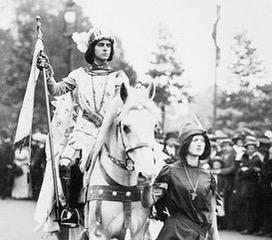 On June 17th 1911 Margery embodied these virtues in London when she led the forty thousand strong Women’s Procession dressed as Joan of Arc (right) in close fitting armour and a tunic, holding the Union banner aloft on a white horse led by her sister Rosalind “Tiny” Bryce dressed as her page. Her portrayal of the French martyr became a potent symbol for women’s rights, and the widespread press coverage of Suffrage demonstrations may have influenced Pope Benedict XV decision several years later to canonise the Maid of Orleons on May 16,1920.
The Bryce sisters’s father John Annan Bryce, a Liberal MP had voted against the three Conciliation Bills (1910-1912), which would have given voting rights to women. Whilst he fired off disparaging letters to the press about Suffrage, their mother Violet L’Estrange encouraged the strong core of activism running through the women in the family.
Rose Bruford
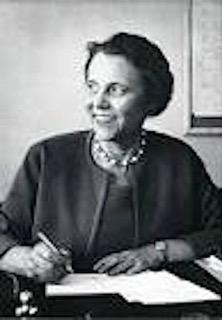
Rose Bruford (1904-1984) was a young woman competing at the Oxford Recitations during the 1920’s. She would go on to have a significant influence on the development of British speech and drama. ’Bru’ was a student of Elsie Fogarty, and in 1950 became the head of her own prestigious theatre school at first known as The Rose Bruford Training College of Speech and Drama, then The Rose Bruford College of Theatre and Performance, and nowadays known simply as Rose Bruford.
The claim on the Rose Bruford website that, “In 1928 she walked off with top honours for her verse speaking” at the Oxford Recitations is not strictly true. In fact, she was never a winner of the Prize Class at the competition. However, she was praised by all the judges in 1928 and flowered as a performer and director at the Oxford Verse Festivals until they ended three weeks before the onset of World War II on July 26th, 1939.
Like many women in her day Bru respected her parents’ wish of not pursuing a career in the theatre. Instead, despite her many talents, she became a visiting teacher of speech and drama for many years before being offered a position at the Royal Academy of Music (RAM) in 1941.There she built a drama course, whilst also teaching mime at RADA. After her book Speech and Drama (1948) was well received and the RAM had rejected her ideas for expanding the syllabus, she resolved to start her own theatre school.
Bru’s ambitions were formidably aided by John Masefield, Laurence Olivier and Peggy Ashcroft, all of whom became members of her Board of Governors. And, in 1960, thirty years after his involvement with the Oxford Recitations ended, Masefield held a verse speaking Festival at the College for which he wrote a special poem.
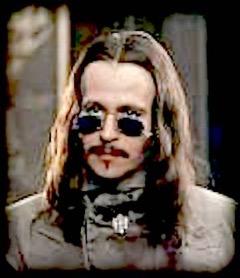
Rose Bruford’s most famous student Gary Oldman graduated in 1979. He went on to win an Academy Award and two BAFTA’s, bringing to life a formidable and often notorious array of characters including Sid Vicious in Alex Cox’s Sid and Nancy (1986), Joe Orton in Stephen Frears’s Prick Up Your Ears (1987), Dracula in Francis Ford Coppola’s Dracula (1992), Lee Harvey Oswald in Oliver Stone’s JFK (1991), Ludwig Van Beethoven in Bernard Rose’s Immortal Beloved (1994), and Winston Churchill in Joe Wright’s Darkest Hours (2017).
Oldman also won the coveted role of the wizard Sirius Black in the Harry Potter trilogy (2001- 2012). And, in 2012 he became the highest grossing actor in history based on his lead and supporting roles. Not bad for a student rejected by RADA and told to seek a different career path.
Another Rose Bruford graduate Pam St Clements played good time ‘girl’ Pat Butcher in the BBC’s soap opera EastEnders for thirty years (1986-2012). Pam’s onscreen sister-in law, Mo Harris is Gary Oldman’s real-life sister. Maureen Oldman. She was given her stage name by Isabella Rossellini, the daughter of Ingrid Bergman, who dated Gary for several years. Rossellini made up Laila Morse from an anagram of mia sorella, Italian for “my sister.” Morse’s first film, Nil By Mouth (1997|) waswritten and directed by Gary Oldman, and loosely based on the siblings’s violent upbringing in South East London.
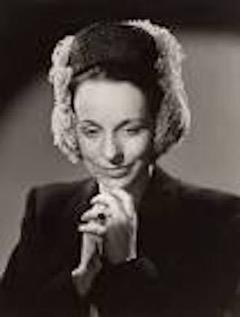
The actress Margaret Rawlings (1906-1996) took part in The Oxford Recitations in 1923, aged 18. Two years later she won several classes and met a fellow student the actor, poet and swordsman Gabriel Toyne, also praised for his fine speech. In 1927 the adventurous couple eloped, setting sail for a theatrical tour of Australia, with Toyne piloting the planes transporting them to theatres around the continent.
During Rawling’s long and varied career she played dozens of leads in London, the provinces and in New York. Her Dance of the Seven Veils in the title role of Oscar Wilde’s Salome at the Gate Theatre in 1931 was provocative enough to cause some members of the audience to faint. Equally at home with comedy, tragedy and romance, her performances included Elizabeth Barrett in The Barrett’s of Wimple Street (1932) and Eliza Doolittle in Pygmalion (1935).
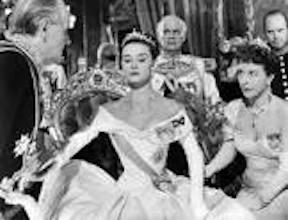
In 1953 Paramount Pictures cast her in the supporting role of Countess Vereberg to Audrey Hepburn’s breakout role in Roman Holiday, co-starring Gregory Peck. In real life Margaret had acquired the title of Lady Barlow in 1943, after marrying Sir Robert Barlow, the driving force behind the Metal Box canning company. She played as hard as she worked, and her daughter Jane Sacchi, recalls wild all-night parties at her mother’s house in St John’s Wood in London.
Margaret Rawlings spent her professional life working with the world’s greatest actors, directors and playwrights including John Gielgud, Noel Coward (right) and George Bernard Shaw. In 1930 she co-founded the UK actors union Equity from the West End of Dame May Whitty and her husband, serving the Council for thirty years, twice as its Vice-President. She continued with her acting career until 1990, the final year of her life.
Diana Homer, Margery Bryce and Margaret Rawlings were mighty teenagers, who alongside the teachers Elsie Fogarty and Rose Bruford were catalysts in the development of Speech & Drama as well as equitable rights in society and the arts.
These courageous women proved the old adage that, “Where there is poetry there is soul.”
Sam Burcher
Sam Burcher has extensively researched The Oxford Recitations. She is also an artist, poet and musician.
www.samburcher.com
.

Thanks.
Comment by Steven Taylor on 23 July, 2026 at 5:51 amBrilliant. Learnt stuff!
Thanks Steve! Makes the hard, but fun work of research worthwhile.
Comment by Sam Burcher on 26 July, 2026 at 1:38 pm