
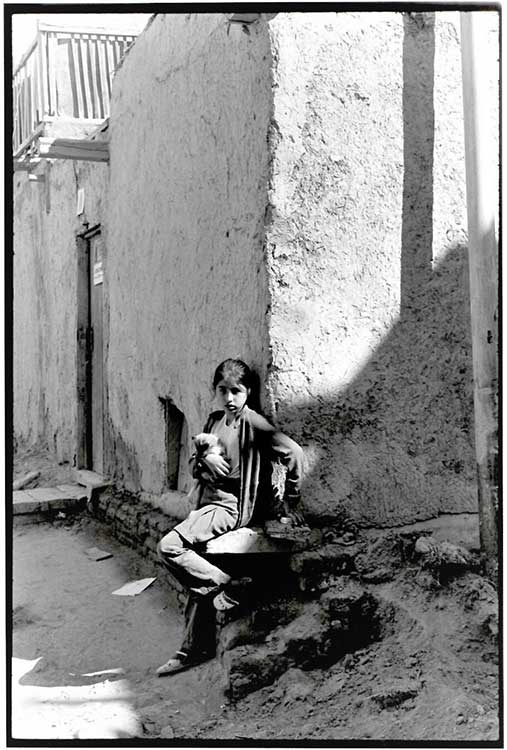
Within the expansive historiography of photography, scholarly attention has frequently gravitated towards practitioners whose reputations were established through international exhibitions, institutional patronage or sustained critical acclaim. While such figures undeniably occupy an important position in the evolution of photographic discourse, this emphasis has often obscured another category of photographer whose contribution is no less consequential. These are individuals whose artistic achievement resides not in spectacular innovation or calculated celebrity but in the patient construction of an enduring visual record of communal life. Their photographs become indispensable historical artefacts precisely because they emerge from prolonged familiarity with a particular place, its inhabitants and its evolving cultural identity. Among these photographers, David Henschel occupies a distinctive and intellectually compelling position.
His career exemplifies a conception of documentary photography founded upon technical discipline, ethical attentiveness and an unwavering confidence in the expressive capabilities of black-and-white imagery. Rather than pursuing novelty for its own sake, Henschel has consistently demonstrated that photography acquires its deepest significance when it functions simultaneously as aesthetic expression, historical testimony and cultural remembrance.
To appreciate the significance of Henschel’s work requires an understanding of documentary photography not merely as a descriptive medium but as a complex form of visual historiography. Every documentary image participates in the preservation of social reality, yet it simultaneously reflects the interpretative decisions of the photographer. Selection, framing, perspective, exposure and timing collectively determine how the world is transformed into photographic representation. Consequently, documentary photography is never a purely mechanical transcription of reality but an intellectually mediated act of observation in which empirical evidence and artistic judgement coexist. Henschel’s work consistently acknowledges this delicate equilibrium. His photographs possess an unmistakable documentary integrity while simultaneously exhibiting compositional sophistication and aesthetic coherence, thereby resisting the misleading assumption that factual accuracy and artistic refinement exist in mutual opposition.
For many years Henschel served as a photographer for the St. Louis Jewish Light, documenting the religious, educational, philanthropic and cultural life of the Jewish community throughout the metropolitan region. This long association endowed his work with an unusual degree of continuity rarely encountered within contemporary photojournalism. Unlike photographers whose assignments are dispersed across disparate geographical and cultural contexts, Henschel observed the gradual evolution of a single community over many decades. Such continuity profoundly enriches the historical significance of his archive. Individual photographs undoubtedly possess intrinsic documentary value; collectively they constitute an extraordinarily detailed visual chronicle through which the subtle processes of demographic transformation, institutional development and cultural continuity become perceptible across time. The archive thereby transcends journalism to assume the characteristics of an invaluable historical corpus.
Photography possesses a uniquely paradoxical relationship with temporality. It records the present only by converting it immediately into the past. Every exposure simultaneously preserves presence and announces absence, transforming transient experience into enduring visual evidence. Philosophically, this temporal paradox has occupied an important position within photographic theory, for the photograph invariably embodies both remembrance and loss. Henschel’s career illustrates this phenomenon with exceptional clarity. His images of communal celebrations, religious ceremonies, educational institutions and civic gatherings inevitably acquire additional layers of meaning as decades pass. Individuals who once appeared as contemporaries become historical figures within family histories. Children mature into community leaders. Familiar buildings disappear or are repurposed. Rituals evolve while preserving essential traditions. The photographs therefore function not simply as illustrations of isolated events but as visual repositories through which collective memory continues to be negotiated and renewed.
One of the defining characteristics of Henschel’s practice is its remarkable absence of aesthetic ostentation. Contemporary photographic culture frequently privileges immediacy, visual excess and technological virtuosity, encouraging images that command attention through dramatic intervention rather than sustained observation. Henschel consistently pursues the opposite trajectory. His photographs rarely depend upon exaggerated composition, conspicuous manipulation or sensational subject matter. Instead, they derive their expressive authority from equilibrium, precision and intellectual restraint. Such restraint should not be mistaken for simplicity. On the contrary, it represents an advanced form of artistic confidence in which visual significance emerges through careful organisation rather than overt display. The resulting photographs reward prolonged contemplation because their complexity resides beneath the surface rather than announcing itself immediately.
This disciplined visual philosophy is particularly evident in Henschel’s enduring commitment to monochrome photography. Within an age overwhelmingly dominated by colour reproduction and digital imaging technologies, black-and-white photography might appear to some observers as an anachronistic survival from an earlier photographic era. Such an interpretation fundamentally misunderstands monochrome as an artistic language. The elimination of colour does not diminish descriptive capacity; rather, it redirects perceptual attention towards structural relationships that colour frequently obscures. Tonal gradation replaces chromatic distinction as the primary organisational principle. Texture becomes increasingly articulate. Contrast assumes greater emotional resonance. Light itself emerges as the principal architect of visual meaning. In Henschel’s photographs, monochrome is therefore not an aesthetic limitation but an epistemological choice, encouraging viewers to perceive form, atmosphere and emotional nuance with heightened sensitivity.
This philosophy finds explicit articulation in The Art of Old Time Black and White Photography, wherein Henschel examines traditional photographic processes not simply as technical procedures but as manifestations of artistic discipline. The work reflects a broader conviction that craftsmanship remains inseparable from creative integrity. Such an argument possesses considerable relevance within contemporary photographic discourse, where technological sophistication is frequently mistaken for artistic accomplishment. Automatic exposure systems, computational imaging and advanced editing software undoubtedly expand creative possibilities, yet they cannot substitute for perception, patience or cultivated visual intelligence. Henschel’s career consistently demonstrates that the camera functions not as an autonomous creator but as an instrument through which human judgement acquires visible form. The decisive photograph ultimately depends less upon technological complexity than upon intellectual attentiveness.
Equally significant is Henschel’s understanding of light as photography’s primary expressive medium. Light does not merely illuminate subjects; it constructs the entire visual architecture of the photograph. Through variations of luminosity, shadow, reflection and contrast, light establishes spatial depth, emotional atmosphere and compositional coherence. Henschel’s images reveal a sophisticated sensitivity to these relationships. Shadows seldom function merely as areas of reduced illumination but instead become compositional elements possessing their own structural and symbolic significance. Highlights are carefully controlled rather than theatrically exaggerated. Mid-tones preserve subtle gradations that sustain visual harmony. Such tonal sophistication recalls the traditions of classical silver gelatin printing, where technical precision served aesthetic rather than merely mechanical objectives.
His portraiture deserves particular scholarly consideration because it embodies a notably ethical conception of representation. Portrait photography inevitably raises questions concerning authority, identity and interpretation. The photographer exercises substantial influence over how another individual will subsequently be perceived, remembered and historically situated. Henschel consistently approaches this responsibility with discernible humility. His portraits avoid caricature, sentimentality and unnecessary psychological intrusion. Instead, they cultivate an atmosphere of mutual respect in which personality emerges through authentic gesture rather than artificial performance. The resulting images preserve human dignity without sacrificing emotional immediacy, thereby achieving an equilibrium that many documentary photographers struggle to maintain.
The ethical dimension of Henschel’s work extends beyond portraiture to encompass his broader relationship with community itself. Documentary photographers frequently confront the tension between detached observation and participatory engagement. Excessive distance risks reducing subjects to anonymous sociological specimens, whereas excessive familiarity may compromise critical perspective. Henschel negotiates this tension with considerable sophistication. His long-standing involvement within the community he documented fostered relationships founded upon trust rather than mere access. Consequently, his photographs often communicate a sense of intimacy without becoming intrusive and familiarity without descending into complacency. This ethical disposition substantially enhances both their documentary authenticity and their historical credibility.
From an art historical perspective, Henschel’s photography occupies an intriguing position within the broader trajectory of American documentary practice. His work shares certain affinities with traditions of humanist photography that privilege empathy, social observation and everyday experience over ideological spectacle. Yet his photographs retain a distinctly regional identity rooted in the particular cultural landscape of St. Louis. Rather than employing locality as a limitation, Henschel transforms it into an interpretative advantage. The city emerges not simply as geographical setting but as a dynamic cultural organism shaped by religious institutions, educational initiatives, philanthropic networks and intergenerational continuity. His photographs therefore contribute to an understanding of regional identity as something continually negotiated through lived experience rather than statically inherited.
Architectural space likewise assumes considerable importance throughout Henschel’s oeuvre. Synagogues, schools, community centres, galleries, domestic interiors and urban streetscapes rarely function as incidental backgrounds. Instead, these environments participate actively in the visual narrative, embodying the cultural values and historical trajectories of the communities that inhabit them. Architecture becomes an extension of social memory, while the photograph transforms physical space into historical testimony. Such sensitivity to environmental context distinguishes Henschel from photographers whose compositions isolate subjects from their surroundings in pursuit of purely formal concerns.
Perhaps the most remarkable aspect of Henschel’s career is its sustained consistency. In an artistic climate frequently characterised by stylistic reinvention, conceptual novelty and rapidly changing aesthetic fashions, his work demonstrates the intellectual value of continuity. Consistency should never be confused with repetition. Rather, it represents the gradual refinement of a coherent visual philosophy pursued across decades of disciplined practice. Henschel’s photographs reveal an artist whose confidence derives not from perpetual experimentation but from the continual deepening of perception. Each image contributes incrementally to a broader investigation of memory, identity and human presence, producing an oeuvre distinguished by remarkable conceptual coherence.
The contemporary relevance of Henschel’s work has, if anything, intensified with the proliferation of digital imagery. The unprecedented democratisation of photography has generated an immense visual abundance, yet abundance itself does not necessarily produce historical understanding. Billions of photographs circulate daily, many destined for almost immediate oblivion within endlessly expanding digital archives. Henschel’s practice offers a compelling counterpoint to this culture of ephemerality. His photographs encourage sustained looking rather than instantaneous consumption, inviting viewers to recognise that meaningful visual experience depends not upon quantity but upon attentiveness. They remind us that photography achieves lasting significance only when guided by intellectual purpose and ethical responsibility.
Herschel’s approach to printing was as deliberate as his approach to making a photograph. He treated each finished print as a singular object rather than something to be reproduced indefinitely. His photographs were printed with gold chloride, a process he used to give them lasting permanence, and most measured approximately 11 by 14 inches. They were finished with broad emulsion borders and individually signed and dated.
For Herschel, the fact that a photograph existed as a single print was important. He had seen the work of well-known photographers reproduced many times, sometimes even after their deaths, with prints carrying the names of artists who could no longer have made or signed them. He found the practice deeply objectionable. In his view, someone who bought one of his photographs should be certain that they owned a unique print, with no identical copies elsewhere. On the occasions when he sold one of the relatively few negatives he made available, he went a step further: the negative was scratched so that another print could not subsequently be produced. It was, in effect, his way of protecting the integrity and individuality of the work.
Herschel also kept a firm boundary between his professional and artistic photography. He never worked with colour negatives or slides for his artistic output, reserving them for his professional assignments instead. That distinction remained important to him, allowing his commercial work and his personal photographic vision to occupy separate worlds.
Around 2000, Herschel retired from photography, but retirement did not mean an end to his creative work. Writing, which he had pursued alongside photography for years, became his principal outlet. His literary work has since grown into a substantial body of work, including eight full-length novels, two collections of short stories, a photographic art book containing 200 images, and an autobiography covering his life and career. He has also produced several further editions of his work and, at the time of writing, is nearing completion of his ninth novel. Working independently rather than through a traditional publishing house, he describes himself as an “indie” author. In many respects, the same independence that shaped his photography has followed him into his writing: he continues to make, publish and preserve his work on his own terms.
Ultimately, David Henschel’s contribution to American photography cannot be measured solely through technical accomplishment or aesthetic refinement, considerable though both undoubtedly are. His enduring importance resides in the manner by which he has united documentary fidelity with artistic intelligence, regional commitment with universal human significance and historical consciousness with visual elegance. His photographs constitute far more than records of particular individuals or isolated events. They collectively form an intricate meditation upon time, memory and communal existence itself. Through decades of patient observation, disciplined craftsmanship and profound respect for the people whose lives he has documented, Henschel has demonstrated that documentary photography remains one of the most intellectually demanding and culturally indispensable artistic practices. His legacy is therefore not confined to the images he created but extends to the enduring affirmation that attentive observation, ethical representation and aesthetic integrity continue to possess immense value within an increasingly transient visual world.
.
by Ade Rowe
.