
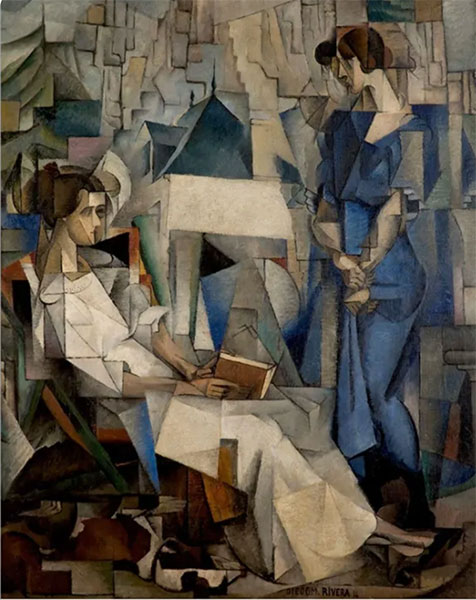
How do we respond to accusations of ego-centrism? What is egoism? Etymologically, it denotes the centrality of the ἐγώ, or, in full Proto-Indo-European derivation, éǵh₂om. Unless the interlocutor is referring to Freudian trivialities such as the Superego, I would interpret the accusation of “Ego Super” as ego-centrism, defined as “thinking only about yourself and not about what other people need” (Oxford Dictionary).
I can close the case in twenty seconds: is the “ego-centric” the one who, having founded a series of collectives, seeks to give voice, through a collective “we”, to his own and others’ demands for recognition of identity—or is it the one who continues to rely on the defensive strategy of “affari miei” (“none of my business”)? The Court will admit that the truly “ego-centric”—whether due to opportunistic cultivation of personal business (Panìa), resignation or distrust, or sheer lack of organizational aptitude (the “we” requires organization)—is the one who persists in the defensive strategy of “affari miei.”
Can Pozzoni be called “ego-centric”? He creates anarchist self-managed centers, solidarity-based publishing houses, collective artistic movements; he renounces—against his own academic interest—the monograph in favor of the repeated and consistent use of collective volumes; he withdraws, abandoning every role and every space at the very moment he denounces the need for a paradigm shift. What an “ego-centric” focused on the needs and demands of others! How would the Prosecutor define him—an “ego-centric” socially engaged? That is, a socio-centric individual equipped with a robust ἐγώ, indispensable for withstanding the continual accusations of “ego-centrism” leveled by business p(o)ets, the resigned/distrustful (frustrated), or those incapable of organization. Or by whom? By those who should be standing beside Pozzoni, battering the walls of the Papal State…
I close the case, substitute myself for the Court, and sentence the interlocutor to reading the complete Mondazzoli works of Cesare Viviani (fundamental in the history of Italian literature).
Let us now dive to the bottom of the issue like a Russian nuclear submarine which, instead of launching twelve thermonuclear warheads at Ukraine to seal annexation—by way of counter-exchange for the EU’s financial invasion of Bulgaria or Moldova and the attempt at social destabilization in Serbia and Bosnia as a strategy for EU and NATO expansion—chooses instead to explore every form of “obsession” of late modernism and its leader. The ἐγώ, in the greatest testimony of marginal Hellenicity, is the μῆνις of Achilles, erroneously translated by Monti as “anger.” The μῆνις of the supposedly “ego-centered” Achilles is the claim of an offended dignity or a misrecognized identity.
Giorgio Linguaglossa—in a text I cannot locate—offered an excellent analysis of the instinct of “rage,” which, without recourse to non-scientific Freudian or Lacanian homeopathic explanations, can be understood with the aid of neuroscience (neuroaesthetics should form the cognitive foundation of every artist): rage stimulates the brain to release catecholamines, triggering immediate self-protective actions, and adrenaline/noradrenaline, which initiate a sustained, focusing aggressive arousal. Catecholamines produce an immediate need for self-defense (“aggressiveness,” anger, ὀργή, or flight); the alternation of adrenaline and noradrenaline produces a recurring reaction against the source of anger—namely, the demand for identity recognition.
The lyric-elegiac strategy of the Papal State, supported by the Mondazzoli trust with its crimi-aesthetic, co-optative, and exclusionary leadership, is a strategy of soundproofing (silencing as the refusal of artistic identity, and damnatio memoriae as the denial of the very existence of an artistic identity). The late-modernist artist, by channeling his μῆνις into bunds, kolektivne, and obstinate (and oppositional) assemblies, has the right to obtain a declaration of artistic identity by acting (as artista agens) through a counter-strategy of hijacking—shock, shame, fear, and anger—against the soundproofing strategies of the members of the Papal State, neutralizing through aesthetic terror pope-kings, cardinals, curial officials and curial underlings, and finally achieving their artistic elimination, with the recovery of his strategically misrecognized identity.
Is this “ego-centrism,” or an attempt to reclaim an artistic identity stolen by a gang of business artists?
.
Ivan Pozzoni
Picture Diego Rivera
.