
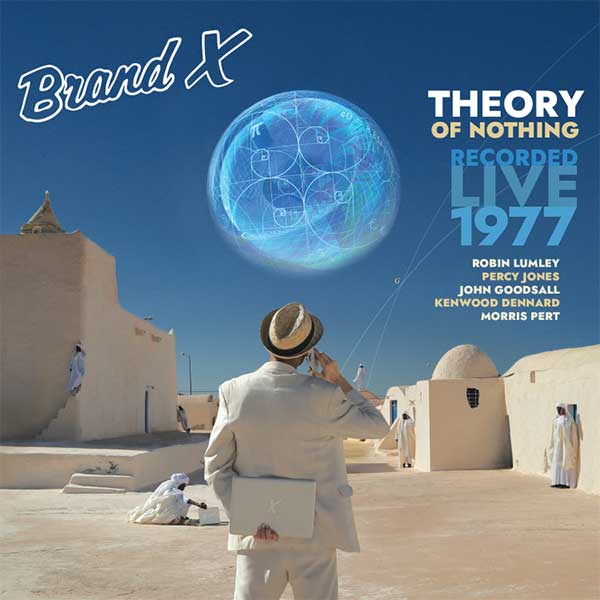
Theory of Nothing, Brand X (2CD; Moonjune)
Jazz-rockers Brand X became successful on the back of their association with Phil Collins, who initially played live with the band whilst he was unsure about what was happening with Genesis after Peter Gabriel left. Collins was present on the band’s first two albums, Unorthodox Behaviour and Moroccan Roll, then left to concentrate on reinventing Genesis, becoming the lead singer and bringing some jazz rock tendencies into the music on Trick of the Tail, before the band changed tack and moved from prog to pop. (I won’t mention Collins’ excruciating solo career.)
Truth be told, jazz-rock was pretty much dead in the water by the mid 70s, so it’s surprising that Brand X was actually a group put together by Island records, who were paid to jam together. They wanted Bill Bruford as drummer but got Collins instead, who would turn up on tracks throughout the band’s existence when he could find the time. The band broke up in 1981 but there were later reformations which, according to the press release for this new live album from a 1977 tour of North America, involved record company arguments, hired musicians who thought they were band members and unofficial and sub-standard reissues and bootleg recordings.
Percy Jones is the only full-time member still standing (I guess Collins has been relegated to session musician) and he is on a crusade to put things right. There are various angry statements on his website and he makes a point of saying that royalties from this album will go to the estates of his fellow band members John Goodsall and Robin Lumley as well as himself. It was Lumley’s attic where the tapes that Jones has cleaned up for this release were found, resulting in ‘a complete concert experience from North America in the fall of 1977’, although it’s unclear if it’s an actual concert or a conceptual/typical one, assembled from recordings from various dates.
So what do we get? Lots of fretless bass, paradiddles, cymbals and out-of-kilter rhythms, searing guitars, keyboard textures and trills, and silly titles. Yes, it’s the Monty Python school of humour: ‘Disco Suicide’, ‘Why Should I Lend You Mine When You’ve Broken Yours Off Already?’ , ‘Euthanasia Waltz’ and ‘Nightmare Patrol’ all feature here, somewhat undermining the clever and busy music on offer.
Jones is no doubt aware that there is a growing interest in music by the likes of Soft Machine and Gong, with new compilations of Canterbury bands and obscure progrock on offer, so it’s good timing on the commercial front and also about time that Brand X got some recognition for popularising the genre. However, the music is very much of its time and hasn’t dated well. It feels more about musical skill and prowess than energy or originality, and I have to say that Nova, Nucleus, Visitor 2035, Paz, early Landscape and indeed Soft Machine, did this kind of thing better, even as punk, post-punk and improvised music was looking forward rather than back.
If Brand X brought new audiences to the jazz-rock genre, then all well and good. This concert does, as the press release claims, showcase ‘the band at its peak performance’, although Collins is noticeably absent, with American jazz drummer Kenwood Dennard standing in. It’s clever, dynamic and occasionally funky, but Theory of Nothing is very much a historical document from the musical archives.
.
Rupert Loydell
.