
Sam Burcher revisits the Blitz Club via the current exhibition at The Design Museum in London.
An old school friend recently attended the exhibition at the Design Museum in London. Afterwards, she wrote this opening paragraph for her recent feature in The Ox Magazine:
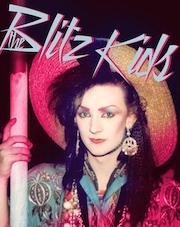
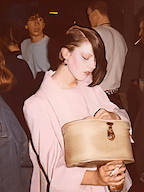 “The coolest girl in our school, also called Sam, was a couple of years older than me and she had been there. She told me about it using reverent tones in the cloakroom where we used to smoke illicit fags between lessons. It sounded so flamboyant and far out of my reach, I could only imagine what it would be like. Indeed she became an ardent attendee and joined the ranks of young creative people who went there religiously. They became known in the media as the Blitz Kids and some even rode a wave of publicity the club garnered to attain global success and celebrity status.”
Today, the school she mentions is something of a Holy Grail for North London parents of clever girls. In 2024, it came top of the League Table of non-private girls school in the country. My parents were keen for me to go but, after passing the entrance exam, I was not minded to perform. Instead, by the time I was fourteen, I was committed to music, going to gigs, meeting other cool people, and by extension going to nightclubs. I didn’t worry about my age being discovered, because my presence was never questioned.
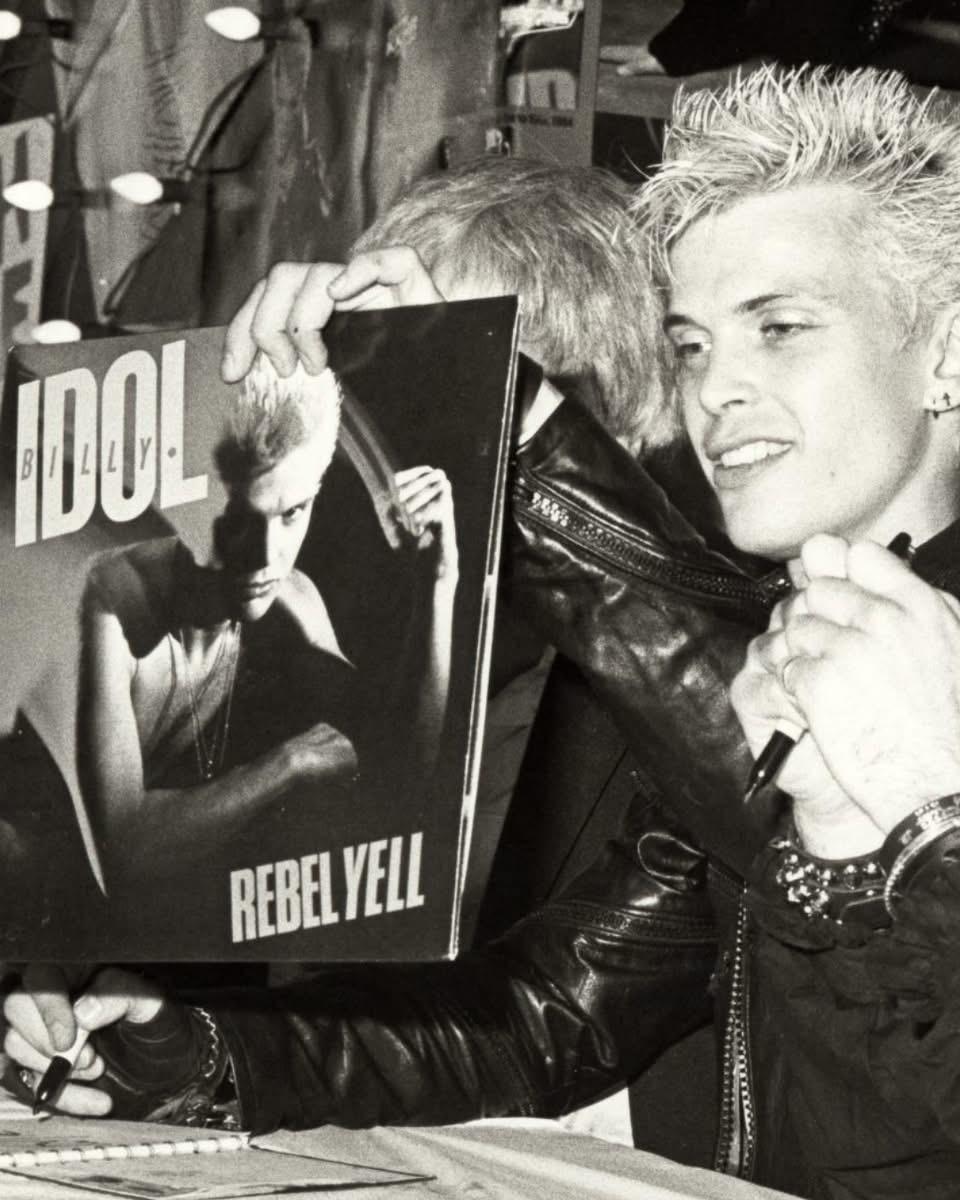
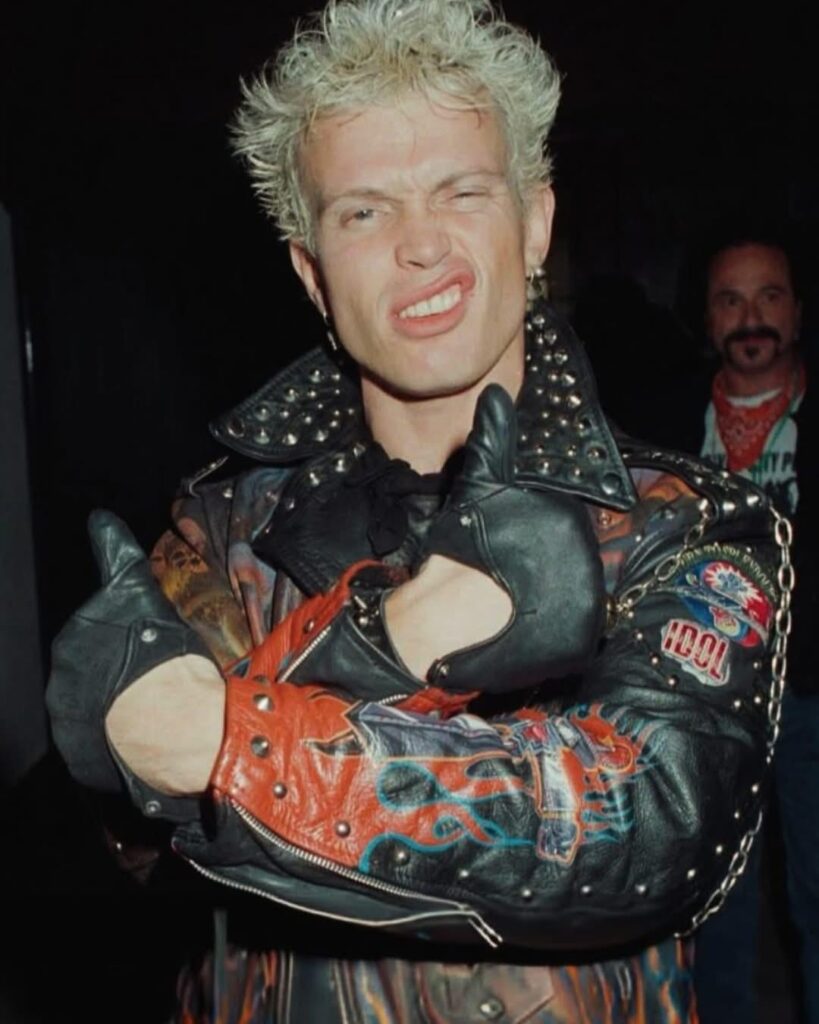
 It is true I rubbed shoulders, and they were sometimes big pink padded shoulders, with the nascent star Boy George at The Blitz. On any given night you might look around and see Gary Numan swaying to the music, or Billy Idol squeezed into the DJ booth with Rusty Egan. One evening it was my good luck to meet David Essex having a quiet drink at the bar, and a year or so later David Bowie when he approached me in one of Steve Strange and Rusty’s clubs following The Blitz.
Some of the major players featured in the exhibition were already friends outside of the context of the club. I’d first met the socialite Phillip Sallon on the bus to his day job at The Royal Opera House, George, before he added the pre-fix Boy on a train to a flat we briefly shared in Birmingham, and the designer Jon Baker, who we all called Mole, up a ladder in the grounds of said school, which was designed by Edwin Lutyens.
It’s also true I was there for one of the club’s seminal moments in December 1979. I remember waiting patiently for the band to come on, mindful of the last train home and school in the morning. I was curious after the lead singer Tony Hadley told me his band called Gentry, as Spandau Ballet was then known, were going to be famous. Thirty five years later, after much water under the bridge, I attended Spandau’s reunion gig and premiere of their rockumentary Soul Boys of the Western World at the Royal Albert Hall in 2014. Somewhere in the enthusiastic crowd I bumped into my friend Phillip who, after gasping at my youthful appearance, muttered wittily, “It won’t last!”
It was my pleasure to be escorted to the Albert Hall afterparty by the actor Bill Nighy, a true gentleman and pal of Gary Kemp. Sadly, this would be the last time I saw Mike Peters, the lead singer of The Alarm, a band I had the privilege of promoting during my 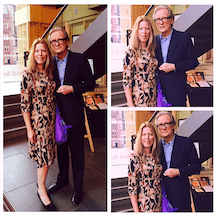 years in A&R at IRS Records with my dear friend and fellow Blitz Kid, Richard Law (Dick Breslaw), who worked with the producer William Orbit, amongst others. IRS was owned by Miles Copeland III, the manager of The Police and was the record label for a number of British bands, including Squeeze, as well as the American bands The Go Go’s, The Bangles and REM. Sadly, the Spandau reunion would also be the last time I saw Steve Strange.
The Blitz Club in the spring of 1978 was my first encounter with Steve Strange, who, in his infinite wisdom, had an uncanny sense of the right people to admit into his club. It’s part of the club’s mythology that Mick Jagger was turned away, perhaps because he had not made the required effort to dress up. Steve was definitely not a follower, nor was he remotely interested in creating a movement. He was far more interested in being himself and attracting likeminded people into his creative ambit to share the enjoyment.
 Inside, the Blitz was scattered with tables adorned with red and white checked cloths and simple fresh flowers. The low light was coming from candles wedged into empty wine bottles, swollen with cascades of wax that had dried into hard rivulets. Bright lights over the bar were reflecting in the tantalising selection of glass bottles glowing with coloured liquids: primed and ready to be mixed into all manner of mind-blowing cocktails.
On my first night there I soon became aware of Rusty rushing around from the dance floor to the door, and the curious parade of people coming in. But there was something else going on. Despite the Blitz being a small club, it had a sense of space where anything could happen as long as it was creative. It was as if a new field was opening up that would coalesce around the new people, new styles, new sounds and Steve himself. I absorbed this unspoken information as Heroes by David Bowie ululated like a siren call across the dance floor. Tingling with excitement, I drained my favourite Blue Lagoon cocktail to its last icy drop and decided to embrace the ideal of The Blitz.
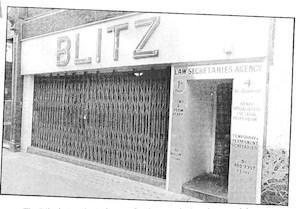
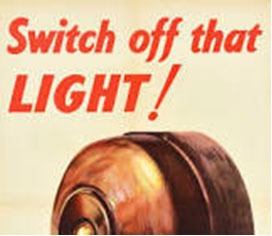
Outside 4 Great Queen Street WC2, the big white neon lights spelling the club’s name was intimidating at first. But once inside, the cafe-blinds and bare floorboards made the Blitz feel intimate, cabin-like, and safe. Fragments of Second World War memorabilia, like the Ministry of Defence poster issuing a blackout warning to, “Switch Off That Light!” to survive the Nazi’s nightly air raids, and the rubber and glass gas masks all added to the atmosphere.
 My Blitz Club membership card was numbered 201 on the back, which may support the fact that only a relatively small number of people were involved. I vividly remember entering the club and Steve pushing it over the wooden counter to me, and recognising this was an important moment. I suspected he liked my look: I had a youthful complexion, short, short hair like a boy, and wore exceptionally good military clothing borrowed from the wardrobes of the theatrical costumiers Bermans & Nathans, because my brother worked there.
I enjoyed the hustle and bustle of Covent Garden, which was not so long ago a busy flower and fruit & veg market. It was around the corner from the Blitz, which I knew already for its Motown and soul nights on Sunday evenings before the Tuesday nights got started. To me the area felt comfortable and familiar, having been born nearby at the old Charing Cross Hospital on The Strand. There was live music in the underground vault at the Rock Garden, and its cafe upstairs served a mean burger and crisp white wine at tables spilling onto the cobbled streets of the Piazza. New wine bars like Rumours on Heddon Street had opened mixing intoxicating cocktails, where people like me stood out against business suits, double denim or pegs with perms.
 A common thread connecting the Blitz kids was, and still is, a love of David Bowie and his music. Bowie repaid the compliment in spades by attending the club with his assistant Coco. Bowie asked Steve Strange to select three of his regulars as extras in the 1980 video for the song Ashes to Ashes, then the most expensive music video ever made. Steve selected Darla-Jane Gilroy and Judith Frankland, both talented fashion students who wore their own creations, the latter also designed Steve’s outfit. Both became successful designers and the third, Elise Brazier, became a top model.
One night, I was lucky enough to meet David Bowie at Steve and Chris Sullivans’s Thursday night club Hell on Henrietta Street in Covent Garden when he asked me for a light for his cigarette. Calming myself, I held my lighter out to him. He leaned in, cupping his hands around my hands and the flame, and inhaled deeply on his cigarette. I smiled demurely at this perfect gentleman and strolled off coolly in a finely speckled black and white tulle ballgown and black silk shoulder cape after Bowie murmured his thanks. But, as soon as I was out of his ambit, I found a private corner where I could emit short visceral screams.
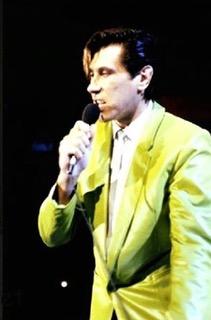
My attendance at clubs and gigs was pretty extensive for a very young teen at a time when live music was cheap and plentiful. I’d strayed into Soho to see The Damned at The Marquee, The Clash at the Lyceum Ballroom, and numerous bands at the 100 Club. And travelled further afield to The Music Machine and The Electric Ballroom in Camden for Devo and The Cramps, or to the other Roxy in Harlesden for The Clash again. A great gig was The Stray Cats and Elvis Costello at The Roundhouse where Bob Geldof was bouncing around chatting to everyone. In May 1979, there was a spectacular night of Roxy Music led by Bryan Ferry in a lemon yellow suit designed by Anthony Price, with Annie Lennox and Dave Stewart supporting in their early incarnation as The Tourists
I loved the sensations of live music, the sound waves oscillating through the speakers and into my body in these cherished smaller venues. But, it was harder to connect to the music and the musicians in larger venues. I saw Bowie’s Isolar tour at the Earl’s Court Arena in the summer of 1978, which led to a series of Birmingham adventures (see Make Me Up I & II). The Hammersmith Odeon was the venue for Kraftwerk’s stunning Computer World 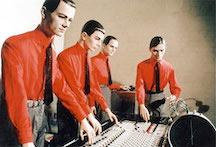 Tour in the summer of 1981, where Autobahn, Die Roboter and Neon Lights shone as the apotheosis of the transEuropean electronic sound. The big screens behind the band member stationed behind a bank of Korgs and computers seemed to bring them closer to the seated audience. And, in an effort to make that connection, I got down to the front row of 65,000 people at the Milton Keynes Bowl for David Bowie’s Serious Moonlight tour in July 1983. It was scorchingly hot and Bowie wisely made sure the security guards sprayed us with cold water at regular intervals.
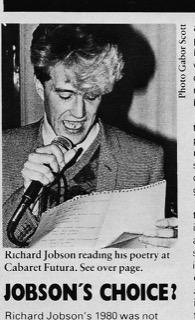 1980 had dawned full of musical promise with Spandau’s spring, summer and winter gigs on the HMS Belfast, under the arches at Heaven in Charing Cross and at the Scala Cinema respectively. In between was the launch party of I-D magazine, then priced at 50p. For all the above occasions I was elegantly encased in silk and fur and hats. At this time I was dating Richard Jobson, the poet, author and lead singer of The Skids. His August gig at the Hammersmith Palais had the added bonus of a superb set by Simple Minds, led by fellow Scot Jim Kerr. In December, Duran Duran played one of their first ever London gigs at the Venue Victoria, with Midge Ure a prominent attendee.
The atmosphere on South Molton Street, just off Bond Street was another lure for me. It was easy to reach on the new Jubilee Line from the suburbs, and it had a great pub on the corner called The Hog in the Pound. After reading Twiggy’s autobiography, I knew she modelled for Vidal Sassoon, who had (and still has) a salon there. I was doing the same in 1980, but was all too aware of my limitations as a model. I’d also read Joan Collins’s autobiography and learned her trick of using eye drops every morning to make my eyes shine. I was absorbing London, and recognised the importance of being stylish. I was convinced of wanting to do something creative, but had yet to take my ‘O’ levels.
The Face and Other Magazines
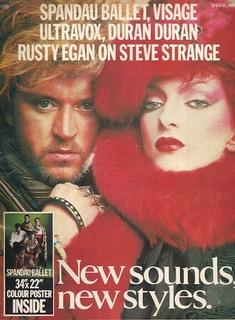
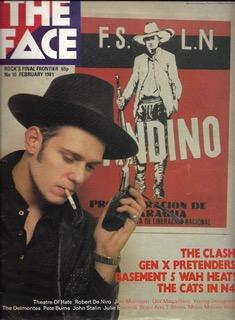 Despite my youth, my eyes and ears were tuned to the Zeitgeist. And, as a result, I appeared in a number of British magazines, including The Face, Time Out, New Sounds New Styles, and Girl About Town. These were the amongst the earliest press for the new scene, and Time Out’s four page feature described us as a somewhat vacuous youth movement akin to style astrologers with no real depth, and the music as a little bland. There were no first hand quotes or contributions by any of us by what Girl About Town described as “The cult with no name.”
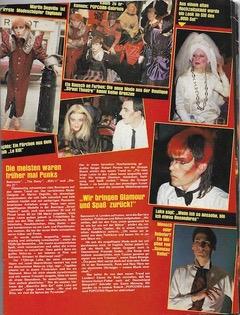
But, that changed in 1980, when the German publications Madchen and Popcorn came to London. Madchen, a teen magazine ran a three page feature under the Editorial heading “Beautiful People…the people who really do the most outlandish and crazy things…And the best part is no-one really pays them any attention.” Apparently, the appeal for Madchen readers was that Londoners could enjoy dressing up however they liked, which, according to the Editor, was literally a crash course in tolerance for Germans.
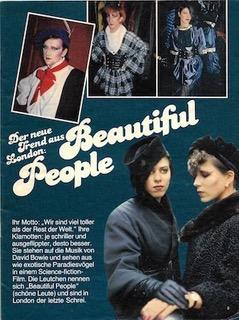 Steve Strange, me and a few others had been asked to model clothes designed by Martin Degville Middle right0, who Madchen described as. ” a former art student who dresses half-male and half-female and causes a stir with sack-like fantasy creations.” Steve, then aged 20, and I did the talking and he eloquently said,”Bowie inspired us the most. We’re countering aggressive punk with total beauty – without taboos!”Unused to being the voice of a generation, I added less eloquently, “When you walk around all dressed up in the evening you’re someone special!” I had invited many of my friends to participate in the Blitz. So, I took this opportunity to advocate the joyful feeling of dressing up and having a wonderful night after a dull day in school uniform to a wider audience.
Popcorn, a German music magazine, was patently more open minded. They were primed about the music, and Steve and I filled in the gaps on fashion. We told them where we got our clothes from, how and why Blitz Kids dressed the way we did, and the clubs in London. In turn, they correctly referenced The Blitz, Hell, Le Kilt, and The Beatroute, Billy’s, and Studio 21, alongside the bands; Shock, Spandau Ballet, Steve Strange and Visage, Soft Cell, and Split Enz.
I reckoned the German music audience must be interested in us because of the connection with David Bowie, Brian Eno, Iggy Pop and Lou Reed all recording and living in Berlin at one time or another. The new bands like Soft Cell were also recording in Berlin, and still do to this day. Warming to my theme of transformational dressing, the Popcorn article states, “It was just so boring to always walk around looking so dirty and sloppy,” says 16-year-old Samantha. ‘I get a huge kick out of dressing up and designing the craziest clothes myself. That includes flashy makeup – preferably in pink and black. Black is just so cool!” And, although it pains me to recall it, according to the translation in Madchen I offered up this salvo, “We’re way cooler than the rest of the world.”
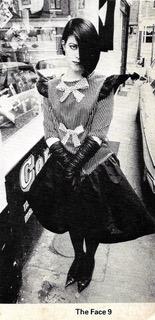 A week or so later, a couple of photos from the shoot on Carnaby Street ended up in The Face. Issue 9, 1981, with Paul Simenon of The Clash on the cover. I’d half hoped to see my picture alongside the many others collaged over the walls of the National Portrait Gallery’s 2025 retrospective of The Face Magazine: Culture Shift exhibition. But, the issue was overlooked entirely. Another erasure was a portrait taken at The Blitz by Derek Ridgers, a photographer named in The Times list of top hundred photographers, and published in the first edition of his coffee table book London Youth 78-87. Yet, as I had already suspected this photo had been replaced in the second edition, which was on sale at the exhibition. This I found slightly odd, since Derek had recommended me to the Emmy-winning news correspondent Alice Hines as a credible source of information about the era for an interview specifically about my photo in his book, which she did: https://samburcher.com/index.php/articles/notes-on/78-87-london-youth
After looking at all the great fashion and music photography at The National Portrait Gallery, especially the Kate Moss portraits, I decided it was a humbling experience to have been left out of the exhibition and the second edition. I remembered that after a girls night out at Eve Ferret’s hilarious show at the Crazy Coqs at Zedels in Piccadilly Circus, Pinkie Tessa a prominent and glamorous Blitz attendee told me she is not the least bit bothered about the past. Whilst she still dresses up in her own inimitable style, she’s more interested in perfecting her ice skating and golf skills in the present moment. Eve, another Blitz regular and performer with her cabaret duo Biddy and Eve, still brings the house down on her own.
But, when I bumped into Princess Julia in the National Gallery’s Audrey Cafe after The Face Exhibition, she did not hide her disappointment at being overlooked. Julia was a regular DJ at the Blitz, and the stunner speaking the French dialogue in Visage’s Fade to Grey (1980) video. To this day she is DJ’ing in nightclubs and mingling with cool young hipsters.
The Blitz Club at The Design Museum
By my reckoning, and no matter how fleetingly, I might appear somewhere in the exhibition Blitz: The Club That Shaped The 80s at The Design Museum (September 2025-March 2026). After all, I had featured in the early media about the New Romantics, making a brief, but enigmatic hat wearing appearance on Newsnight in January 1981. I had cheekily piped up “Scuse me” as I glided passed a stylishly attired Chris Sullivan, who was being interviewed by the BBC on the door of a London nightclub. This scene was repeated in the curious documentary Blitzed! The 80’s Blitz Kids Story, first shown on Sky Arts in 2021.
The curators of the exhibition at the Design Museum have correctly referenced many of the ‘right’ people. And, they have meticulously contextualised the club into it’s bleak socio-political era of Thatcherism; the miners strike, the three day week, the stinking streets piled high with rubbish and the other pervasive grimy backdrops of the late 1970’s and early 1980’s era. It was, in part, this sense of deprivation that drove the glamour, inclusivity and possibility of the Blitz Club. It truly was a world of its own; warm and safe, a glorious crossover of punk, disco, and new wave utilising the new technology in music and film.
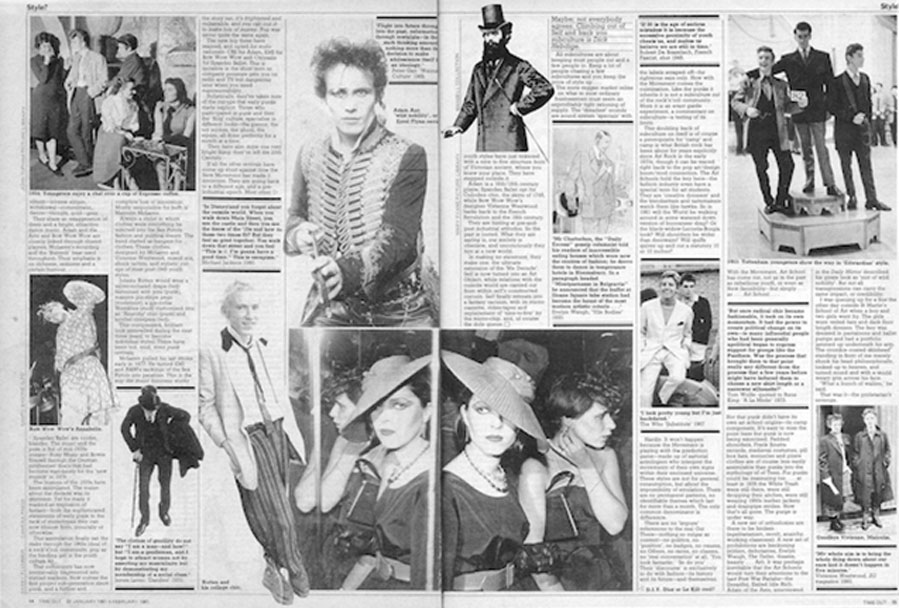
What the Blitz represented in its very early days was a new concept in style and a way of being well known and influential without actually being a celebrity. That came later. But first it had to ground and integrate the structures and styles of the best of the previous generations. Young people put in great effort to create new looks by making outfits and recycling vintage clothing to make the most stylish appearance they could possibly afford.
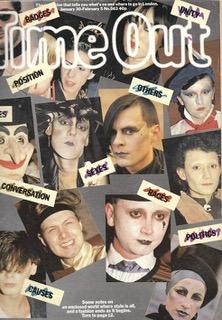 For me, it was not so much about what we were reacting against, it was what we were standing for. The Blitz Club provided a unique opportunity to experiment and learn how to become an agent of change. Often in history it’s the small groups of people, the dynamic movers and shakers that make significant changes in the world. The Blitz Club, which ended after just eighteen months in October 1980, was integral to the success of those who used its power and mystique as a springboard into fame.
Beyond the possibility of fame was a wonderful sense of liberation. There were no stigmas around the same sex dancing together or kissing each other. In fact, if you hung out exclusively with friends of the same sex, the assumption was that you were gay, although that was not always the case. My experience was one of a free spirit being liberated from any prejudices picked up or inherited; prejudices of colour, religion or sexual orientation. And, for me, being part of London nightlife was crucial in bringing about a feeling of creative direction and orientation away from strict parental control and institutional conditioning.
I think it’s a shame the effusive ruffles, cummerbunds, ballet pumps, and diamontees that made the club shimmer have been sidelined. In contrast, some of the haute couture on show would be considered far too tame to have been worn by an ‘ordinary’ Blitz Kid. To look good at the Blitz seemed at the time to be a high bar. And, like many others, I had acquired a sophisticated collection of 1920’s, 30’s 40’s 50’s and 60’s clothing from vintage markets, that were gifted and thrifted for a few pounds and pennies. The average Blitz Kid would literally have had to beg, borrow, or steal designer clothes.
The Blitz Club and Not The Blitz Club
What appears to me to be a glaring misrepresentation at the Design Museum is the mock-up of the interior of the Blitz Club with AI generated posers. Whilst the computer images are ingenious, the physical installation feels more like a worn out snug in a high street pub, rather than the perky Covent Garden wine bar. It is unlikely that such a dingy bar would have inspired the fantastical forgings of the creative crucible that continues to resonate to this day. This small, but significant detail would go unnoticed by many and perhaps wouldn’t matter to those who weren’t there, which includes the majority of people visiting the exhibition.
Like many of my contemporaries, I enjoyed the exhibition, but was left wanting something more from it. Several attendees including Sarah, an artist, told me she was already familiar with the fashion, the music and the political contexts. She expected and wanted to know something different about the Blitz club. Andrea Obhozler, a writer I recommended see the show, yearned for an ethnographic approach, a way of knowing about the lives of the people. What happened to them before and in the intervening years since? The author Sophie Parkin pictured in the wedding veil) was also disappointed, telling Andrea that she thought the exhibition was told through the heterosexual male’s perspective and didn’t give enough attention to the teenage girls and gay guys who dressed up and created the vibe.
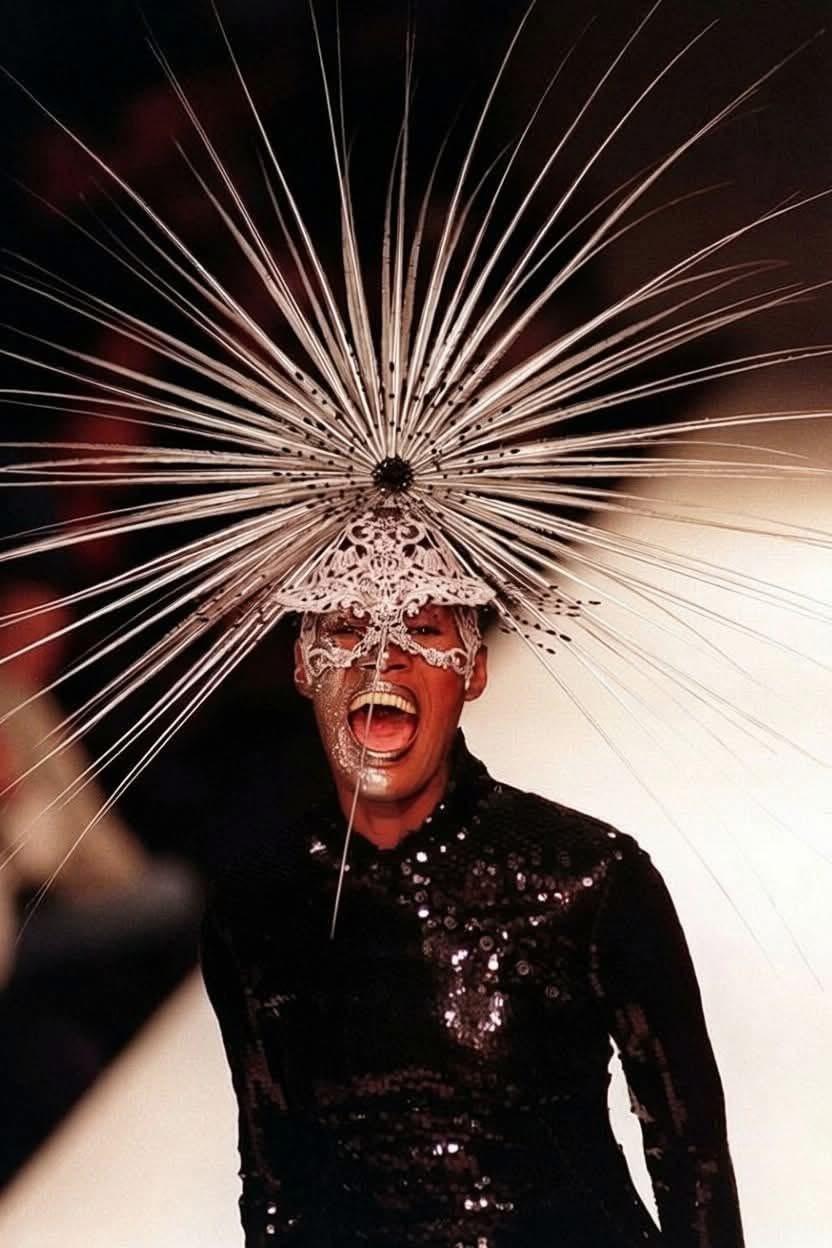
However, there is a lot to like. In particular the Sue Clowes section, whose wonderfully colourful screen prints of religious imagery on garments hold relevance today. The quality and originality of Stephen Jones millinery speaks across the generations, encapsulating and perfectly fulfilling the unwritten ‘brief’ of the Blitz club. The British Press’s fascination with the New Romantics had fast tracked the new designers to mainstream success through the patronage of the Royals and other wealthy clientele. Ironically, this excluded the average Blitz Kid from buying these designer clothes, and reinforced haute couture as something only those with money could afford.
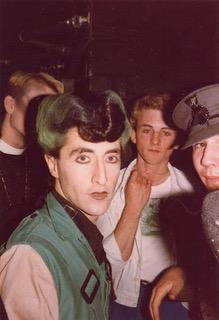 It was good to see Steve Strange’s engaging autobiography Blitzed! (2002) reprinted and on sale at the exhibition. But, it was strange to be reminded of intimate moments with some the club goers after looking at images, or watching videos of them being interviewed. And, I doubt that I am alone amongst the original group in having flashbacks or triggered memories from seeing the material on show. To say there was a lot of kissing and late night interactions between the Blitz Kids would be an understatement. Yet, none of these intrigues are hinted at, and this, my friends, does not constitute history!
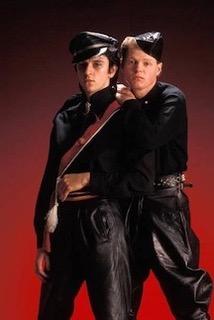
It’s safe to say this exhibition is lovingly curated, but strictly controlled. Of course there were friendships, betrayals, competition and plenty of flouncing with feather boas and fox furs. Glimpses of the club’s wild side are seen in Duggie Fields’s exciting photography and heard in snippets of the music. The wildly beaten congas on Spandau’s To Cut A long Story Short or the sheer perfection of Grace Jones’s tracks Great Dark Man (GDM) or Warm Leatherette or Pull Up to my Bumper were conducive to creating the other kind of heat as well as the heat generated by the hours of lurching dance movements clothed in layers of ruffles, leathers, tartans, furs, hats and military surplus.
For the Blitz Kids there were no stigmas around the same sex dancing together or kissing each other. In fact if you hung out exclusively with friends of the same sex, the assumption was that you were gay, which was not always the case. I was experiencing myself as a free spirit liberated from any prejudices in tolerant cultural communities; the music scene, even at times in my high achieving school, and especially in nightclubs where there was a celebration of youth, style, courage and sexuality.
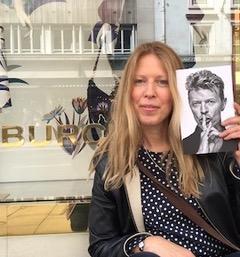 But life is hard and being young is not always easy. And like any other social group many of the Blitz Kids have faced struggles with addictions or chronic physical and mental health issues, which are too often not spoken about or made explicit here. Sadly, young men like little Robert, a side kick of big Robert, who became Marie, and Ross Waring-Adams, a beautiful soul inside and out who dressed as a priest didn’t make it. However, the timing of the exhibition has marked the 10th anniversary of Steve Strange’s death. Other leading lights from the scene have left us relatively early too, including David Bowie in 2016.
The Blitz was a small, but mighty nightclub, so perhaps it is fitting the exhibition is held in what could be described as a bunker of the Design Museum. Although, the long flight of stairs to see it may unsuitable for those with mobility issues. The timeline of this retrospective ends in 1985, but, of course, it didn’t really end there. Because, like most entities built on a creative spark, it is eternal.
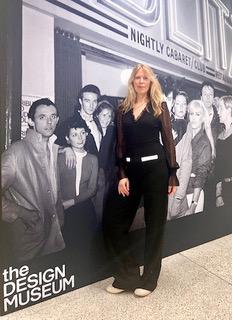 I was not included in this exhibition, which bemused my family and friends, who went expecting to see me as part of the whole spectacle. So, that being the case, I appreciate my schoolfriend referencing me in print as one of the original and inspirational Blitz Kids, who actually was a kid at the time. And, I agree with another schoolfriend’s professor husband who recently remarked, “You peaked too soon,” after hearing stories of my youthful adventures over dinner in New York.
Whilst exhibitions of well documented sociological perspectives of historical people and places are entirely welcome and needed, it may be the role of independent writers to disseminate a more intimate and personal narrative of these histories.
The Design Museum Exhibition runs until 29th March, 2026
Sam in pink by Richard Law, Bill Nighy pics by Jani Moore-Rad, Bowie Post card pic by Sian French, Design Museum pic by Suzi Behl.

Billy Idol and Phil Lynott at the Blitz Club, 1979
.