
Allen Ginsberg’s poem “Howl” is over a half century old now, and it will do us no harm to review the
first stanzas yet again, for the are as vatic, volcanic and visionary as they were when they first saw
print in 1955.The transcendent beauty of an inflamed mind that’s suddenly and completely found an
articulation for the unspeakable has never been captured better. “Howl” was the perfect bit of literary
insanity to appear in a decade where America had collectively laid down and played dead:
I saw the best minds of my generation destroyed by madness, starving hysterical naked, dragging
themselves
through the negro streets at dawn looking for an angry fix,
angelheaded hipsters burning for the ancient heavenly connection to the starry dynamo in the
machinery of night,
who poverty and tatters and hollow-eyed and high sat up smoking in the supernatural darkness of
cold-water flats floating across the tops of cities contemplating jazz,
who bared their brains to Heaven under the El and saw Mohammedan angels staggering on
tenement roofs illuminated
who passed through universities with radiant cool eyes hallucinating Arkansas and Blake-light
tragedy among the scholars of war,
who were expelled from the academies for crazy & publishing obscene odes on the windows of the
skull,
who cowered in unshaven rooms in underwear, burning their money in wastebaskets and listening to
the Terror through the wall,
who got busted in their pubic beards returning through Laredo with a belt of marijuana for New
York.
who ate fire in paint hotels or drank turpentine in Paradise Alley, death, or purgatoried their torsos
night after nigh twith dreams, with drugs, with waking nightmares, alcohol and cock and endless
balls,
incomparable blind streets of shuddering cloud and lightning in the mind leaping toward poles of
Canada & Paterson, illuminating all the motionless world of Time between,
Peyote solidities of halls, backyard green tree cemetery dawns, wine drunkenness over the rooftops,
storefront boroughs of teahead joyride neon blinking traffic light, sun and moon and tree vibrations
in the roaring winter dusks of Brooklyn, ashcan rantings and kind king light of mind,
who chained themselves to subways for the endless ride from Battery to holy Bronx on benzedrine
until the noise of wheels and children brought them down shuddering mouth-wracked and battered
bleak of brain all drained of brilliance in the drear light of Zoo,
who sank, all night in submarine light of Bickford’s floated out and sat through the stale beer
afternoon in desolate Fugazzi’s, listening to the crack of doom on the hydrogen jukebox…
(c)Copyright 2005 The Estate of Allen Ginsberg.
“Howl” is one of the most important and influential poems of the 20th century, and it simultaneously
invigorated free verse with the range of its rage and honesty, and spawned a generation of imitators
who composed indulgent and lazy lines that were more pose than poetry. This is a poem that speaks
from the middle of the century with a voice gorged with collective anxiety and spiritual hunger for an
element that would counter technologized conformity and the loss of authenticity. Its long, Biblecadenced lines have resonated into the century following its debut, and it’s likely that succeeding
generations of disaffected yearners will find the poem’s scalar cry appealing for the way it touches on
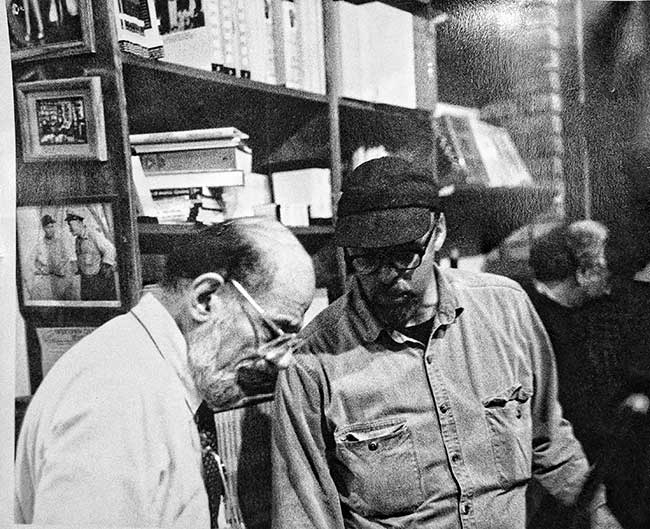
The man in the shot with Allen is Dennis Wills, owner of DG Wills Books
.
Ted Burke
.