
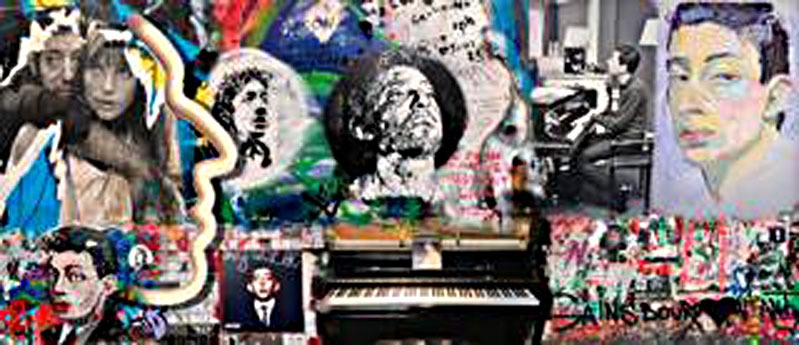
Maison Gainsbourg situated at 5 Rue de Verneuil in the stylish St Germain district of Paris is almost exactly as Serge Gainsbourg, the singer, actor, writer, composer, photographer and director, left it when he died in 1991. Now, the heavily graffitied building serves as his permanent House Museum, where visitors are intimately guided room by room by his daughter Charlotte Gainsbourg, whose sweet tones enter your ears via a headset. Like many French dwellings, it’s a curious mixture of grand elegance and modest simplicity.
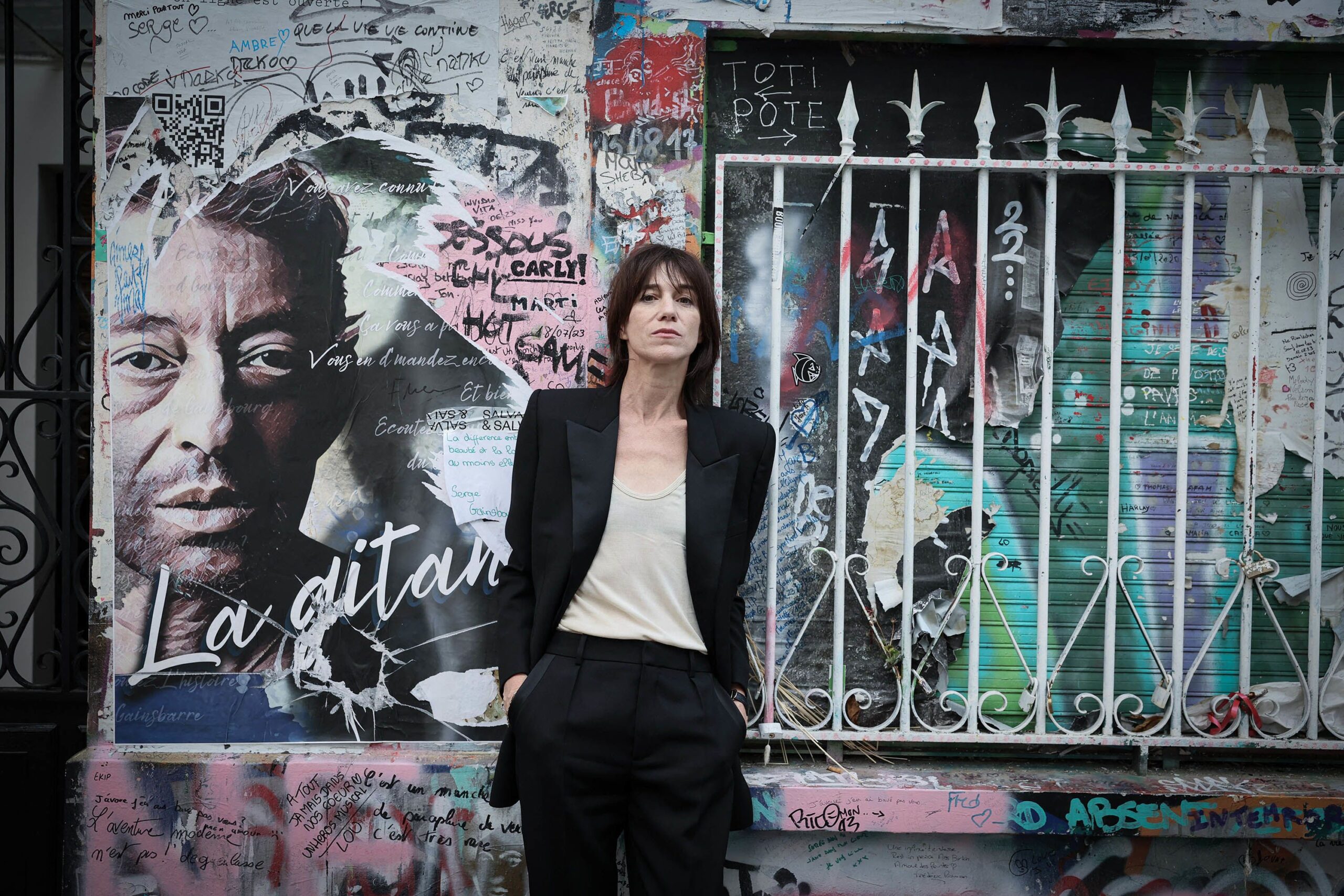
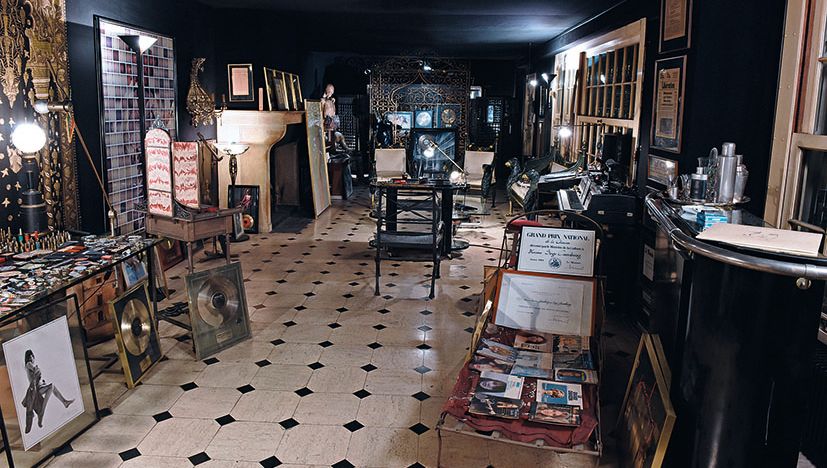
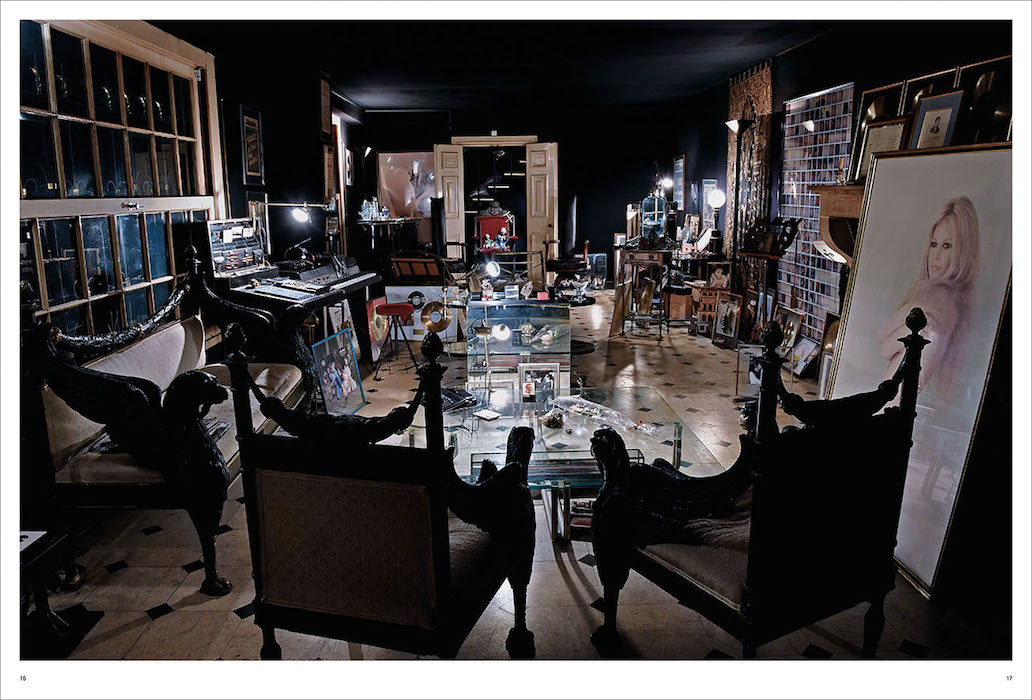
Charlotte invites me to open the black door to the right inside the main entrance and step onto the elegant porcelain tiles of the salon, which runs the entire length of the building. At the far end sits a Steinway baby grand piano, and a smaller upright piano. Closer to me is a portrait of the French icon Brigitte Bardot and a row of gold discs, awarded to Serge for millions of record sales. She confides that her father never taught her to play the piano because he described the experience of being taught by his father as, “torture.”
But, as a result of his musical torture, Serge became the composer of the Eurovision Song Contest winner in 1965, a string of hits for and about Brigitte Bardot, including Harley Davidson (1968) Bonnie and Clyde (1968) and The Initials B.B (1968) with a masterful string section based on Dvořák’s New World Symphony (No. 9). A love song for Jane Birkin on the B side of the multi million selling super erotic pop song, Je T’aime… moi non plus (1969) was inspired by Chopin’s Fourth Prelude from Opus. 28 in E minor.

Jane Birkin (left with Brigitte Bardot) was a British actress, model and singer, who met Serge Gainsbourg on the film set of Slogan in 1968. He was forty, she was twenty one, and it was not love at first sight. She thought he was ugly and he didn’t think she was great looking. By the end of the movie they were infatuated with each other and began a fruitful musical collaboration including the albums Serge Gainsbourg & Jane Birkin (1969) and L’ Histoire de Melody Nelson (1971). The duo continued to work together even after they separated in 1980.
In her insightful auto-biographical Munkey Diaries 1957-1982, Jane Birkin prophetically writes,”So living with Serge in his little house in Rue de Verneuil was delightful but complicated. It was rather like living in a museum. In his salon every object had its place and the children weren’t allowed to touch the piano.”
 Their daughter Charlotte Gainsbourg, born in 1971 is a model and accomplished actress, the winner of two César Awards and the Cannes Film Festival Best Actress Award. In Franco Zeffirelli’s Jane Eyre (1996) she played the title role. She starred in Lars von Triers’s compelling Nymphomaniac I and II (2013), and was directed by her father in Charlotte Forever (1986). As a successful musician with a string of albums, she collaborated with Jarvis Cocker on 5:55 (2006) and Beck on IRM (2010) and Time of the Assassins (2010).
The tiny kitchen at the back of Maison Gainsbourg is reached by the long corridor running parallel with the salon. Here, Serge prepared dinner so he and Charlotte could settle down to watch every single one of his performances on the small black white television in the corner. She recalls her parents often went out all night enjoying the glamorous night clubs of Paris, and her mother happily picking her up from school in the afternoons. Her father, she said, never rose before 1pm.

I am guided upstairs, passing Serge’s capsule wardrobe of blue jeans, white t shirts, black jackets and soft white shoes, but never socks, not even in the snow. Endearing photographs of Marilyn Monroe and the almost otherworldly beauty of Jane Birkin adorn the long passage to the bathroom. Charlotte confides that although scrupulously clean, her father preferred to perform all of his ablutions in the bidet.
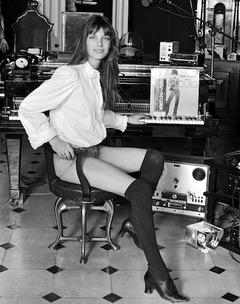
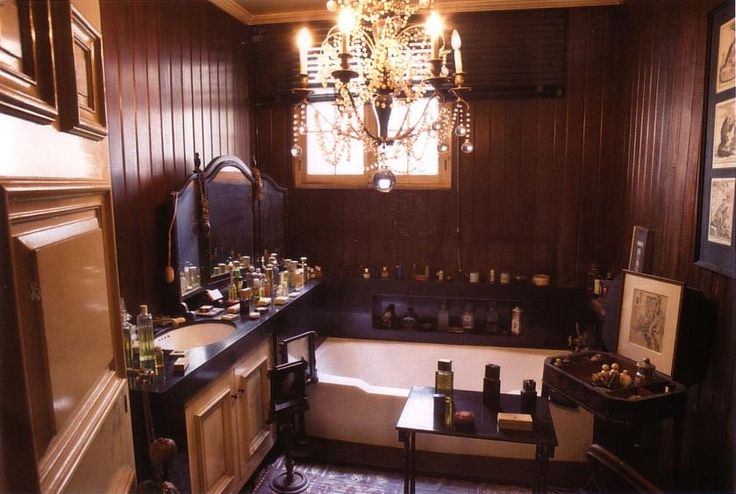
In contrast, her mother loved to jump into the bath with both of her daughters. When she was eighteen Birkin married John Barry with whom she had one daughter, Kate. Barry composed eleven of the James Bond themes, the film scores for Out of Africa (1985) and Midnight Cowboy (1969), and the soulful song Born Free (1966). As a child Charlotte measured her growth by her head getting closer to and eventually touching the glass ball dangling from the Venetian chandelier strung ever so low from the bathroom ceiling.
The house provided an essential part of Charlotte’s education. The family’s fame precluded visits to museums and galleries, so she learnt from the books in her father’s study. She earned pocket money by tidying her mother’s messy wicker baskets, which famously morphed into the iconic Hermès Birkin Bag. After her parents separated, her mother’s topsy-turvy room was used solely to display her father’s collection of antiques dolls, which she found creepy.
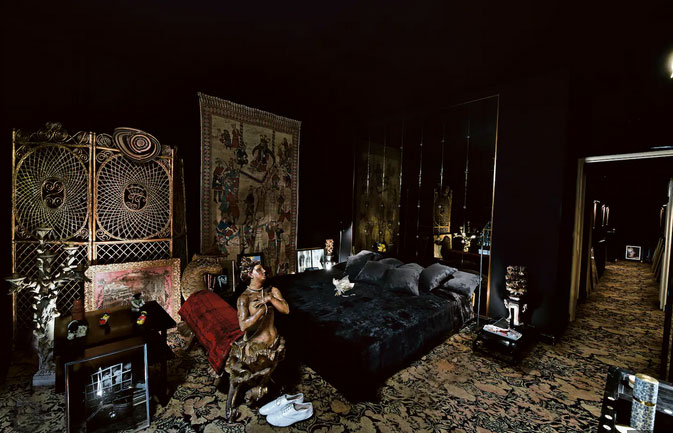
Lastly, I arrive at the bedroom where Serge died in his sleep in 1991. The heavily black velvet clad room has a decorative screen and an ornate Baroque bench carved in the shape of a mermaid reclines at the end of the low, wide bed. This is where his body was embalmed so his family and friends could spend more time with him. Being close to his cold, dead body was better than not having him there at all, Charlotte says.
In life Serge Gainsborough was a prodigiously gifted artist, in private he was delightfully mischievous. He particularly enjoyed the company of the policeman he met on his nightly perambulations around Paris, and liked nothing more than to invite them home for a drink. Then, after hours of conversation, they were invariably persuaded to give him their badge of office, and even on occasion, a pair of handcuffs A long glass table in the living room is laden with dozens of badges, something a gendarme is strictly forbidden to part with.
Museum Gainsbourg
Across the street at 14 Rue de Verneuil is the Museum Gainsbourg, an important aural and visual archive of the life, loves and career of Serge Gainsbourg. This is where details of his  own challenging childhood emerge in a series of eight rare videos he narrates himself. Born Lucien Ginsberg on April 2nd 1928 in Paris to Russian emigres he was forced to wear the yellow Star of David sewn onto his jacket during the Nazi occupation of Paris.
The Ginsbergs fled from the 20th Arrondissement to the relative safety of Limoges in the free zone. Lucien would be sent even further away to a boarding school under an assumed,non Jewish surname. Later, traumatised by the war and plagued by excessive shyness, he turned to alcohol as a source of comfort and confidence. It was in childhood that he acquired a chronic cigarettes leading to a five packs a day habit which certainly exacerbated his heart condition.
Opposite the screens playing on constant loop are glass display cases packed with personal artefacts. The collection of around 450 mementos start with Serge’s early oil paintings, a career he gradually abandoned to pursue music. There are photographs of his parents, his sister, and his twin sister. These images reveal Serge as a beautiful young boy, sweet vindication for the man hounded by a reputation, especially in the Press, of having an “ugly face.”
In 1954 Serge Gainsbourg passed the entrance exam to enter the Society of Authors, Composers and Publishers of Music (SACEM). This proved he was a competent musician, but a hit song was still a way off. During a stint as a cabaret musician he discovered the songwriting talents of the French jazz trumpeter, composer and novelist Boris Vian, who, by his own admission inspired him to write over 550 new, different and interesting songs.
Writing hits for beautiful young women made Serge both successful and very rich. The song Poupée de Cire, Poupée de Son, sung by teenager France Gall to win Eurovision in 1965 had a 4:4 beat and was light and frothy with a new Euro-pop sensibility that paved the way for bands like Abba. He also composed La Javanaise (1963) a charming chanson recorded by Juliette Greco, an album for the actresses Catherine Deneuve in 1981 and Isabelle Adjani in 1983, and wrote Vanessa Paradis’s second album in 1991, amongst many others. The death of Brigitte Bardot, announced this week, will certainly draw attention to the songs Gainsbourg penned for her in the late 1960’s.
It’s a thrill to watch the videos of Serge’s early chansons like Black Trombone (1962), and to learn about his obsession with African rhythms. And, to see the unusual artistic and scientific objects, as well as familiar ones, such as his green military shirt. At the age of 51, he enjoyed a hit with Aux armes et cetera (1979), a sparkling reggae adaptation of the French National Anthem. This song caused something of a sensation, and was followed by two reggae albums. He purchased the original manuscript of the Marseillaise at auction, which is proudly on display.
The ground floor archive ends with Claude Lalanne’s bronze seated sculpture of Gainsbourg’s surreal and conceptual character from his song L’homme à tête de chou (1976) or the man with the cabbage head. This was the same year Gainsbourg released his first movie Je t’aime moi non plus, hailed as both an obscenity and France’s first underground film.
Je t’aime…Moi non Plus

In the basement a temporary exhibition is dedicated to the enduring success of the erotic pop song Je t’aime…. moi non plus, which caused an international scandal when it was released in February 1969. Serge originally wrote it two years earlier for Brigitte Bardot when she requested a magnificent love song during their three month affair. She changed her mind about releasing the recording, mainly over concerns about her millionaire husband Gunter Sachs’s reaction, who considered Gainsbourg an ugly rival.
The rerecording with Jane Birkin’s breathy soprano delivering the sound simulating an orgasm sent the Pope into a spin. The Vatican branded Je t’aime…. moi non plus obscene, and it was banned in Italy, with Britain, Brazil, Spain and Sweden following suit. Queen Juliana of the Netherlands, a major shareholder in the Fontana/Philips Record label exerted her influence to halt production of the disc.
Serge acted quickly to quit his contract with Fontana/Phillips and handed over the recording to independent record labels, including Disc’ Az in France. By October 1969, the 45rpm single had sold three million copies and topped the charts in Austria, Norway, Sweden, Switzerland, and in the UK. A perennial favourite of lovers, sales were estimated at six million copies by 1996.
Birkin and Gainsbourg were the quintessential free spirited romantics, as seen in the charming videos. A few months before she died Jane Birkin’s last performance in January 2023 included a rendition of Jane B, the haunting love song she first performed on the B side of Je T’aime….moi non plus. Despite a vast body of work made apart and together, it was the release of this single that mutually shaped the couple’s lives; in terms of her fame, his financial success, and the forging of an unbreakable connection and a cultural legacy that will resonate for all time.
The Maison and Museum Gainsbourg have been opened to the public since September 2023, with the capacity to welcome around 100,000 visitors per year. The Museum has a book and gift shop as well as an elegant piano bar named Le Gainsbarre after Serge’s alter-ego. This space was designed by the renowned French interior decorator Jacques Garcia and is a perfect place to have a cocktail or dinner whilst listening to music and reflecting upon the intriguing life and loves of Serge Gainsbourg.
Sam Burcher
Collage by Sam Burcher and Andy Watton
.
,