
In a recent article in The New Yorker Alex Ross writes about the recent death at the age of 95 of German philosopher Jurgen Habermass, the last man standing from the Frankfurt School. Otherwise known as the Institute for Social Research, a group of Gernan philosophers which included Theodore Adorno, Max Horkheimer and Walter Benjamin, the Frankfurt School posited the need for a radical approach to the dangers of capitalism which has become known broadly as critical thinking. Ross writes that ‘Max Horkheimer and Theodor W. Adorno saw capitalist society not as the antithesis of totalitarianism but as its more affable, aw-shucks twin. Citizens become commodities; technology increases the power of an already powerful few; pop culture serves up mechanized slop; truth and lies commingle.’ Perhaps the ultimate absurdity of contemporary capitalism is that a white supremacist narcissistic bully has become the world’s first trillionaire. Pause for a moment to consider what this means: a useful analogy in trying to get one’s head around what a trillion dollars looks like is this: a million seconds is 13 days; a billion seconds is 31 years; a trillion seconds is 30,000 years. That a system exists which can enable the accumulation by a single individual of such grotesque wealth is an indictment of how far off-course the human project has strayed.
So what has all this to do with an independent music label based in Belgium trading in short-run cassettes? Is there any validity in claiming that independent artists, who work largely in the margins and have little true reach in a market-oriented world saturated with Ross’s ‘mechanized slop’, form part of a imperative towards resistance to the deluge of meaningless crud that mainstream culture subjects us to? Does anyone hear these cries from the wilderness? Is it enough that such cultural objects as IT itself continue to exist? Is there a drip-drip effect that means all instances of independent arts practice accumulate a steady stream that has even a minor effect? Is this effect felt at large, even if subconsciously? Are we in fact, as many of us in our wildest dream-state moments would like to believe, helping to save the world? And if not, does it matter? Is it enough that we go on doing it, simply for its own sake?
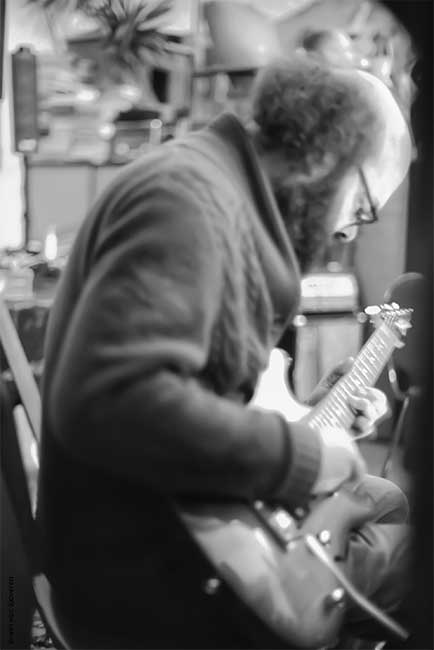
Sloowtapes is run in Belgium by Bart de Paepe, who is himself an experimental musician with an impressive back catalogue. The label releases its artists’ work on cassette tapes. Editions come typically in a run of 70 copies, with artists paid a percentage of those tapes. If experimental music can be understood as those forms that push coventional boundaries – free form improvisation, drones, spoken word – music that trades in the unusual and unexpected – then I think it’s fair to say that Sloowtapes is an experimental label. It features an eclectic mix of artists and ranges from haunting spoken word by Mia Kirski Stageberg to pieces for electric violin by Valentina Goncharova, an album by garage-punk band Tractor and much more besides. No mainstream slop here then.
I caught up with Bart de Paepe online and asked him a few questions.
KR: When did you establish Sloowtapes and what made you decide to use cassettes, rather than the more conventional CD or vinyl LP?
Bart de Paepe: I was listening to a lot of underground music, going to shows around Belgium and was inspired by other small local labels as Audiobot and Imvated. I started Sloow Tapes in 2005. I opted for cassettes because I like the format, it’s relatively cheap and quick to release and it lasts longer then the then prevalent CD-R’s, of which a lot don’t play anymore. During high school I had been taping hundreds of CD’s from the library, so that might have been a source as well. For the first tape I just wrote a fanletter to Keijo over in Finland as I was a big fan of his music and a couple weeks later I found a master recording in my letterbox. Over the years I got more interested in poetry and small publishers like Gerard Bellaart’s Cold Turkey Press, Eddie Wood’s Ins and Outs and René van der Voort’s Counter Culture Chronicles. I’ve worked with them all and felt an affinity with that earlier generation. Some of the poets I released like Simon Vinkenoog, Hans Plomp and Eddie Woods also wrote articles for IT back in the day.
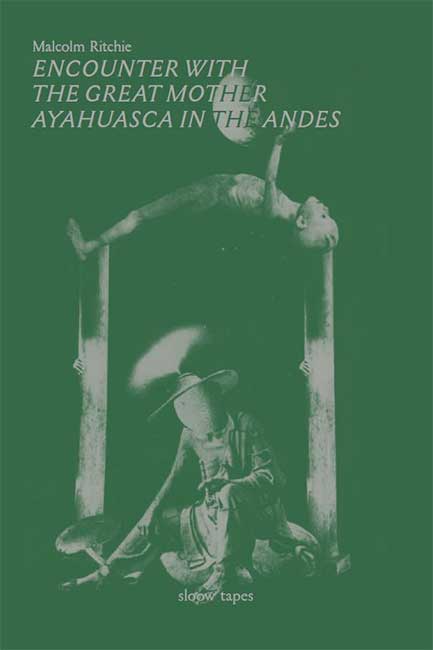
At one point I also started releasing a few LP’s. At first from others (Up Tight, Fursaxa) but later mainly my own music (Ilta Hämärä (with Timo van Luijk), Wendingen 1918 (with Raymond Dijkstra), collaboration with poet/musician Louise Landes Levi etc). I also did a few books (Sloow Tapes discography, John Michell, Malcolm Ritchie…). Only analogue is real, especially since the digital overkill imprisons us all and feeds forgetfulness and I find colour shades much more exciting than the black or white of 1 and 0.
KR: You have a diverse and eclectic range of artists, and your output tends, I think, to defy easy categorisation. What qualities do you most admire about the artists you feature on your label?
B de P: I have to like their music or writings of course; their work has to speak me in one way or the other preferably on a deeper level of existence. They have to expand my consciousness and ways of thinking. I don’t care much about the latest phony hipster or shallow trend.
KR – The artist I am continually inspired by, and of whose music I never get tired, is Miles Davis’ ‘electric’ period between 1969-1975. Do you have anyone who never fails to enthral or inspire you?
B de P – Funny, a few weeks ago I found his At Newport 4CD box at a library sale. It has been on heavy rotation, not all is from his electric period but it’s all fantastic [Author’s note: I agree]. I don’t have anyone that comes to mind, but I used to listen constantly to Popol Vuh, Embryo and Pentangle. Nowadays I always seem to return to alternative/indie rock from the eighties and nineties at 6 in the morning after a haemorrhage dose of heavy weirdness and various fractal entropies.
KR: A quick AI-enhanced Google search for Sloowtapes brings up ‘cult label'(!). How would you respond to this?
B de P: I can live with that! Mostly cult outside of Belgium then as there’s little support to be expected in these boring and tiresome backwaters.
KR: Do you think independent or outsider art is a response to mainstream culture? If so, can it have an effect on the mainstream, or do they exist entirely apart?
B de P: The mainstream must have its food and has been cherry-picking from independent culture for a long time, though always with the necessary modifications of course. Once recycled and appropriated it loses interest and it hunts its next victim.
KR – How does one buy a Sloowtape?
B de P – Email me!
PS – I was introduced to Sloowtapes by David Erdos, who writes frequently for IT. His tape, Divided by One, features Erdos reading his own poetry. The writing is spare, lean and keenly focused. The track Of Another London conjures a vision of early-morning London caught in a kind of timelessness. The poem celebrates the history of contemporary literature in a place of legend and ancient history combined, sometimes uneasily, with the many foibles of contemporary living; his appreciation for his beloved home town shines through. You can listen to it here: https://soundcloud.com/sloowtapes/david-erdos
.
Keith Rodway
Sloowtapes on Soundcloud: https://soundcloud.com/sloowtapes
On Bandcamp: https://sloowtapes.bandcamp.com/
To buy a tape, contact Bart de Paepe here: https://sloowtapes.blogspot.com/
.
Deeply fascinating article/interview by Keith Rodway with Bart of Sloowtapes, whose output in different forms looks fascinating. I look forward to subverting the digital patriarchy with my cassette copy.
Comment by Neil Partrick on 21 July, 2026 at 11:37 am