
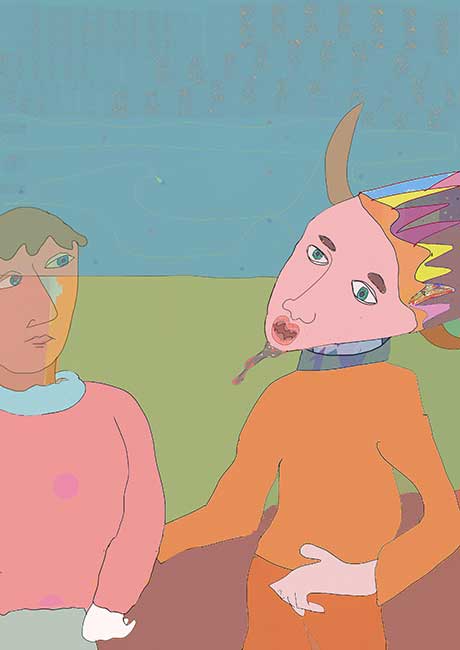
Satanism in dance music is less a coherent religious movement within the scene and more a recurring aesthetic and symbolic language, which has provoked cultural controversy that since electronic music’s underground origins. It appears in visuals, lyrics, performance art, branding, and media narratives, often blending real occult philosophy and shock imagery from within the broader tradition of transgressive art.
Transgressive art is never an exception to culture, it is one of its most reliable
constants, endlessly resurfacing wherever societies draw their brightest lines and
dare people to step across them.
– Dr. Sabine Turnbull, The Devil’s Dance: Sound and Symbolic Transgression
Dance music culture – especially its earliest forms in acid house, techno, and rave – developed in opposition to mainstream social norms. In late-1980s and early-1990s Britain and the United States, underground parties were often framed by authorities and tabloids as sites of moral panic: drug use, sexual liberation, and “decadence” were frequently exaggerated into narratives of chaos or corruption. Within that climate, anything visually provocative, such as pentagrams, inverted crosses and ritualistic imagery, was quickly associated with “Satanism”, whether or not any religious belief was involved. Much of it functioned simply as rebellion-by-symbol rather than doctrine or theology.
In modern electronic music, especially darker subgenres like industrial techno, dark techno, EBM (electronic body music) and certain strands of drum’n’bass, occult symbolism is often used as a design language, used to inform ritualistic or ceremonial stage design and visual branding. Lyrics often refer to demons, chaos and forbidden or occult knowledge and the music often contains samples of Latin chants or decontextualised liturgical samples. For most artists, these elements are not expressions of literal Satanic worship. Instead, they function as metaphor: rebellion against authority, exploration of taboo or an aesthetic alignment with darkness, power, and mystery.
The darkness in dance music isn’t about evil. It’s about removing daylight from
the equation.
– Lena Korr, sound artist
Electronic music is deeply tied to identity-building, both for artists and audiences and provocative imagery helps differentiate performers in a saturated scene. In this context, “Satanic” themes often overlap with broader marketing strategies that emphasize danger, intensity, or extremity. Record labels and bands in darker techno scenes, for example, sometimes adopt ritualistic branding to signal the fact that their music is mechanical, hypnotic and aggressive. The imagery is less about religion and more about atmosphere and experience.
From the early rave era onward, the media has repeatedly viewed dance music subcultures through moral panic lenses. In the 1990s, UK tabloids frequently linked rave culture to “devil worship” or “Satanic rituals”, especially when reporting on illegal warehouse parties. This echoes earlier cultural episodes such as the “Satanic Panic” of the 1980s in the United States, where youth culture, music, and games were sometimes accused of occult activity without substantial evidence. In dance music, these claims often collapsed under scrutiny, but the association stuck in the public’s imagination.
While most electronic artists using occult aesthetics are not practicing Satanists, there are exceptions where individuals draw from structured belief systems such as LaVeyan Satanism or broader esoteric traditions. Even then, these beliefs are usually personal philosophies rather than collective movements within dance music scenes. It is therefore important to distinguish between:
• Symbolic Satanism: the visual or thematic use of satanic imagery for artistic effect.
• Philosophical Satanism: individual belief systems emphasizing self-deification or anti-
dogma principles .
• Pop-cultural Satanism: the media-driven labelling of anything dark or controversial.
Most “Satanism” in dance music falls into the first category.
“Satanism” isn’t belief, it’s architecture. It’s how we build spaces where normal
rules stop working.
– Maya Grant, owner of Hell’s Gate
Electronic music, particularly in club environments, often emphasizes repetition, hypnosis, and altered states of perception. Dark or occult imagery complements this experience by reinforcing the dissolution of identity and encouraging a loss of control or ego to allow participation in ritual-like communal experience on the dancefloor and emotional catharsis facilitated by intense experience. Here we can see that “Satanic” aesthetics are less not about “evil” but more about liminality, the crossing of psychological or emotional thresholds.
Satanism in dance music is primarily expressive, not doctrinal, making use of cultural and artistic motifs and well-established occult symbolism, to heighten atmosphere, challenge norms, and explore the boundaries of human experience on the dancefloor.
We don’t worship anything. We just amplify the parts of humanity that polite
society tries to edit out.
– Kira Nox, industrial techno artist
(from Episodes from an Alternative History of Music)
.
Jonathan Sinclair
Picture Nick Victor
.