
Sam Burcher explores one of the world’s most iconic songs at The ABBA Museum in Stockholm.
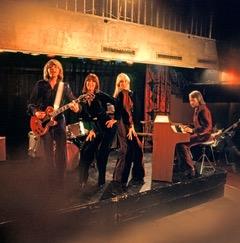
ABBA recording Dancing Queen
Who doesn’t love the songs of ABBA, and in particular Dancing Queen released in 1976. The contrast of innocent yet seductive verses and the dynamic soaring chorus driven to stellar heights by the pure voices of Agnetha Fältskog and Anni-Frid “Frida” Lyngstad evokes blissful memories of first dances, first loves, and the carefree excitement of boogying under the disco lights.
When Benny Andersson played the backing track of Dancing Queen, its working title Boogaloo, to Frida she was so moved that she burst into tears. She later said, “I knew it was absolutely the best song ABBA had ever done.”
Composed by Benny, his songwriter partner Bjorn Ulvaeus, and their manager Stig Anderson, the song’s sophisticated piano lines and melodies were strongly influenced by the 1970’s American disco craze and borrowed influences from the US producer Phil Spector’s layered “wall of sound” musical arrangements.
Not surprisingly, it reached the top of the Billboard charts becoming ABBA’s only number one in America, and was inducted into the Grammy Hall of Fame in 2015. Dancing Queen hit the top spot in the UK, as well as fifteen other countries.
ABBA premiered Dancing Queen on June 18th, 1976 at the Royal Swedish Opera House Gala to celebrate the wedding of Carl XVI to Silvia Sommerlath the following day. It was the first wedding of a ruling monarch in Sweden since 1797, so required a special song. The Swedish royals were not the only ones to appreciate it, apparently it was a favourite of Princess Diana. Frida reprised a semi-acapella version for Queen Silvia’s 50th birthday celebrations in 1993.
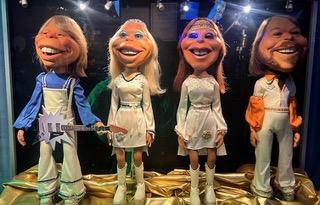
Abba’s Spitting Image puppets photo by Sam Burcher
In the UK, manager Stig released the folky Fernando to follow up Mamma Mia, holding Dancing Queen back until late summer of 1976. It has since been streamed 275 million times in combined audio and video streams, and racked up 2.5 million singles sales and 260,000 downloads (Official Charts Company). In April 2024 BBC Radio 2 listeners voted it their ultimate ABBA song, with tens of thousands of votes cast by fans.
On October 11th, 2026 the ABBA Museum in Stockholm celebrates Dancing Queen’s 50th anniversary with a special exhibition. Housed in the basement of the Pop House headquarters, the museum first opened in 2013. Pop House is the music investments company founded by Bjorn Ulvaeus to operate virtual Avatar concerts, for example ABBA Voyage at a purpose built arena in Queen Elizabeth Olympia Park in London where the band appears to be physically present as their avatars perform with a live 10-piece band.
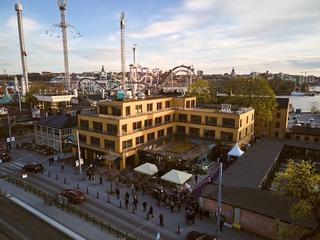
Abba Museum Pop Art Headquarters
ABBA split in 1982 with the girls pursuing successful solo careers and the boys continuing their songwriting partnership. The avatars were created so audiences could see them perform their greatest hits as they looked and sounded in their prime. The projections are not holograms, but rather 2D digital projections rendered from 3D digital models created with motion capture technology, and advanced CGI animation developed alongside George Lucas’s (Star Wars, Indiana Jones) special effects company Industrial Light & Magic.
The band reformed for five weeks in Stockholm in 2020 under the gaze of 160 cameras wearing full body motion capture jumpsuits and helmets embellished with reflective markers to capture every body movement, facial expression and gesture. Recordings, photos and videos from the 1970’s made up the rest of the data.
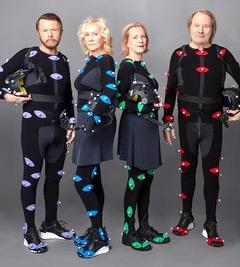
ABBA in Motion Capture suits
Downstairs in the museum there’s an opportunity to perform with the “ABBAtars,” as the band prefers to call their digital doppelgängers. My performance of Mamma Mia, although greeted with enthusiastic applause and wows from the small audience of parents and kids, only proved how difficult co-ordinating song and dance really is, and renewed my respect for live performers.
Aside from technical innovations, this dedicated collection provides a fun and informative display exploring a rich seam of traditional archive material tracing the timelines of each band member, born in the mid-1940’s, with the exception of Agnetha, born in 1950, and the diverse musical paths leading them to each other.
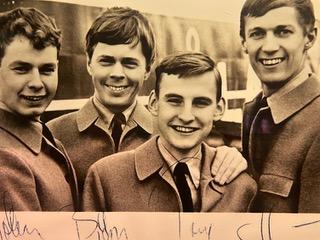
Bjorn doing National Service
Despite receiving “nil points” from the British judges, ABBA’s triumph at the 1974 Eurovision Song Contest with Waterloo immediately garnered international success. They would later receive The Special International Ivor Novello Award from the British Academy of Songwriters, Composers and Authors.
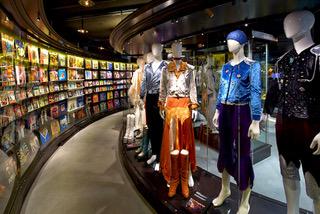
Abba’s costumes for Waterloo
The basement walls lined with innumerable gold discs represent subsequent sales of 150 million albums worldwide. And, the presence of many original and remade sumptuous stage costumes are a reminder not only of wonderful songs and performances, but also of the svelte physiques of all four band members.
The word museum from the Greek for muse is a good fit for the combined legacy of Agnetha, Bjorn, Benny and Anni-Frid aka ABBA, and a fitting tribute to a band from a non-English speaking country which inspired listeners worldwide, and to the music that lives on, evolving and bestowing new meanings to new generations.
Dancing Queen is the finale of ABBA’s Voyage and remains a source of unfiltered joy and happiness, filling dance floors to this day. Agnetha recalls, “I found the song so beautiful. It’s one of those songs that goes straight to your heart. It’s often difficult to know what will be a hit. The exception was Dancing Queen, we all knew it was going to be massive.”
50 Years of ‘Dancing Queen’ exhibition
Pophouse Exhibitions & Abba The Museum
The exhibition opens at ABBA The Museum in Stockholm on October 11th 2026.
Pophouse Exhibitions & Abba The Museum
The exhibition opens at ABBA The Museum in Stockholm on October 11th 2026.
.
,