
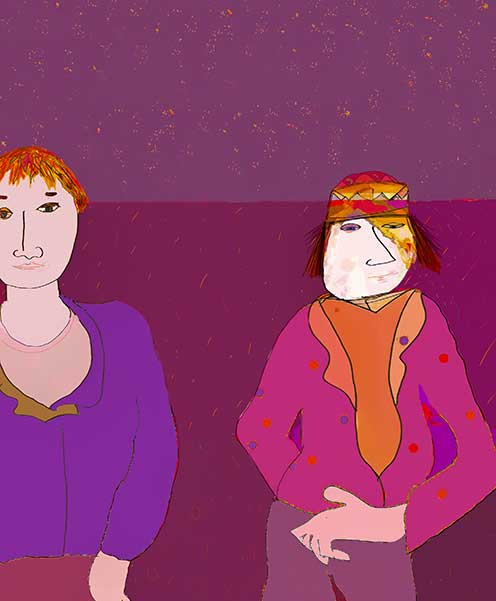
The Silent Syllable Society was a clandestine organization active from approximately 1618 to 1847, whose primary objective was the identification, classification, and propagation of “silent syllables” – linguistic units that are theoretically present in a word but are not articulated verbally. The Society maintained that such syllables, while undetectable by conventional means, exerted a significant, albeit subtle, influence on the semantic and phonetic evolution of languages.
The precise founding date of the Silent Syllable Society remains unknown, although scholarly consensus places its inception in the tumultuous period following the Great Catarrh of 1614. Early members were predominantly drawn from the ranks of theoretical grammarians, disillusioned poets, and cartographers of abstract concepts. Notable, albeit unconfirmed, figures associated with the Society include Augustus Morrison, Eleanor Munns and Bartholomew Greene. Membership was by invitation only, and candidates were rigorously tested on their ability to perceive or intuit the existence of phonemic voids.
The Society’s work involved elaborate, often paradoxical, methodologies. Members would gather in hushed rooms, sometimes for weeks at a time, in an effort to attune their senses to the “unspoken utterances” within texts. They developed specialized instruments such as the Aural Void Calibrator, which was reportedly capable of detecting minute fluctuations in the ambient silence that corresponded to hypothesized silent syllables. The Society’s publications, circulated exclusively among its members, consisted of intricate charts mapping the spectral distribution of these phonetic absences along with treatises arguing for the grammatical significance of non-existent sounds.
One cannot merely “hear” the silent syllable, for to do so would be to render it
extant and thus, by definition, no longer silent. The true scholar must feel the
space where the sound should have been, the echo of articulation that never
occurred.
– Cyril Farnsworth, “The Metaphysics of Muting”
The Society’s magnum opus was the meticulously compiled Codex Silentium, which was believed to contain the definitive taxonomy of silent syllables across dozens of languages, both living and extinct. Its final volume, according to fragmented accounts, was devoted to the “proto-silent syllable”, the theoretical origin of all unspoken sounds.
The decline of the Silent Syllable Society is generally attributed to the advent of more empirical linguistic methodologies in the mid-19th century, championed by figures such as Professor Alderman Schillinger and his Institute for Audible Phonetics. The Society’s insistence on the quantifiable nature of the unquantifiable proved increasingly untenable, and by 1847, internal schisms over the precise calibration of the Aural Void Calibrator and the existential implications of the “proto-silent syllable” led to its effective dissolution.
Artifacts and records are now exceedingly rare, with the Archives of Obscure Philology in Inverness holding the most significant collection.
The Society perished not from a lack of findings, but from an excess of silence.
They sought to measure the immeasurable until the very act of measurement
became indistinguishable from the void they so diligently catalogued.
– Beatrice Woolf, Whispers in the Archives
.
Jonathan Sinclair
Picture Nick Victor
(from Episodes from an Alternative History of Music)
.