
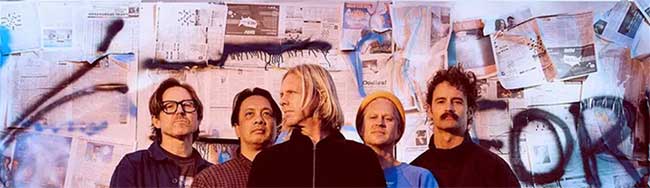
Forever Now by Switchfoot (By Design Music/BMG, 2026)
In Bloom by Jon Foreman (John Mark Foreman, 2024)
The Long Surrender by NEEDTOBREATHE (MCA Nashville and Drive All Night Records, 2026)
In 2002, the film A Walk to Remember gave my family something we could all enjoy. A successful chick-flick with upcoming singer and actress Mandy Moore in the central role, the film explored the transition from teenage to adulthood whilst being set to a soundtrack by alt-rock band Switchfoot.
The film’s production team felt the band’s earnest melodic rock matched the emotional tone of the teen romance well and unusually used four songs by the then relatively unknown band prominently in the movie. Songs like ‘Dare You to Move’ and ‘Learning to Breathe’ – ‘The tension is here / Between who you are and who you could be’, ‘I’m learning to breathe / I’m learning to crawl’ and ‘I dare you to move / Like today never happened before’ – connected closely with the mix of experimentation and insecurity that characterises adolescence.
A contract with Columbia and a classic album The Beautiful Letdown with two hit singles followed the film. The transition from semi-obscurity to mainstream promotion was essentially made possible by the melodicism and emotional heft of their songs. The result for my family was music for car journeys which was enjoyed by all.
Earlier this year, Switchfoot released their 14th studio album Forever Now which loops back to that initial period of success in at least two ways. First, the band wanted to channel the spirit that initially inspired them to pick up guitars by delivering a louder, more guitar-driven record, one that reconnects with the sound of The Beautiful Letdown. ‘We wanted to make the record that Switchfoot alone can make,’ lead singer Jon Foreman said. ‘The kind of record that the 14-year-old version of us would flip out about.’
Second, the track ‘Beautiful Life’ features the recall lyric ‘I’m still learning to breathe’, which directly echoes the title track of their second studio album from 2000, Learning to Breathe; a track that featured in A Walk to Remember. This line finds singer and guitarist John Foreman telling the same foundational story of perseverance decades later with newly gained perspective. The song is an intense vehicle for self-reflection about the breadth and quality of one’s life with the album, as a whole, built around a central question: ‘If you knew today was your last, how would you live it? What would you do?’
Forever Now is the most thematic and narrative-driven album of Switchfoot’s career centring on the emotional roller coaster of a person’s final day on Earth and the questions one might ask if confronted with that harsh but potentially enlightening reality. Born from an intense and highly emotional period of songwriting, musical discovery and keen cultural observation, the band drew inspiration for these songs from notable novelists, such as Leo Tolstoy and Fyodor Dostoevsky.
Foreman explains: ‘It feels like the modern musical experience is “If it didn’t happen to you, you shouldn’t be singing about it”. When I read Dostoevsky, I’m reminded that all those characters, they are him, those are his inner voices fighting it out. That was a big revelatory moment for me – to be able to say “Why couldn’t I do that in a song? Why couldn’t I have this same representation and drama with characters in a song?”’
The album’s central character, Benjamin Crow, is listening to voices at the end of the line wondering ‘Which of these voices is mine?’ (‘Wake Up, Mr Crow’). He is mourning the world of mourning into which he was born (‘Same Blood’) and can’t accept that we were meant to fall away (‘Natural Causes’). He wonders if someone outside him could become his absolution (‘Absolution’) and asks that he be shown what his broken wings are for (‘Broken Wings’). He sings broken songs like a candle, like a prayer, to be met in the darkness (‘Darkness’).
Foreman has described the album as one that ‘is framed by the tension between mortality and presence, and by the ways modern life keeps pulling people out of the moment they’re actually living’: ‘We’re never promised a tomorrow. We’re only promised today. Our mind is tempted to live in the regrets of the past, or the fears and projections of the future. We’re tempted to live in other places, through other lives, looking at our phone, watching other versions of existence flow by, distracted from the ever-present reality that’s in front of us.’
This thinking seems to have spilled over from Foreman’s most recent solo album In Bloom: ‘I have no idea how old I will be when I die, most likely, I’m about halfway there. Time is the avalanche I’m riding down the mountain: out of control and gaining speed. The kid I was before is getting harder and harder to reach. I’m still him, and he’s still me… but not quite. And yet, THIS moment, right here and now – THIS is the ever-present now. Available now and briefly. The future and the past are ghosts and phantoms – they haunt me with regret and fear, anxiety and shame. And yet, the past and future are spaces where I cannot act. Fortunately, each day has enough worries of its own. The “here and now” requires my full attention, and my presence can only be present in this moment alone. When is the present mine? When I am present to it. Garden be my teacher. Sun. Moon. Soul. New leafy growth. The flowers, the birds, even my children- they are unencumbered by future fears or past regrets. They are fearlessly unassailable to the ghosts and phantoms of tomorrow and yesterday. Alive to the moment alone! And my prayer? To be present. Here and now. Available to a beauty that transcends my desire for control.’
Foreman sought to practice this prayer in the production of this album. After his departures album, he intended to release another album titled arrivals, but the attempt to create it kept running away from him. Instead, new and different songs were coming to him; ones that didn’t quite fit with the record he set out to create. So, he decided to begin on the new road that seemed to be offering itself to him and embraced the unknown while fresh songs poured effortlessly out of his mind. Letting the music lead the way, Foreman felt the melodies and lyrics were coming to him like flowers, delicate and intuitive. In Bloom was written in the present, moment by moment, and embraces mortality, limitations, and the ever-present mistakes of the everyday.
The record saw Foreman lean into the everchanging nature of being and becoming: ‘In Bloom is the album that I wasn’t trying to make. It’s a flower that came to me, unasked. In Bloom is an album that celebrates the unexpected gift of the moment. The cover photo and the songs themselves feel like gifts. This record is full of honest, humble, surprises that came to me while I was busy chasing a different arrival. Rather than obsessing over a future, static destination, may this album represent an entirely different pursuit: to stay present to the present to the ever-present gift of the moment along the way. Like a wildflower, may these songs bring you beauty and joy as you travel along your journey.’
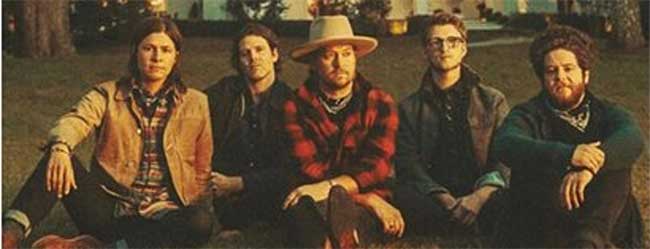
Switchfoot have been part of a generation of bands, including Lifehouse and NEEDTOBREATHE, whose lead singers and main songwriters have each developed solo careers to explore different styles of music to that for which their bands are principally known. Switchfoot have in the past collaborated and toured with NEEDTOBREATHE, a band who have achieved similar levels of success through their own distinctive blend of Americana, alt-rock, and spiritual depth.
NEEDTOBREATHE’s lead singer Bear Rinehart has spoken of their latest album The Long Surrender in terms that equate to Foreman’s experience on In Bloom: ‘This record’s different from any other because we didn’t set out to actually make one. I think the album actually found us at a time we really needed it. The whole process of the record was surrendering to the process, surrendering to all sorts of things going on in our lives. It felt like everyone worked really hard to drop their own ego or preconceived ideas, and not force songs to fit in some sort of plan. Instead, we all felt like the record was a gift that wasn’t ours to control.’
He expanded further saying he ‘was just writing in a therapeutic way, trying to get my head around what I wanted my life to look like going forward’: ‘There’s always been a guardedness as far as how personal I get in the songs, or how overtly I express certain things, but this time I was writing everything down as I was going through it. It felt like the songs were coming from a different place, and where we ended up almost feels like a whole new band.’
The album developed at a time when two of its members were on a journey to sobriety, at the same time that one was also dealing with the death of his father. These experiences influenced the songs in profound ways. Rinehart has said: ‘It’s like the first day of AA. It’s saying, “I have a problem. And I can’t do this alone.” I think the perspective on the record is a little bit like that. But yes, I do think the world has been absolutely crazy, and so much, culturally, has been about the “self.” So it puts this crazy pressure on everyone to somehow fix the problem.’
The album is a cry for help that begins with the recognition that we are ‘Trading our love for a little wild lightening wondering why it never soothes the pain’ (‘Highlands’) and resolves ‘in this life there will be trouble and there’s no time for us to mourn / So strike a chord, sing a song and spread the ashes’ (‘Spread the Ashes’).
Rinehart concludes that: ‘Surrender isn’t something you go into on a whim. It’s normally the last thing you try when you reach the end of yourself. That really is where the record came from. We feel like freedom was closer than we realized, but it took us getting out of the way to see it. It’s one of those things that appeared the minute we admitted we couldn’t find it on our own.’
As a result, like Switchfoot who have said the songs on Forever Now are ‘incredibly meaningful to us’ and are ‘increasingly relevant in the “strange, strange times” we live in’, Rinehart hopes ‘that this record brings rest to people navigating the strangeness of the world’: ‘I feel like there’s a lot of people who feel lost or overwhelmed, but haven’t felt seen. That’s one of the many powerful things about art. It gives our stories a place to overlap.’ On this occasion, it is the inspirations and songs of these two bands that are overlapping.
.
Jonathan Evens