
Walls and Windows, 20 August – 6 September 2026, The Minories, Colchester
Essex has been described as England’s most misunderstood county. Known today principally for the stereotypes of ‘Essex man’, ‘Essex girls’, TOWIE, ‘Gavin and Stacey’, and support for Clacton’s MP, Essex nevertheless has an alternative life and history. From Jonathan Meades’ visual essay The Joy of Essex to Radical Essex, a project of Southend’s Focal Point Gallery, attempts have been made to dig below the surface of the county, a surface which is often only skimmed.
Since 1956, The Minories in Colchester has been an alternative space in the County by being a welcoming venue where artists and creative minds can connect and thrive. The gallery seeks to serve as an incubator for new ideas, allowing audiences and artists to explore without judgment. Their aim is to foster a more connected Colchester where creativity can flourish and their vision is one of empowering their communities ‘to access the life-changing power of art’
Walls and Windows is part of The Minories’ Emerging Curator Residency, which provides an opportunity for a curator at the start of their career to develop their practice. That curator, Antonia Layzell, has taken the opportunity to create an exhibition which has the aim of divulging ‘forgotten viewpoints of mythology, lost to us through the demonizing of women and animals,’ as a bid is made ‘to reconnect the lost heritage of our Anglican tribal communities’. It’s an ambitious vision and one which aims to scratch beneath stereotypical surfaces. Layzell is involved with Chalice Gallery, an artist run gallery in Sudbury, Suffolk, and Walls and Windows includes several artists associated with that initiative.
The exhibition features a selection of artwork exploring the theme of empowerment. It asks viewers to reflect on how abuse and selfish acts of non-consensual violation of land and bodies have ruptured our ability to stay tuned to nature, and, in doing so, separated us from the birthrights all living beings have, to know and navigate the fabric of the world around them? As such, it seeks to reopen the vistas of our mind, after trauma has caused us to shut off, with several works in the exhibition revisit historical or mythical stories to reinhabit or retell them from alternative perspectives.
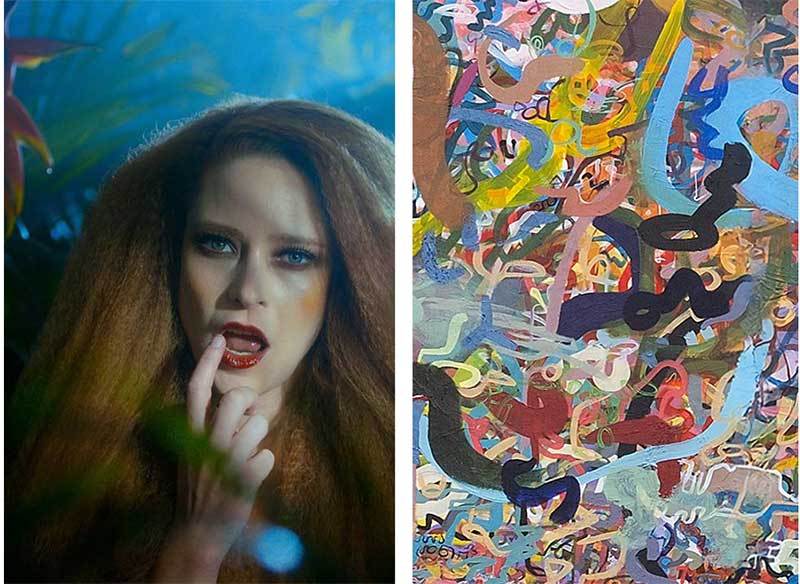
The (Un)Holy Trinity by Laura Jean Healey, draws inspiration from three legendary ‘fallen’ women from Biblical times, Eve, Lilith, and Salome, who, through their supposedly ‘unwomanly’ acts of defiance, aggression, or desire for autonomy have been demonised throughout the ages, serving as a warning of the destructive nature of unchecked female sexuality. The three filmed performances explore these so-called ‘fallen’ women in their moment of defiance to both challenge the male gaze and to question the demonised perceptions of the so-called “unnatural” woman.
Visual artist and filmmaker Healey uses the visual language of cinema to create large cinematic installations that explore the nature of the cinematic experience. In particular, she examines the camera’s inherently voyeuristic ‘male’ gaze, the role and objectification of women within art and film, and the desire such representation raises within the spellbound spectator. The films seek to force the audience to question why these ingrained perceptions still exist today.
Rebekah Wallace and Caryn Hoad have both created sculptural pieces inspired by the story of Boudica. Wallace’s The Flogging uses raised ridges on a leathery canvas to show the body’s memory of violence rendered as a terrain of endurance. Hoad’s They Made a Warrior – From the series Broken explores, through the jagged edges of the woman’s torso which suggest a world torn apart, the hidden strength that can arise when love, loss, and survival collide.
Dennis Coote works in an abstract and expressionist form verging on surrealism. He attributes titles – here relating to Biblical stories, Garden of Eden or Mary Magdalene – to his paintings as an initial mechanism to open the door for the viewer to engage with and explore the piece. He intends for the viewer to follow the work in front of them in a way that relates to or stirs something within them, deliberately leaving his own attributions loose.
Imaginative journeys, such as those prompted by Coote’s paintings, are a further response to the theme and feature in the work of Nico Harbridge and Wyn Haythornthwaite, in particular.
True North by Harbridge, is a series of constructed paintings made from scavenged materials found in her natural environment, that guide us home through a process of reorientation with nature. Through her images, we are invited to go North, South, East and West; to remember what has been forgotten, to inhabit our lives more fully, to awaken us to new possibilities, and to go into the depths of the soul. By engaging with these elemental directions, her work encourages a deeper sense of belonging, connection and place, revealing ways in which the outer landscape can mirror and enrich our inner lives.
Haythornthwaite’s images show us the journey of transformation undertaken by a small tortoiseshell butterfly and the world of conscious dreaming found in retreat at the end of the Wirrikuta pilgrimage route in the desert of San Luis Potosí in Mexico. Her work is about journeys that are both meditative and visionary. The spirituality and mystic symbolism in her work enables the viewers imagination to flourish.
The work of Peter Day, self-taught artist, sculpturer, engineer and welder, sums up what this exhibition seeks to achieve. His work, which is influenced by his experiences, nature, and a contemplative view of the world around him, offers introspective twists on how we interact with others around us and our inner self.
Mythos explores the invisible stories that shape who we are. Formed by hundreds of intertwining lines, the sculpture evokes a web of memory, ancestry, belief and imagination. Each strand follows its uncertain course, yet contributes to a greater whole – a reminder that identity is not singular but woven from countless narratives passed through generations. The stories we tell ourselves shape our identities and set parameters for what we achieve. Our narrative is often influenced by external forces and when negative can limit what’s possible.
Harmony is a reflection on our need to balance our inner spirit and ego. Our spirit allows our expressive and creative side to explore and experience the world around us, while our ego is there to protect the body, maintaining control through practicality and distracting us from the spirit.
The exhibition suggests that we all map and journey out in the world from the point at which we are born. Our sense of belonging and how we navigate correctly is based on the encounters we have with other beings and the relationships made. When our right to be at peace on our land is disrupted or taken away, we are traumatised and this destroys our bearings and ability to navigate the bigger whole. This exhibition seeks to restore us to ourselves, to one another, and to the world around us.
.
.
Jonathan Evens
The image shows Laura Jean Healey’s Salome, 2020 and Antonia Layzell,s She Who
Bore It, 2021.
.