
September 1967:
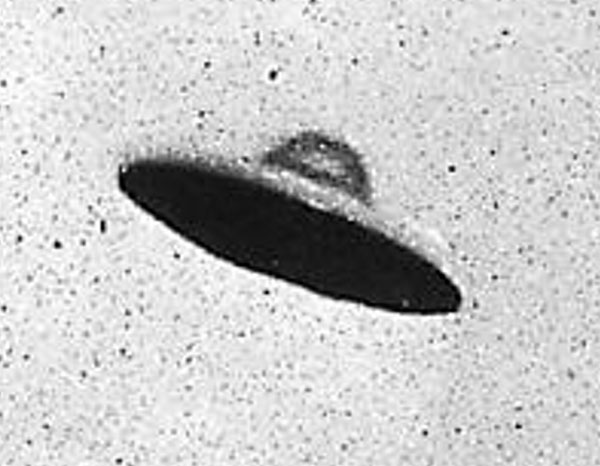
six flying saucers landed in the south of England.
It was raining, as I remember it, but then
it always looked as if it were raining
on our black-and-white TV.
Constables in their long, dark coats
and standard-issue custodian helmets
cordoned off the landing sites,
stood guard. Square-eyed, we watched,
wondering what would happen next.
Only a few weeks before, Jocelyn Bell Burnell
had discovered pulsars: stars that go bleep
in the night. And here were flying saucers
going bleep, bleep. The power of association.
Harold Wilson had been told.
For several hours it looked as if it might be
a threat to the British Way of Life, to
Sunday dinners, Puppet on a String,
Peter Purves and Petra, World Cup Willie,
war films on wet weekend afternoons.
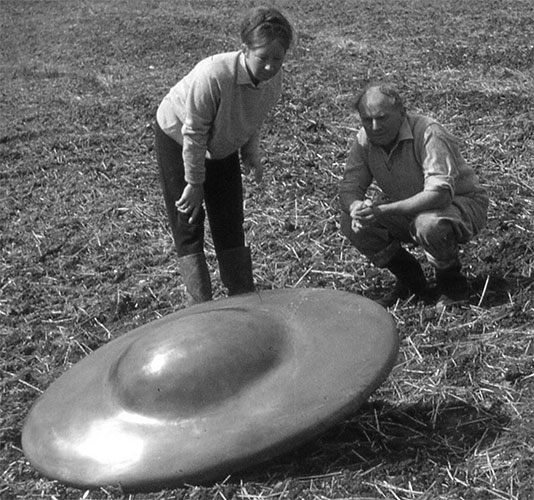
One had landed in a field near Chippenham.
Ever mindful of interstellar relations,
the authorities decided to blow it up
with plastic explosive, demonstrating by so doing
that they had no more idea what to do in such a crisis
than the director of X the Unknown
(although, to be fair to Leslie Norman,
at least he knew how to get people
to stand in the right place). It was an act of war, only
they had no idea who or what they were up against.
As it turned out, it was no more than a hoax,
only one that managed to encompass everything
everyone was afraid of then (i.e., not just
Little Green Men. For example, the public were told
to keep their distance, for fear of radiation).
When one of the saucers was placed in an X-ray machine,
it was found to contain an EXIDE battery.
Since it was known to the intelligence services
that these were only available on Earth,
the forces of law and order were stood down.
Life, as we knew it then, went on.
.
Dominic Rivron
,