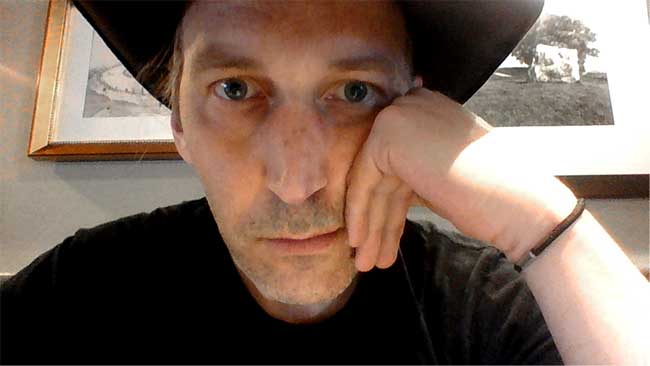
Introduction by Malcolm Paul
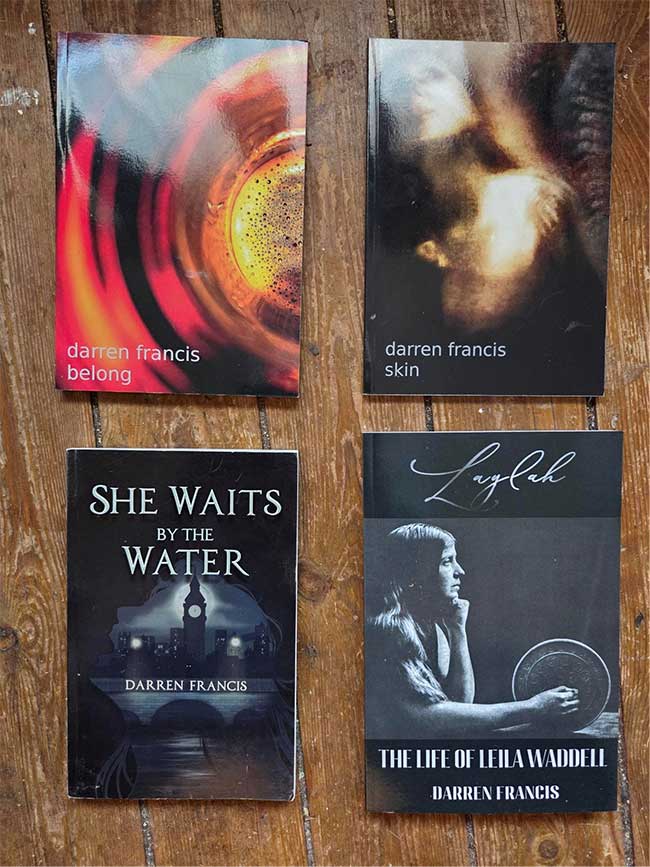
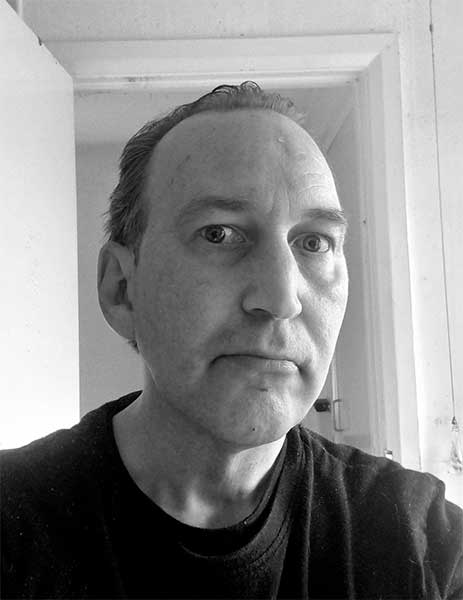
Darren Francis the author of the novels Skin, Belong, Alice Dee, Cutting, She Waits By The Water, and The Way We Leave, the nonfiction Laylah: The Life of Leila Waddell, and the spoken-word-with-music albums God Thing, Future Ghosts, Uforia, Open The Dog, Left At The Luna Mansion, All Things Left On Earth, and Becoming Akhenaten.
He was also a member of the industrial band Cubanate in the mid-1990s, and has recorded six albums with the band Logos – Gehenna Now, Ascending A Line In The Sky To Sothis, Shamania,Santa Susana Blues, Everything Under The Sky, and Chasing A Thread That Has No End.
He is at present working on a new non fiction book and two albums.
International Times recently published my interview with Tony White, author, publisher and compiler of the iconic 1999 anthology of innovative short stories ‘brit pulp’.
One of the authors, who contributed a piece of their own written work to the ‘trailblazing’ book was Darren Francis author/musician and spoken music word-creator.
I’m delighted with the collaboration we shared.
I wanted to look at ‘brit pulp’ through an assortment of lenses – perhaps even a Kaleidoscope where the collaborators overlap and the interconnectedness also cleaves away into individual literary originality, as it surely will be apparent at the end of the interviews with Tony White, Darren Francis and Steve Aylett – perhaps Stewart Home will join us as well later.
Darren is to my mind a very private person and this is reflected in his writing where he creates a landscape of introspection, a place where people interact as if their very being depended on the success of communication and understanding.
Anything short of Sartrean Authenticity and honesty would mean their very existence would crumble just as surely as the Golem did when the Hebrew word ‘emet’ (Truth) was shortened to ‘met’ (Death). It just crumbled to mere dust.
I will handover to Darren, who not only talks about his life and writing but layers the space between the questions and answers with some striking examples of his writing over the years. Read on.
by Malcolm Paul
MP) Darren, I don’t see much in terms of biography when it comes to your early life and background. Where were you born and spent your formative years?
DF) I’m a Londoner by birth. I grew up on a council estate in south-east London and my childhood was thoroughly ordinary, the youngest of three children. I’ve been creative for as long as I can remember, with words in particular. It’s always been my primary passion.
MP) Do you find talking/writing about yourself uncomfortable?
DF) Not at all, I’m happy to answer any questions, but I do tend to think the work is more important than the precise details of my life. To my mind my writing is intensely autobiographical even if the characters, narratives, and situations are invented. The thoughts and feelings are often very much my own. There is a tremendous amount of me and my life in my books, woven throughout.
MP) Did you live in a home where there were books and music – two of your main interests culturally?
DF) Books more than music, though one of my earliest memories is of playing in my room and Echoes by Pink Floyd coming through the wall at volume; my father was a great lover of music. My mother later told me that while she was giving birth to me – I was a home birth – he was lying in the room next door listening to Jimi Hendrix. I do wonder if these experiences explain a thing or two. My father was also a prolific reader, my mother less so, a habit I inherited from an early age.
MP) What was your education like?
DF) I went to an all boys’ comprehensive school. I was mostly solitary with few friends but that was fine since I had my imagination and was already creating my own stories and my own worlds. I only studied as far as A levels and didn’t do a degree. I wouldn’t say I was an unhappy child because I didn’t know any different. My later teens were very difficult, with mental health and depression issues, but that’s another story.
MP) Did you show an early interest in art, especially writing? When did you start writing stories and can you remember what you wrote about? In the Leila Waddell podcast you stated that you started writing at the age of five – in fact it seems you were always interested in writing.
DF) For as long as I can remember I’ve always written stories. Art was a childhood interest too, though I never felt particularly proficient at it. My earliest stories were influenced by what I was reading and watching then, which was mostly science fiction and – later – horror, and this was the case until my late teens. I don’t feel as if I found my own voice until then when I began using writing as a way of confronting myself and what I was truly thinking and feeling. The intimate and confessional first person style which characterises most of my books dates from that period.
MP) It seems like writing and publishing ‘Skin’ in Pulp Faction in 1991 was a big turning point. Could you say a bit about what was happening then. Was it a big turning point? And if so, what did it feel like?
DF) It was 1995, though the first draft of Skin was written in 1991. It was the first thing of any substance I had published and was well-promoted, so I was suddenly doing interviews and lots of readings. It certainly opened things up for me and helped introduce me to the London literary scene. It felt good. I’ve always had confidence in my work and it was great to see other people pick up on it.
MP) I read that you enjoyed the art of Patti Smith. Is that true? Could you say something about your artistic relationship with Patti Smith?
DF) I’ve long been a fan of Patti Smith. I love her way with language, her voice, her energy. She’s fantastic live too, like Kali channelling William Blake. There’s an honesty and a purity about her work that I appreciate. Though frank with her influences – Rimbaud, Ginsberg, Blake, Burroughs in particular – she has a unique vision and is true to herself. That’s what I draw from her first and foremost.
MP) Did you feel influenced by Patti’s albums: Horses and Ethiopia Radio?
DF) I think her work from the 1990s onward is more of an influence than the earlier albums though I do appreciate those too. The later albums – Gone Again, Gung Ho, Trampin’, Banga etc. – are the ones I come back to and am most inspired by.
MP) There is a whole book about the recording of Horses. Would you find that kind of book useful in any way?
I love: ‘Break it Up’.
“Ice, it was shining.
I could feel my heart, it was melting.
I tore off my clothes, I danced on my shoes.
I ripped my skin open and then I broke through.
I cried, “Break it up, oh, now I understand.
Break it up, and I want to go.
Break it up, oh please take me with you.
Break it up, I can feel it breaking,
I can feel it breaking, I can feel it breaking,
I can feel, I can feel, I can feel, I can feel.”
DF) I know the book you mean but I haven’t read it. Horses is a tremendous album but isn’t my favourite of hers.
MP) You seem to have a much gentler relationship with your words and music than let’s say Patti Smith does. Is this a reflection on your personality?
“4581 Asclepius (from the album Future Ghosts)
another twilight
put through the human thresher
wine
laughter
the peaked meat
of matter
how many remain?
how much longer?
night pushes open the door
leers and sharpens knives
we run from sight
across london fields
you’re holding your own hand
not mine
i down beer
at the speed of starlight
sirens but there’s ever sirens
epiphanies but there’s ever epiphanies”
DF) It’s not something I’ve really considered. All of my work is inevitably a reflection of me though I have a diverse array of interests and influences and inspirations.
MP) Was your interest in music simultaneous?
DF) My fondness for music didn’t come until my teens though it soon became all-consuming. Joy Division were the first band that I totally fell in love with and they still remain a favourite. Early influences in my mid-teens included the likes of Bauhaus, Joy Division, The Sisters of Mercy, Cabaret Voltaire, Cocteau Twins, those were the bands I grew up with. My tastes are extremely eclectic now.
MP) The combination of words and music. The Cubanates? Darren, you were a member of the industrial band Cubanate in the mid-1990s, and recorded six albums with the band Logos – Gehenna Now, Ascending A Line In The Sky To Sothis, Shamania, Santa Susana Blues, Everything Under The Sky and Chasing A Thread That Has No End.
DF) Cubanate are a very different band to Logos. Logos originated in 2010 while I was creating my first spoken word album God Thing, sound-ideas arising from those sessions which didn’t work in a spoken word context but were still determined to take on a life for themselves and evolved into their own tracks. That’s how the first Logos album came about. I’d describe it as ‘uneasy listening’ or ‘industrial psychedelia’. Aside from a couple of tracks it’s entirely instrumental. Influences are numerous though include the likes of Coil and Brian Eno, Cabaret Voltaire and early Current 93.
Logos released six albums between 2010 and 2016, one of which is a collection of radically different mixes and another a compilation of rare tracks and out-takes. Though I wouldn’t say Logos is at an end, it is on hiatus – with writing and everything else I’ve simply not had the opportunity to return to it. There will be another Logos album and we’ve already created many of the tracks for it, I just don’t know when it’ll be finished.
MP) Who exactly are/were the Cubanates? Were you labelled by the music press? Did you find the labels irrelevant?
DF) I spent a lot of time on the Goth and industrial scene in London in the early to mid-1990s. Cubanate were friends of mine and I appeared live with them for a while in that period. My involvement was minimal to be honest, I only did gigs and didn’t appear on any of the albums. I had a lot of fun with it though and got to go on tour and indulge in plenty of rock and roll excess. I’d describe the music as ‘industrial metal’, hard EBM beats of the Nitzer Ebb or Front 242 variety with thrashy guitars over the top. Plenty of people have done that sort of thing since but back then it was much less common.
It is interesting how the music press labels and categorises bands, especially in those days when you had the likes of NME, Melody Maker and Sounds, all with a huge readership and very influential on the music scene. Whole genres were invented by journalists by lumping bands with shared elements together. My favourite journalist description of Cubanate was ‘Motorhead jamming with 2 Unlimited’. I can see Motorhead, but 2 Unlimited? It did amuse us. I guess whoever wrote that wasn’t familiar with the industrial acts that influenced the band.
MP) Is it fair to say that you prefer to create your own music to accompany your spoken words/poetry than in collaboration with others?
DF) It’s less a case of preference and more one of convenience. I often have a clear idea in mind of the kind of sound I want and it’s easier to just do it myself. Plus I tend to work quickly with these things and don’t like having to rely on others. That said, I’d be very happy to collaborate on the musical side and have of late been having conversations with people regarding that. It will happen but I’m not sure when.
The trick with spoken word, I’ve found, is to think of the backing not so much as a ‘score’ or piece of music in its own right and more as an accompanying soundscape. Less is more in my experience, if you mix in too many elements the voice and the music end up drowning each other out. There’s a fine balance to be found and it took me a while to get there – some of my tracks and albums work better than others in this regard.
MP) Do you have a clear picture in your mind before you start of what a piece is going to sound like?
DF) Usually. With my two most recent albums for example, Rubicon and Epicentre, I had a very precise idea of how they should sound. I wanted to take them in a slightly different direction than with previous albums and the sound is a lot more unified track by track. Rubicon is fairly minimal, lots of keyboard drones and tones with other elements dropping in and out, Epicentre is dominated by piano. Both will be out this summer.
MP) I see that you name-checked William Burroughs in your podcast. Was he an influence?
DF) I’d say Burroughs was less an influence than an inspiration, an opening up of literary possibilities, he considerably widened the parameters of what one could do with text and with language. He was also a fantastic reader of his own work and I do tend to listen to him more than read him these days. Dead City Radio and Spare Ass Annie and Other Tales in particular are wonderful but people tend to remember that side of his work less than his books.
MP) Was there a Beat influence? Kerouac did some words/music, as did Ginsberg. Often with Jazz. Were you influenced by this era of poetry and music collaboration? It was more ‘public‘ than what the poet Brian Patten described to me when I asked him about combining music and poetry:
MP) Can you talk a bit about your experience with music at the time you were in Liverpool in the days of the Cavern and attempts to weld music and the spoken word together? Do you think it was a successful experiment?
BP) Bob Wooler, DJ at the Cavern, tried to get me to record poetry and music – he even got a group of musicians together and managed to record a few things when the place was empty. But my heart wasn’t in it. I felt something of a dickhead standing in front of these musicians mouthing away. I was young, and poetry was my passion.
DF) Again, I’d say it was more an inspiration than an influence. I’ve always found the Beats a very disparate bunch united more by kinship than shared literary aspects. I enjoy the work of some more than others. Ginsberg for example was a tremendous influence, Burroughs too of course, the others less so. Another writer sometimes lumped in with the Beats that I like is Lenore Kandel, who seems largely forgotten now which is a shame. She’s long overdue for reappraisal. Kerouac’s spoken word with jazz accompaniment is great though I’m less keen on his novels, books I appreciate rather than enjoy reading.
I’ve never lived in Liverpool so can’t comment on that. For most of my life I lived in London, then rural Buckinghamshire for six years, now I’m in a little village in the middle of nowhere in the south-east. I’d say London was a significant influence on my writing too and most of my novels are set there. In fact London and music have likely had a bigger impact on my work than most writers I could mention. It’s a place I still spend time in as I have friends there and there’s always something interesting going on but I’m happy not to live there any more.
MP) I think listening to your words and music, you can be as gentle as say Nick Drake, and yet still have the bite of Punk, Richard Hell, Mark E Smith or John Cooper Clarke. As if the music you create can be as much a pull on the trigger as a gentle touch. Does this show how you feel? A reflection of your moods?
DF) It’s less a reflection of my moods or how I feel and more the way it’s presented. Some of my texts can be quite hard or biting or acerbic but I find that people are more inclined to listen if you don’t shout at them. There’s definitely a time and a place for that approach but it isn’t the one I favour.
MP) You seem to me, without having met you, to be a gentle soul. Would you describe yourself in that way?
DF) I can be. I’m one of the most easy-going people you could meet but I frequently despair at the world I see around me. I let it all out through my writing.
A Pattern As Complex As Us (from the album All Things Left On Earth)
“i disappear then;
into molecular memory
of matter
the world’s
atomic suffering
black time of
black sky of
stars that
sweat and weep there
alone with my derangement;
every twitch of hands
swayed by unseen puppetry
each movement stilted
a dream-flicker
at the speed of film
the work
pills
girlfriend;
i live it
i presume it existent;
but all the rooms
through which i move;
does anything of me
remain there?”
MP) Reading Skin, Belong, Alice Dee, Cutting, She Waits By The Water and The Way We Leave. Left me with many thoughts – some I will try to address here.
I think you are very much an Expressionist in both your novels and your words & music. I read and listened to both and I felt that the way you express yourself is very personal.
(Expressionist writers were an early 20th-century avant-garde group who rejected realism and naturalism in favor of depicting subjective emotions, inner psychological states, and apocalyptic visions. Emerging primarily in Germany, they utilized dreamlike settings, distorted realities, and ecstatic language to explore individual struggles against modern society. Wikipedia)
This is my opinion. Would you concur?
DF) All art is ultimately subjective I think, and says as much about the artist as it does about the subject. Every approach is valid, they’re all just tools.
MP) But there is also something of the Weimer era and the Cabaret in the storytelling and the mix of words and music. I’m a big fan of Expressionism, so perhaps I’m biased. Any reflections on that?
DF) I’m more influenced by others who draw on that era than the era itself. Tom Waits and Marc Almond for example, two very different artists who I think are united by that kind of influence, are both inspirational to me. Above all I favour unique voices true to their own vision and am less concerned with labels and categories though of course the latter can help in drawing one’s attention to things.
MP) Your stories are often sad and your characters are adrift in society and the world. Dee needs more than a hug to get her through. And a gun is a desperate way out but it’s as redundant as she is. Embracing nature is just not enough of a life saver in the end.
DF) Alice Dee is a desperate character in a desperate situation. Her actions seem the most appropriate response to her. I leave judgements as to whether she’s right or wrong in what she does up to the reader. That’s why the book ends the way it does; I didn’t want it to be a moral lesson and it’s not my job to tell people what to think.
Alice Dee (novel excerpt)
“She pushes open the door, stands in the halo of the frame. Lifts the gun from her pocket. The click as she releases the safety causes the man in the chair to turn.
‘Who are you?’ he says. ‘What are you doing in my house? What do you want? Are you trying to rob me?’
‘There’s no time for talk,’ she says.
Then he notices the gun in her hand. He doesn’t say anything after that. She raises it, aims, hums as she pulls the trigger. It is only then that she takes in the room around her. A library, every wall lined to the ceiling with shelves. Most of the books look several times older than her. Her target – the chief executive of a fast food franchise known for having cut down vast swathes of rainforest for cattle-grazing land – sits slumped head back in a chair by the desk, lit only by an ornate bronze lamp in the shape of two intertwined mermaids. His mouth hangs open. She wants to close it but doesn’t want to touch him. She watched his face this time as she pulled the trigger. This is getting easier.
That was an interesting book to write from a craftsmanship perspective; my other novels are first person male protagonists, Alice Dee is third person and female. I did write one draft in first person to help connect me with her character but thought third person worked better for that particular book.”
MP) Did you read a lot of Existentialist fiction? Would you describe yourself as an Existentialist? Does philosophy interest you at all?
DF) Philosophy interests me intensely, what I’d refer to as the human conundrum, but I don’t think I could realistically describe myself as adhering to any one view. I find it difficult to understand how anyone can but that’s not for me to judge. My own perspective varies considerably moment to moment and if I had to use a label it would be ‘agnostic’. I’m happy with not needing to categorise and explain everything, prefer being endlessly fascinated.
The Way We Leave (novel excerpt)
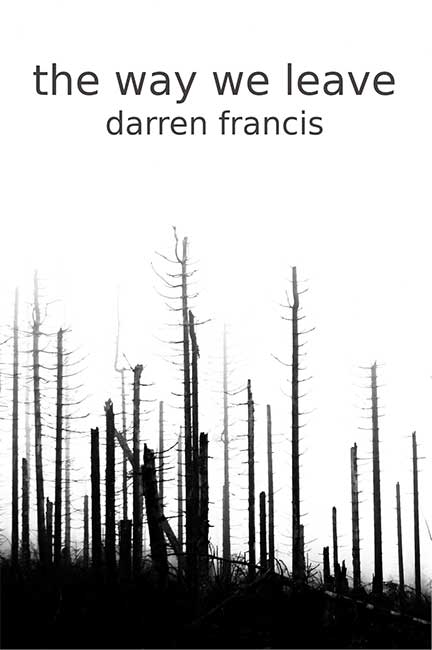
“The human specimen is such a frail construction, our species so young and still barely formed, scurrying impetuous and beyond control on the surface of this globe. We tell ourselves that we are unique, significant, are evolution’s peak. That we are the masters of our planet. No. We are simply one link in an unending chain of ongoing animal adaptations spreading back four billion years, one that will continue outside of us and into the future. What will we be then? Where will we be? Still confined to this Earth, or beyond it? Will we have found new worlds to seed and to despoil? Will we have snuffed ourselves out? This planet could effortlessly shrug us off. Extinction-level events are a part of the process. Almost every species that has preceded us is now gone. The few stray survivors – the coelacanths and goblin sharks and horseshoe crabs of this world – are the freak exceptions. There is no reason to suppose that we will be amongst their ranks.”
MP) I reckon your novellas and short stories are as powerful as say the ones in Sartre’s short story collection Intimacy or Nausea. Maybe the Kitchen Sink in the Internet era?
DF) I read a lot of Sartre in the 1990s, Camus too, and they were both definitely an influence on Skin and Belong. Skin in particular was the first novel where I felt like I’d found my own literary voice, which is very much intimate and confessional and writing in the first person helps immeasurably in that. I have written third person but first person always feels more immediate to me. I don’t think I’m as pessimistic as the likes of Sartre or Camus, at least not these days, gritty and grimy as my work can sometimes be.
MP) Do you think if a publisher wanted a sequel to Sartre’s Intimacy you could do it?
DF) I’d be happy to try but it would take its own course and its own identity as these things always do. I do find that when I set out to write to a specific remit those books tend to work less well. The only time I’ve done it and been happy with the outcome was with She Waits By The Water, I deliberately set out to do something different with that one. Though the style is similar to my other books it’s very tightly plotted with a constantly evolving narrative whereas in my other books the focus is more on character and voice. It was as much an exercise to see if I could do it and draws on different inspirations; Thomas Ligotti, David Lynch, Jacob’s Ladder which has always been one of my favourite films. It’s one of those books where nothing is ever quite how you think it is and you need to read it again once you get to the end to realise that what you thought you understood is very different to what’s actually happening. It operates on multiple levels.
Naked Ghosts (from the album All Things Left On Earth)
“she said she wanted to feel
like a teenager again
so i moped about
writing bad poetry
got drunk on cheap cider
and puked on her shoes”
MP) I remember a Greek girl I used to go out with asking me: “Why don’t you write something nice?”
So I said – ‘like what?
She said:
“Well every year the people from the village go and put flowers on the graves of Resistance fighters the Nazis captured and executed and we were never able to trace their families…”
Yes I get the point!
Do we owe it to ourselves or anyone else to write ‘nice’ things in life? At least look at life in a positive way once in a while.
DF) I think we owe it to ourselves to write honestly first and foremost. ‘Nice’ is subjective anyway.
Belong (novel excerpt)
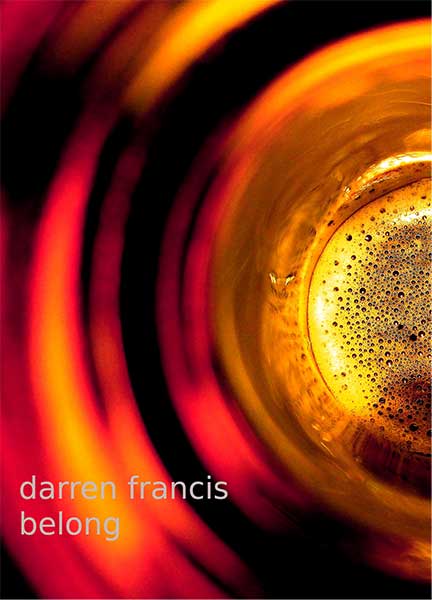
“Then I’m on top of the world. Then I’m looking down on creation. My guide and I float in black and nil space. From here the curvature of the earth is explicit, as is its turning to yield the illusion of days, as is its hang in empty. Blue water, white cloud, night side, light side, the scuzz of all living between. Sunlight meeting water sparkles like crushed glass. And beyond it, beyond the blue, an unending wall of stars. Space and light are physical things. I feel their weight, their matter. Watch as Earth rolls away into darkness, into nothing. It’s like it was never there.”
MP) I used to read a lot of American ‘Dirty Realism’, especially Raymond Carver.
I always thought that there was a very different type of beauty in a hard way of life. In suffering. Especially with an author like Richard Yates.
“The hell with “love”anyway”, and with every other phony, time-wasting, half-assed emotion in the world”.
Richard Yates, Revolutionary Road
Do you see that in your own writing?
DF) I’m not familiar with Yates but have read Raymond Carver. There’s beauty to be found wherever one looks, in the dark as much as in the light.
Belong (novel excerpt)
“Friday. Two days since I last ate and my mind assumes new frequencies. Time bending over. Seasons turning in on themselves. Too hot here for April. Some days it’s too hard to formulate, everything expanding endlessly, mass that spirals in on itself, galaxies colliding and everything moving away from everything else at x hundred miles per second.
Home alone I do just the frequent things. Make some food. Process cigarettes. Listen to the sixties on re-mastered CD. Tim Buckley, Love, Pearls Before Swine. I know there is a sun in the sky. In my sky or someone else’s. Sat here is an illusion of serenity, like watching clouds and thinking nothing happens inside them. An explosion on the news, bomb in a baby carriage, the bodies wrapped in plastic like microwave meals. I hate the way songs live out of control in my head, the way magazines film on my fingers. Mind so permeable. By day a suit defines who I am. Evenings and weekends it’s more fuzzy. Sheets stained with too many lovers. Every fold kicks up a face in my head. Another empty beer can. Want to see friends but don’t want to explain, don’t want to be the me I am for them. Chain-smoke and stare through the window at the lighted web of streets at the steady blip of traffic. Three men argue on the corner but I pay them no heed. Noise diluted by glass. I need to be out there too. A street or any street. Always after dark, always away from my flat. Dull to four walls and air. Know there’s stuff out there to forget me in. Show me a purpose that isn’t distraction. Further than stars, all of it”
MP) I think Jarvis Cocker got close in one of the verses in Common People.
“You will never understand
How it feels to live your life
With no meaning or control
And with nowhere left to go
You are amazed that they exist
And they burn so bright whilst you can only wonder why”
Is it ever possible to turn a literary piece of grit into a pearl?
Because reality is too hard to live with?
Would you ever consider giving up writing or creativity?
DF) It’s because reality is hard that we carry on. No, I wouldn’t consider giving up. As Samuel Beckett put it, ‘I cannot go on, I go on.’ The rest of the world will catch up with me eventually.
Three Days (from the album Open The Dog)
“monsters lie sleepless
and shivering in my bed
i am the thing that lurks
in the dark beneath it
my mind is going
i can feel it
i’m the thing that spiders
and clowns are scared of
funny how one can know
that every devil is metaphor
but that doesn’t make their
claws tear any less tender
we dust of stars
had could have run had
lips on mine or thousand
mean the same thing
this is not
a corridor
down which
i walk
but writhing welter
of matter-mating matter
that for now have
form of a corridor
into her golgotha
graveyard mind
cosmos sits at her feet
she is the gate”
MP) By all accounts you seem to have retreated from society and politics – but not your art, which you still are so committed to. I don’t know your exact age, I’m guessing you are in your mid fifties. Has your life been hard and if yes, how would you describe that? Would you say you have experienced desperate times in your life? I feel you are very much in touch with your emotions.
Cycler # 3 (from the album Open The Dog)
“the blackest thing
about depression
is that it offers
scant glimpse
and no glimmer
of a way out
of itself
is all the mind’s matter spiralling in
to its own self-created event horizon
this little yet utter darkness
isn’t me
is just my crooked brain
thinking it knows better
cheat on me
brain
if you must
i’ll be here”
DF) You’re right about my age. I wouldn’t say my life has been harder than anybody else’s but the key of course is less what we are dealt and more how we respond to it. I have had some very tough periods, issues with mental health and the like, crippling depression, self-harm. I’m a much happier person now than I was ten or twenty years ago. The trick perhaps is learning to let go. I never hold grudges, animosities or the like. Move on and you’ll be happier. Besides, there’s always too much to do. I’d rather focus on that.
MP) As I said earlier, I see you as an author unafraid to experiment with either words or music – separately or combined.
You were a co-writer with Tony White in his anthology ‘brit pulp’ (along with others).
In a recent interview with Tony – not yet published – I asked him a particular question. I would like to ask you the same question:
MP) How do you react to an accusation – that I’ve heard – that genres like avant pulp and the ‘slipstream’ lack emotional depth?
Can it be quite shallow and that the characters are devoid of warmth, personality and humanity? Could these characteristics be a casualty of experimentation?
I don’t know Tony’s answer yet but I would like to hear your thoughts.
DF) It’s more a matter of the writer than the genre. Writing considered ‘pulp’ can be as rich in what it has to say about the human condition as any literary fiction.
I could never write genre fiction I don’t think, not that I look down upon it but more because I have such a diverse range of interests and inspirations. I rarely set rules for myself and don’t like being limited by arbitrary parameters.
MP) The other question was about the relevance of Anthologies in the 1990s.
Such as brit pulp. How did it all come together? What was the connection?
That was my other question to Tony.
MP) Was this group of writers already discovering/defining a new style of writing and the anthology just brought them together?
And the consequence was a new generation of authors who found a new voice – and a means to express what was going on in society and in their minds? Like cultural reporters on a ‘frontline’.
Do you have any reflections on that perspective?
DF) Britpulp was Tony White’s idea entirely, he put that together. He asked me to contribute and I did. I felt an affinity for some authors, others less so. You’d have to ask Tony how it came about and how he chose which writers to include. I think it was less a new voice and more a new exposure. The authors featured were a disparate bunch all in all.
I met Tony and many of the other writers in the Britpulp anthology and the Pulp Faction anthologies in part through the London literary scene and in part through creative writing courses at the City Lit in Covent Garden. Tony and I connected at the launch of the first Pulp Faction book which we both had stories in. It’s also how I first met people like Steve Aylett and Simon Lewis. Those Pulp Faction anthologies were as vital in their own way in unifying the literary scene in the UK in that period as Britpulp was I think.
MP) There are a few questions I would like to ask about the need or otherwise of a counterculture in society.
Do you feel as if you belong or belonged to a counterculture?
Or, do you feel – perhaps more now – as if you are an artist working in a sort of isolation? An isolation of your own making.
DF) ‘Counterculture’ is such a broad and all-encompassing term. I guess one would consider what I do countercultural in that I’ve never been part of the mainstream but that’s more how things have unfolded for me and less a conscious choice. I don’t write the kind of books that are going to sell millions of copies and I’m fine with that. Being honest with myself and writing what I want to write is more important to me. Writers are by necessity solitary people, the practice demands it. That said, my creative process tends to be sitting on my sofa with my laptop and my other half next to me and one or more cats in attendance so it’s perhaps less lonely for me than most. I don’t need to seal myself in a garret or anything. I always listen to music when writing too, custom playlists which vary book to book, so I have plenty of company.
MP) I have interviewed a lot of artists over the years and I have always had a positive response to the above question… perhaps with a bit of reservation.
This was an exchange I had with Toby Litt at the end of an interview.
MP: Is everything too fucked up for us to be able to revolt anymore? Or should we, like you, take issues like the environment more seriously rather than living an ‘in the moment’ hedonistic lifestyle?
TL: I would say the two are connected. But living in the moment has been co-opted by corporate culture as a way of creating permanently distracted customers. If it’s always ‘next next next’, you’re not going to be a difficult citizen. You’re not really going to organise in the way that’s necessary, but also fulfilling.
How would you react to Toby’s comment?
DF) The environment or climate change is in my estimation one of the most important things happening in the world right now but I do despair as to how much people are willing to acknowledge it. The problem perhaps is that we’re too far down the line and the changes that would be required to avert it are so far-reaching that most people aren’t prepared to countenance them. My novel The Way We Leave concerns these things. When I began writing that one I deliberately didn’t make it future-set and dystopian, which is the way most authors go. My take concerns people living in the modern day in a changed and changing world and how they adapt to that. It’s a human story as much as a global one.
The Way We Leave (novel excerpt)
“How many lost empires, how many lost cultures, has this planet witnessed in the past ten thousand years? And we have ambitions that our society will be any different? The odds were stacked against us from inception. Like gods, like species, civilisations come and go. This western capitalist consumer empire of ours will fall with time and another will rise to replace it. And when and if we humans are extinct, what will remain of us? Fifty or a hundred million years from now what signs, what evidence of us will there be, to testify that we were even here? Our cities in dust, our societies under forest floor or beneath the ocean, our bones rendered fossil, our gods and our values forgotten, not even a memory any more, our signals and our transmissions still beaming endless through blank and lonely space? Perhaps one day in a future far distant an extraterrestrial archaeologist will intercept one of them, trace its source, decide to visit this planet a while, will find a fecund and overgrown and unruly Eden, a world entirely without us.”
With regard to Toby’s comment, we live in a corporate culture first and foremost, one engineered for making us compliant and unquestioning consumers. Everything is commodified and everything has a price. This year’s soundtrack to revolution is next year’s advertising theme. Is it possible to break out of that? Of course, but it takes effort.
MP) How do you see your future in terms of writing and music?
I am aware that you have projects in the pipeline: two new albums and another non- fiction book.
DF) I just get on with it. I’ve always got things on the go. Another novel, another non-fiction book, another spoken word project. There’s plenty to do. I only began writing non-fiction recently, simply because I wanted to read a book about someone – Leila Waddell, the musician and sometimes occultist and paramour and muse to Aleister Crowley – and nobody had written one so I decided to do it myself. I have more non-fiction on the way, books about interesting people doing interesting things in interesting fields, that’s the remit I set myself. There’s always a lot to do.
MP) Thank you for your time in answering my questions. I hope the readers enjoy reading them.