
Transformations, Gerauschhersteller (Gerauschhersteller)
A Grain of Sand – 9016DL (2026),Walt Shaw / Jim Tetlow (Discus Music)
Brixton (1982), Lol Coxhill / Susanna Ferrar / Sylvia Hallett (Scatter Archive)
More Crimes, Dave Tucker (Scatter Archive)
Berlin Eiskeller, Olaf Rupp (Scatter Archive)
At Nether Edge, Lawrence Casserley / Viv Corringham / Yoko Miura (Scatter Archive)

The album notes to Gerauschhersteller’s latest album, Transformations, begin on a somewhat biblical note: ‘On the third day, we decided we had said all we had to say – or played all we had to play – about the Clangers.’ I recently reviewed Adrian Newton and Stuart Riddle’s enthralling homage to that British, twentieth century stop-motion animated TV series. Here, having successfully orbited the Little Blue Planet, they’ve returned to Earth, splashing down Artemis II-fashion, somewhere in the vicinity of Horton and Charlbury Village Hall where they simply improvise together, without specific reference to Oliver Postgate’s cute, long-snouted aliens. I say ‘specific’ as, listening to the music, I thought I could still hear them lurking in the background. Perhaps a couple stowed away (there is an unnervingly Clanger-like utterance six minutes and fifty-eight seconds into the second track, ‘Formosan transit’).
Or it could just be that Newton and Riddle have a respect for the sounds of that era which runs through their work. There are musicians who seek out original ways of synthesising and patterning sounds, and, although Newton and Riddle do this, a large part of what they do is also an elaboration of an inherited language. (There is nothing whatsoever wrong with this: musicians have been doing it for centuries). They’re happy, for example, to create slowly rising and falling waves of pink noise with the best of them, but somehow they manage to incorporate such artifacts into striking, original soundscapes of their own. And they’re not all electronic. I particularly liked Riddle’s flute solo in ‘Afton Rainstorms’: gentle and understated, it keeps trying, Samuel Beckett-like, to grasp the unsayable, only to fall back on the consolation of the known. Am I reading too much into it? Probably not, although, of course, the audience can never know exactly what an artist has in mind (and vice versa). Another version of the answer is there in the title of the album (and the album art, a circuit diagram symbol for a transformer): two wires don’t need to be joined together for one to induce a current in another.
Anyone who finished listening to their last album, Gerauschhersteller Spielt Klangermusik, wanting more, will be delighted with this. And if you’ve not come across Gerauschhersteller before, do have a listen!
Walt Shaw is an artist and musician whose work undermines the divide between the visual and the musical. Among other things, as an artist, he creates assemblages which, as an activity, is only a short step away from creating some of the instruments he uses here which, as the album notes explain, ‘[involve] springs, small saw blades, contact microphones, broken music box, bent wire, dismantled autoharp, wire brush, mounted needle, metal egg slicer, etc.’ Jim Tetlow, as well as being a musician, is also a graphic designer and – like Shaw – an artist. As it says on his website, he’s ‘passionate about that wonderful hybrid zone where the boundaries dissolve’, be it that between art and design or art and music. This sensibility is an area of common ground he shares with Shaw. Where the creative tension comes in, it seems to me, is in the choice of instruments. Shaw’s choices are predominantly analogue, whereas Tetlow is using a laptop to play samples, software-based instruments and modulation effects.
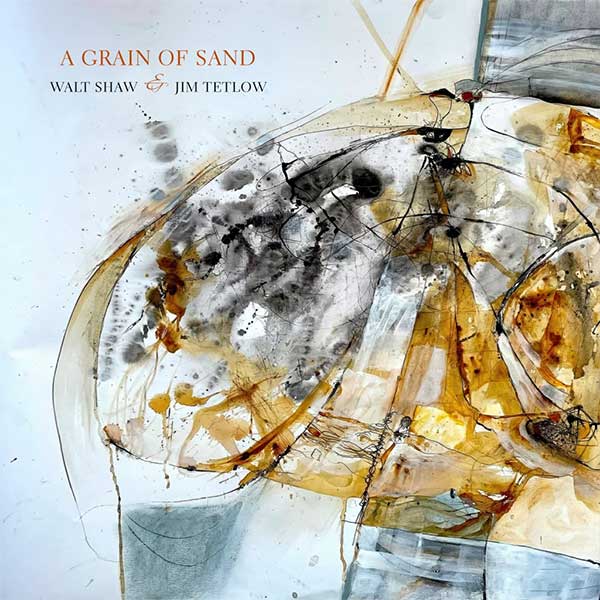
Of course, the Blakean title, A Grain of Sand, sets a high bar for anyone with the courage to use it. As listeners, having been invited to see the world in a grain of sand, we expect to ‘hold infinity in the palm of our hand[s]’. It’s a challenge Shaw and Tetlow are well aware of: as they say in the album notes, ‘in our own modest way we were … trying to see the bigger picture from tiny components.’ And they succeed. Although it’s often difficult – and, of course, unnecessary – to know which musician is making which sound, I get a similar feeling listening to the music as I get from Shaw’s assemblages: a sort of new primitivism, an impression that they – and it – could be the work of some post-apocalypse mudlark finding fragments of a past they never knew and putting them together in new ways that often bear no relation – other than the merely coincidental – to their original purpose, but which are clearly the work of a human: what they’re formed into goes beyond what can be put into words to resonate in archetypal ways with what we are and how we fit into that bigger picture.
Releases from Scatter Archive, that repository of essential sounds from the left field of the left field, can come so thick and fast that it’s hard to keep up with them all. (I’m not complaining: bring ’em on!). They’ve released six albums in the last three weeks alone. Here, I’ve set down my brief thoughts on four of them, although I’d implore anyone interested in what they do to check out the others, too.
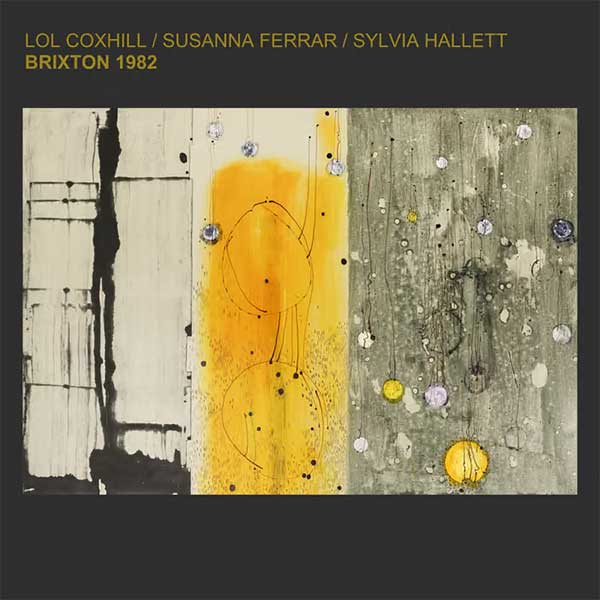
Brixton 1982, the latest release (at time of writing), brings together sax player the late Lol Coxhill with violinists Susanna Ferrar and Sylvia Hallett. It’s a recording of a gig they did at The White Horse in Brixton. What we get is three musicians feeding off each other to create three sets – fifty minutes in all – of uninterrupted invention. I say ‘uninterrupted’, but in the third set a drunk can be heard in the background, making his presence felt. Weirdly, it in no way detracts from the music: indeed, it becomes part of it. The full story is told in Susanna Ferrar’s album notes, which are well worth a read in their own right, as they present us with a slice of musical history: an insight not only into the gig, but also, into the world of the LMC at the time.
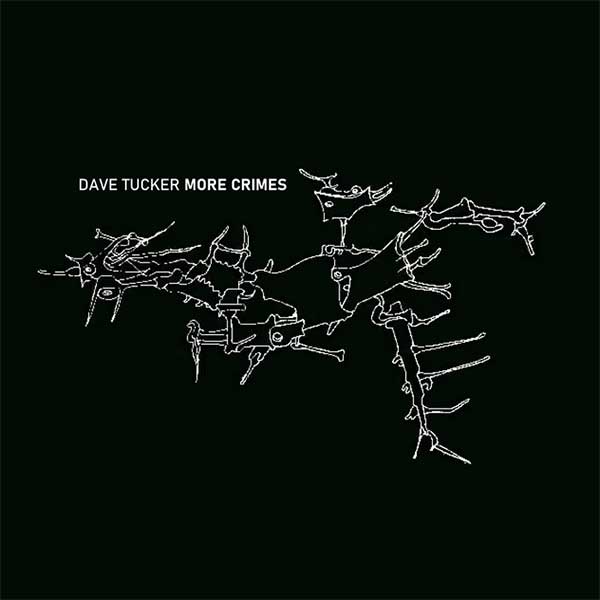
When Dave Tucker’s Crimes Against the Avant-Garde was released last summer, he promised there’d be ‘more to follow from the same sessions.’ The ‘more’ turns out to be another recent Scatter Archive release, More Crimes. Both albums were created by Tucker during a period of ill-health. He admits to a habit of recording something most days and both albums are created from his ever-growing collection of foley, instrumental (he plays a range of instruments) and field recordings. He name-checks JG Ballard in the album notes and the music often, to my ears, evokes the musical equivalent of the sort of space Ballard explores in his fiction: a ‘third space’ one can become trapped in, that is neither public nor private. It’s as if one is listening to a field recording made on some sort of impersonal public concourse one is forced to survive on, where distant, unspecifiable activities are going on, out of sight but not out of earshot. It’s as unsettling as it is compelling.
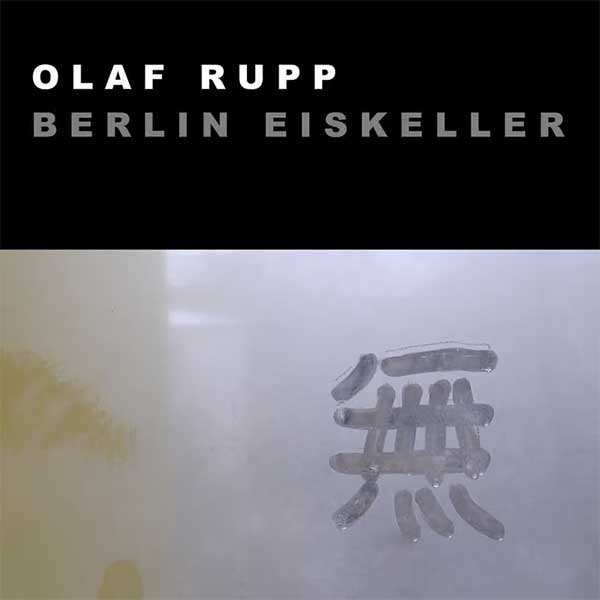
The album notes to Olaf Rupp’s album, Berlin Eiskeller, describe him as ‘currently one of the most important guitar players in European improvised music’. I’m not one to be easily impressed by verbal puff, preferring just to listen. However, he has the talent to seek out spaces where things can happen and the imagination to exploit them when he finds them. He creates a rich texture, using distortion, harmonics, noise and melodic fragments to great effect, often counterpointing one against the other. He is, indeed, a joy to listen to. Anyone who aspires to produce engaging improvised music on an electric guitar should have Olaf Rupp on their listening list!
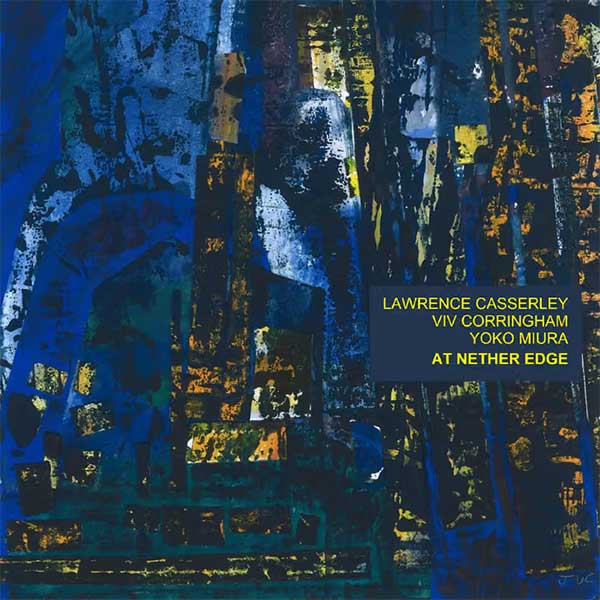
Finally, with At Nether Edge, signal processor Lawrence Casserley, vocalist Viv Corringham and piano/melodica player Yoko Miura have created a quite unique sound-world. What we get is a continuous, thirty-eight minute track in which the intriguing textures they create build up into passages of dense, enthralling music. A great listen.
.
Dominic Rivron
LINKS
Transformations:
https://gerauschhersteller.bandcamp.com/album/transformations
A Grain of Sand:
https://discusmusic.bandcamp.com/album/a-grain-of-sand-9016dl-2026
Brixton 1982:
https://scatterarchive.bandcamp.com/album/brixton-1982
More Crimes:
https://scatterarchive.bandcamp.com/album/more-crimes
Berlin Eiskeller:
https://scatterarchive.bandcamp.com/album/berlin-eiskeller
At Nether Edge:
https://scatterarchive.bandcamp.com/album/at-nether-edge
.