
by Ade Rowe
To speak of the avant garde in the Middle Ages is to gently unsettle a habit that has shaped how history is often told. The period is still frequently imagined as one of repetition and obedience, where tradition held firm and imagination had little room to move. It is an image that feels neat and convenient, but it does not quite hold up. Creativity has never belonged to one era, nor has it ever waited for the right conditions to emerge. Even in a world structured by authority and belief, people found ways to test limits, reshape ideas, and quietly push beyond what was expected.
Medieval life was undeniably shaped by strong frameworks. Religion informed understanding of the world, social hierarchies defined position and identity, and inherited knowledge carried a kind of unquestioned authority. These forces created order, but they also created pressure. Within that pressure, there was space for invention. What is striking is not that innovation happened, but how it happened. Rather than announcing itself loudly, it often took subtle forms. Artists and thinkers did not always reject tradition outright. Instead, they worked within it, adjusting, stretching, and sometimes gently subverting it from the inside.
This is particularly clear in illuminated manuscripts. The Book of Kells, created in the ninth century, is often admired for its detail and craftsmanship. Yet its real significance lies in how it changes the act of reading. The text does not sit neatly on the page. Letters expand, intertwine, and transform into intricate patterns that draw the eye in multiple directions. The reader is not simply absorbing information. They are navigating the page, almost physically, as if meaning must be discovered rather than delivered. It encourages a slower, more reflective kind of engagement.
Other manuscripts reveal a different, more playful side of this creativity. In the Luttrell Psalter and the Gorleston Psalter, scenes of daily life appear alongside sacred text, but they are far from straightforward. Figures are exaggerated, animals behave oddly, and strange hybrid creatures emerge in the margins. There is humour here, sometimes subtle, sometimes quite bold. These images do not neatly explain the text they accompany. Instead, they sit beside it, creating a sense that meaning can exist on more than one level at once. The sacred and the absurd are not in conflict, they are simply part of the same world.
Some works take this even further, stepping into territory that feels deliberately uncertain. The Voynich Manuscript remains one of the most intriguing examples. Its script has resisted every attempt at translation, and its imagery offers no clear guidance. Plants that do not seem to exist, diagrams that suggest systems we cannot fully grasp, and a structure that feels both deliberate and elusive. It leaves the viewer with questions rather than answers. Whether it was intended to conceal knowledge or simply to explore it in an unconventional way, it shows a willingness to move beyond clarity and into ambiguity.
Architecture offers another perspective on medieval innovation, but on a much larger scale. The transformation of the Abbey Church of Saint Denis in the twelfth century introduced a new way of thinking about space. Under Abbot Suger, light became central to the experience of the building. Walls were opened, replaced by expansive stained glass that allowed colour to flood the interior. This approach developed further in cathedrals such as Chartres and Notre Dame in Paris.
The effect of these spaces was profound. Entering them was not simply a matter of stepping inside a building. Light shifted as it passed through coloured glass, casting patterns that seemed almost alive. Sound travelled in unexpected ways, echoing and fading into the distance. The height of the structure could feel overwhelming, creating a sense of awe that was both physical and emotional. These buildings were carefully designed to shape experience. They asked something of the people who entered them.
Not everyone welcomed these changes. Some argued that such visual richness risked distracting from spiritual focus. Yet the builders continued, guided by both technical knowledge and creative instinct. Developments such as ribbed vaults and flying buttresses were not only practical solutions. They allowed stone to behave in new ways, opening up space and changing how it was perceived. Architecture became less about enclosure and more about transformation.
Music followed a similar path, though it worked through time rather than space. Early medieval chant was simple and unified, built around a single melodic line. Over time, composers began to experiment with additional voices, creating layers that moved together in complex ways. This development, known as polyphony, changed how music was experienced. It required listeners to hold multiple strands in mind at once.
At places like Notre Dame, composers such as Léonin and Pérotin developed works that unfolded gradually, allowing patterns to emerge over time. By the fourteenth century, the Ars Nova movement pushed this even further. Figures such as Philippe de Vitry introduced new rhythmic systems that made music more intricate and demanding. Listening became an active process, requiring attention and engagement.
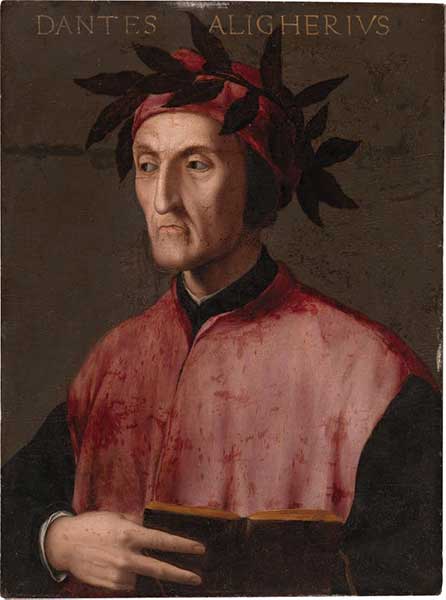
In literature, one of the most remarkable examples of this spirit of innovation is Dante Alighieri. His work, The Divine Comedy, is often seen as a structured and orderly vision of the afterlife, yet it is also deeply experimental. One of his most significant choices was to write in the Tuscan vernacular rather than Latin. This decision brought complex ideas into a more accessible language, shifting who could engage with them and how.
The structure of the work itself is ambitious and carefully constructed, yet it feels emotionally immediate. Dante places himself within the journey, reacting to what he encounters with a very human sense of uncertainty and awe. The progression through Hell, Purgatory, and Heaven becomes not just a map of the afterlife, but a reflection on human experience.
Time within the poem does not behave in a straightforward way. Historical figures appear as if still present, and different eras seem to exist side by side. Personal memory, political reality, and spiritual belief are woven together. This creates a sense that the boundaries between past and present are less fixed than they might seem.
Dante also takes a bold approach to authority. Figures of power, including religious leaders, are judged within the narrative. Through his writing, he positions the poet as someone capable of moral insight and critique. It is a powerful reminder that artistic expression could carry weight, even in a world shaped by hierarchy.
Writers such as Geoffrey Chaucer explored similar ideas in different ways. The Canterbury Tales presents a wide range of voices, each offering their own perspective. There is no single viewpoint that dominates. Instead, the reader moves between stories that often contradict or challenge one another. It creates a sense of openness, where meaning is not fixed but negotiated.
Other works experimented by blending forms. The Roman de Fauvel, for instance, combines poetry, music, and imagery in ways that resist clear categorisation. Meaning emerges through the interaction of these elements rather than through a straightforward narrative.
Mystical writing adds another layer to this picture. Hildegard of Bingen created works that attempt to express experiences that go beyond ordinary language. Her writing is filled with descriptions of light, movement, and sensation, offering something that feels both intellectual and deeply personal. It does not simply explain belief, it tries to make it felt.
Public performances brought these ideas into shared spaces. Mystery plays and morality plays were staged in towns and marketplaces, bringing familiar stories into everyday life. These performances often included humour, doubt, and contemporary references, making them feel immediate and relevant. Audiences were not passive observers. Their reactions shaped the experience, creating a dynamic relationship between performance and interpretation.
Material culture also reflects this ongoing experimentation. The Bayeux Tapestry presents history as a continuous visual narrative, guiding the viewer through events in sequence. It combines storytelling, symbolism, and rhythm in a way that feels remarkably sophisticated.
What distinguishes medieval innovation is not the absence of creativity, but the way it developed. There were no formal declarations or movements in the modern sense. Much of the work was anonymous, created within communities rather than by individuals seeking recognition. Change happened gradually, through practice and adaptation.
The Middle Ages were not a quiet pause between periods of brilliance. They were a time of steady exploration, where people worked within the limits they faced and still found ways to expand what was possible. The avant garde did not need to announce itself. It was already there, in the details, in the risks taken quietly, and in the willingness to see the world a little differently.
.
Thanks
Remember Gabriel Josipovic’s – The World and the Book – which opened Chaucer up …. we forget how form (in fiction) has narrowed and become safer, less challenging – the conventions more settled and bourgeois
Comment by Steven Taylor on 27 April, 2026 at 7:17 am