
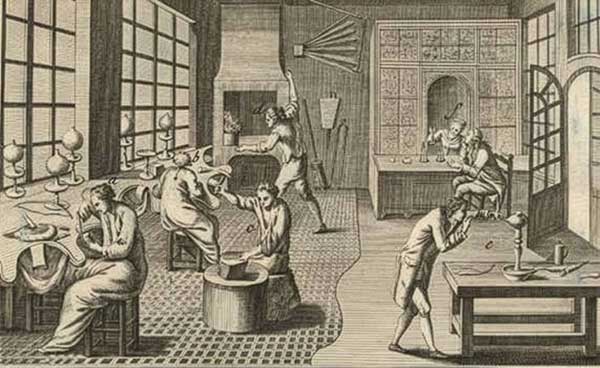
Human beings have adorned themselves for tens of thousands of years yet the history of bench jewelry begins long before the appearance of recognizable workshops or professional jewelers. It begins with the emergence of deliberate craftsmanship when ordinary materials ceased to be valued solely for survival and became vessels of memory identity belief and social meaning. The earliest ornaments fashioned from shell bone ivory teeth and polished stone reveal an intellectual transformation as much as a technical one because they demonstrate that prehistoric communities invested time and energy increating objects whose significance extended beyond immediate necessity. These objects required planning patience and repeated manipulation. They were not accidental products of daily life but intentional creations produced by individuals who gradually developed specialized abilities through observation experimentation and accumulated experience. Although archaeology preserves fragments of these ornaments it rarely preserves the spaces in which they were made. Those forgotten places represent the earliest ancestors of the jeweler’s bench because they were locations deliberately chosen for concentrated manual work where raw materials were slowly transformed into objects carrying emotional symbolic and economic value.
The concept of a dedicated workspace emerged naturally from the demands of precision. An artisan attempting to drill a shell bead or polish a piece of native copper quickly discovered that stability improved accuracy while organization reduced wasted effort. A flat stone a section of hardened timber or even a carefully prepared patch of compacted earth could become a permanent location for making decorative objects. Such places were modest by modern standards yet they established an enduring principle that continues to define bench jewelry today. Successful craftsmanship depends not merely upon tools but upon the environment in which those tools are used. The workspace itself becomes an active participant in production because it supports the body organizes movement protects valuable materials and encourages consistency throughout long periods of concentrated labor.
Long before written language appeared knowledge concerning decorative craftsmanship passed directly from one generation to another through observation rather than explanation. The absence of written instruction demanded extraordinary attentiveness from apprentices who learned by watching experienced makers repeat familiar motions countless times. Every successful action became part of a living tradition preserved within memory instead of manuscripts. This method of education encouraged careful imitation before personal innovation. Young craftspeople first mastered established procedures then gradually introduced subtle refinements based upon their own experience. The continuity of manual knowledge therefore depended upon human relationships rather than institutions and this intimate transmission shaped the character of bench craftsmanship for thousands of years.
The discovery that certain naturally occurring metals could be shaped without breaking altered the trajectory of decorative craftsmanship more profoundly than almost any subsequent innovation. Native gold possessed remarkable malleability allowing early artisans to flatten small nuggets into thin sheets through repeated hammering with stone implements. Native copper exhibited similar behavior although it required greater effort and eventually revealed another important characteristic. Repeated deformation gradually increased hardness until the material resisted further shaping. While prehistoric metalworkers possessed no scientific understanding of crystalline structures they recognized predictable patterns through practical experience. They discovered that heating deformed metal restored its softness thereby allowing additional shaping. This empirical understanding of work hardening and annealing represents one of humanity’s earliest examples of sophisticated technological knowledge acquired entirely through repeated interaction with materials.
As settlements expanded into organized civilizations decorative objects assumed increasingly complex social functions. Jewelry became associated with inheritance political authority religious devotion marital status commercial exchange and personal identity. Precious metals acquired economic importance because they combined durability rarity divisibility and aesthetic appeal within a single material. Consequently those capable of transforming raw metal into finished ornaments occupied positions of considerable trust. Their responsibility extended beyond artistic creation because they handled valuable resources belonging to rulers temples merchants and families. Precision therefore became inseparable from honesty. A minor error in fabrication could produce significant financial loss while deliberate dishonesty threatened the reputation upon which every successful craftsperson depended. The jeweler gradually emerged not simply as an artist but as a custodian of wealth whose technical competence carried ethical obligations.The earliest metalworking environments likely remained modest despite increasing sophistication. Archaeological evidence suggests that ancient craftspeople arranged their work according to practical necessity rather than formal design. Hammers gravers burnishers abrasives and cutting implements occupied positions determined through habitual use. Over many years these arrangements became remarkably stable because repeated experience revealed the most efficient sequence of movements. Every unnecessary reach interrupted concentration while every misplaced tool increased the possibility of error. The gradual refinement of workplace organization represents an often overlooked aspect of technological history because improvements occurred incrementally through countless individual decisions rather than dramatic invention. Nevertheless these seemingly minor adjustments collectively transformed the efficiency and precision of manual craftsmanship.
Within the great civilizations of the ancient world jewelry production achieved levels of refinement that continue to inspire admiration among modern historians conservators and practicing bench jewelers. Egyptian artisans developed astonishing control over thin gold sheet allowing them to construct lightweight objects possessing remarkable visual richness without excessive material consumption. Their workshops produced intricate collars bracelets rings ceremonial regalia and funerary ornaments through combinations of hammering cutting soldering engraving and stone setting that demonstrate profound practical understanding of metal behavior. Although many surviving masterpieces are associated with royalty they also testify to the existence of highly organized workshops where experienced craftspeople collaborated according to specialized responsibilities. One artisan might prepare sheet metal while another executed decorative chasing and another performed final assembly. Even within these cooperative environments however success ultimately depended upon individuals capable of performing delicate manual operations requiring exceptional steadiness and judgment.
Mesopotamian metalworkers introduced equally sophisticated achievements characterized by intricate wire decoration elaborate granulation and imaginative compositional balance. The remarkable precision required for attaching minute metallic spheres to larger surfaces without destroying surrounding details illustrates extraordinary mastery of heat control. Such accomplishments reveal that ancient bench workers developed practical methods for regulating temperature long before scientific instruments existed to measure it accurately. They relied upon visual observation subtle changes in color the behavior of flames and accumulated sensory experience rather than numerical calculation. Their workshops therefore functioned as laboratories of empirical knowledge where repeated experimentation gradually produced dependable techniques transmitted across generations.
Greek civilization contributed an intellectual dimension that profoundly influenced later craftsmanship. Greek artisans pursued proportion harmony and geometric balance with unusual consistency treating jewelry not merely asornamentation but as miniature architecture.Their work reflects broader philosophical interests concerning order symmetry and mathematical relationships observable throughout Greek art and construction. Bench craftsmanship consequently became associated with rational design as well as manual dexterity. Every curve every decorative border and every structural connection contributed to an overall composition governed by deliberate visual logic rather than arbitrary embellishment. This integration of artistic theory with technical execution established standards that continued to influence jewelry production throughout subsequent centuries.
Roman expansion transformed jewelry manufacture through unprecedented commercial integration. Extensive trade networks supplied workshops with gemstones pearls gold silver and exotic materials gathered from territories extending across Europe NorthAfrica Western Asia and beyond. Increased demand encouraged greater specialization within urban workshops where individual craftspeople concentrated upon engraving stone cutting chain fabrication casting polishing or repair. Although production expanded significantly manual bench work retained its central importance because final assembly fitting adjustment and finishing resisted complete standardization. Every commissioned object reflected the specific requirements of its owner while every natural gemstone demanded individual consideration. Even within an increasingly interconnected economy craftsmanship remained fundamentally personal.
Beyond the Mediterranean world equally sophisticated traditions flourished according to distinct cultural priorities. Indian goldsmiths cultivated extraordinary sensitivity to color arranging gemstones according to visual relationships that emphasized brilliance through contrast rather than strict geometric regularity. Chinese metalworkers pursued exceptional refinement in casting engraving and symbolic decoration integrating philosophical concepts into ornamental design with remarkable subtlety. Persian workshops achieved distinguished reputations for delicate surface ornament while artisans throughout Central Asia combined influences from multiple civilizations carried along commercial routes connecting East and West. These traditions demonstrate that bench jewelry developed not as a single continuous lineage but as numerous interconnected histories shaped by geography belief commerce and available resources. Despite considerable variation they shared an enduring dependence upon disciplined manual skill acquired through sustained practical experience.
Throughout these civilizations the workshop occupied a position extending beyond simple manufacture. It functioned as a place of education innovation economic exchange and cultural continuity. Young apprentices enteredthese environments possessing little more than curiosity and gradually acquired technical understanding through prolonged exposureto experienced practitioners. Instruction emphasized observation because many essential skills resisted verbal explanation. The correct pressure required for filing the appropriate speed of sawing the subtle angle necessary for engraving and the precise moment when heated metal reached workable condition could rarely be communicated adequately through words alone. They belonged to a category of knowledge embodied within repeated action. Modern scholars oftendescribe this phenomenon as tacit knowledge although historical craftspeople understood it simply as experience accumulated through patient labor. This invisible inheritance became one of the defining characteristics of bench jewelry because each generation preserved not only completed objects but also methods of thinking through the hands.
As centuries progressed the jeweler’s working environment evolved gradually rather than abruptly. Simple supports developed into purpose built benches incorporating recessed working areas storage compartments and specialized surfaces intended to secure-delicate pieces during fabrication. These changes reflected increasing recognition that physical comfort influenced technical precision. A stable posture reduced fatigue while organized tools preserved concentration during complex procedures lasting many hours. The bench itself therefore became an instrument of craftsmanship rather than passive furniture. Its proportions adapted to the human body while its features reflected the practical realities of daily work. Every notch groove and polished surface represented solutions to problems encountered repeatedly across generations of artisans whose quiet innovations seldom appeared within written history yet profoundly shaped the evolution of the craft.
The emergence of increasingly organized societies transformed jewelry from a personalcraft into an essential component of political authority religious expression and commercial exchange. As settlements developed into cities and cities into kingdoms the demand for finely made ornaments expanded beyond the ruling elite to include merchants administrators military leaders and prosperous families whose growing influence found visible expression through precious materials. This expanding demand encouraged greater specialization among craftspeople and gradually distinguished the jeweler from other metalworkers whose principal concerns involved weapons agricultural implements or domestic utensils. Although all relied upon an understanding of metal the jeweler confronted challenges requiring far greater precision because the slightest irregularity became immediately apparent when working on objects intended for close inspection. Strength alone could no longer define successful workmanship because refinement assumed equal importance. The craft therefore evolved along a path in which accuracy patience and visual sensitivity became inseparable from technical competence.
Within every established workshop an unspoken rhythm governed daily activity. Preparation often consumed more time than fabrication itself because successful work depended upon orderly surroundings and carefully maintained equipment. Metals required cleaning before joining. Tools demanded constant sharpening. Abrasives had to be sorted according to their degree of coarseness. Even charcoal used for heating varied in quality and influenced the consistency of temperature during delicateoperations. Such preparations rarely attracted attention from patrons who admired only finished objects yet they formed the invisible foundation upon which excellence rested. Historical appreciation frequently celebrates extraordinary jewels while overlooking the disciplined routine that made their creation possible. In reality remarkable craftsmanship emerged less from moments of inspiration than from sustained habits repeated with unwavering consistency over many years.
As workshops matured they became environments in which observation acquired exceptional importance. Experienced jewelers cultivated an ability to detect minute imperfections invisible to untrained eyes. A slight distortion along the edge of a ring a barely perceptible inconsistency within an engraved border or the faintest irregularity in reflected light immediately revealed deviations requiring correction. This heightened visual awareness represented far more than natural talent because it developed through prolonged exposure to exacting standards. The eye gradually learned to recognize relationships between proportion symmetry texture and structural integrity with increasing speed until evaluation appeared almost instinctive. Modern neuroscience describes such perception as the product of repeated pattern recognition yet historical craftsmen understood it simply as experience refined through labor.
The bench itself encouraged this development because it created a controlled environment where concentration could remain uninterrupted for extended periods. Every object rested within comfortable reach of the artisan while natural light or carefully positioned lamps illuminated the working surface from angles minimizing shadows. Although different cultures developed distinct workshop arrangements nearly all shared an appreciation for stability. Movement beyond what was necessary introduced uncertainty and uncertainty threatened precision. Consequently the jeweler’s physical relationship with the bench became remarkably intimate. Shoulders hands wrists and eyes operated together according to movements gradually perfected through repetition until many procedures unfolded almost automatically without conscious deliberation. Such embodied knowledge distinguishedaccomplished practitioners from those relying solely upon theoretical understanding.
The medieval period introduced new institutional structures that profoundly influenced the history of bench jewelry throughout Europe and parts of the Near East. Urban growth encouraged the formation of organized craft associations responsible for regulating standards controlling commercial competition and preserving professional reputation. These organizations established rigorous systems of apprenticeship intended not merely to transmit technical ability but to cultivate personal discipline reliability and ethical conduct. A novice entering such an environment rarely began with prestigious tasks. Instead instruction commenced with activities that appeared almost mundane including cleaning tools preparing work surfaces organizing materials and observing experienced craftsmen. Only after demonstrating patience and responsibility would an apprentice receive permission to perform elementary operations under close supervision.
This educational philosophy reflected a sophisticated understanding of skill acquisition. Complex craftsmanship could not be mastered through isolated instruction because every advanced technique depended upon countless simpler abilities already internalized. Filing accurately required correct posture. Accurate sawing depended upon controlled rhythm. Successful soldering demanded familiarity with metal behavior acquired through previous observation. Each lesson therefore rested upon foundations established long before the student recognized their significance. The apprentice often believed progress to be painfully slow while the master understood that haste produced weakness impossible to conceal within later work. Such educational methods reveal remarkable insight into human learning despite the absence of formal psychological theory.
Trust occupied a central position within every successful workshop because precious materials represented concentrated wealth. Gold and gemstones belonging to patrons frequently remained in the jeweler’s possession for weeks or months while commissions progressed through multiple stages of fabrication. Reputation therefore became an economic resource as valuable as technical proficiency. A workshop known for honesty attracted commissions extending across generations while even unfounded suspicion could destroy decades of carefully cultivated standing. Bench jewelry consequently developed within an ethical framework emphasizing accountability meticulous record keeping and transparent workmanship long before modern commercial regulations emerged. The artisan accepted responsibility not only for aesthetic quality but also for safeguarding materials whose value often exceeded the annual income of ordinary households.
The transmission of knowledge during thisera remained overwhelmingly practical despite increasing literacy among certain social classes. Manuals describing artistic techniques occasionally circulated yet they couldnever replace direct demonstration. Written descriptions might explain the sequence of operations involved in engraving or stone setting but they could not adequately communicate pressure timing or tactile sensation. A mentor corrected these subtleties through immediate observation guiding the student’s hands until movements acquired appropriate confidence. This reliance upon personal instruction fostered close professional relationships extending beyond technical education into broader questions of character perseverance and judgment. The workshop functioned simultaneously as school workplace and community bound together through shared commitment to excellence.
As commercial networks expanded across continents workshops encountered unfamiliar materials whose distinctive properties demanded adaptation rather than routine application of established methods. Gemstones arriving from distant regions differed in hardness cleavage transparency and optical behavior. Precious metals varied according to natural impurities and refining techniques employed by different cultures. Pearls coral amber ivory enamel and countless decorative substances each presented unique opportunities alongside equally distinctive challenges. Bench jewelers responded by modifying familiar procedures instead of applying them indiscriminately. Such flexibility illustrates an essential characteristic of the craft because successful practitioners continually balanced respect for tradition with willingness to experiment whenever circumstances required innovation.
Trade also encouraged the exchange ofideas among civilizations whose artistic traditions had previously developed in relative isolation. Decorative motifs traveled alongside merchants while technical observations accompanied itinerant craftsmen seeking opportunity in prosperous cities. A workshop situated hundreds of miles from the originof a particular technique might gradually incorporate selected elements into its own practice while adapting them according to local taste and available materials. Cultural influence therefore operated less as direct imitation than as ongoing conversation conducted through objects rather than language. Every generation inherited accumulated knowledge from multiple sources and quietly reshaped that inheritance according to contemporary needs.
During the Renaissance this process accelerated dramatically as renewed interest in mathematics anatomy natural philosophy and classical antiquity transformed artistic thinking throughout much of Europe. Jewelry increasingly reflected intellectual curiosity alongside decorative ambition. Designers studied botanical structures architectural proportions and human anatomy with unprecedented attention believing that careful observation of the natural world revealed universal principles of harmony. Bench jewelers translated these ideas into miniature works requiring astonishing technical sophistication. Delicate hinges concealed within elaborate pendants articulated figures carved from precious materials and complex gemstone arrangements demonstrated an expanding confidence in the possibilities of fabrication. Such achievements demanded not only imagination but also extraordinary command of metallurgy because increasingly ambitious designs often approached the physical limits of available materials.
Advances in metal refining contributed significantly to this creative expansion. Greater purity allowed more predictable behavior during forming joining and finishing while improved alloying techniques enabled craftsmen to balance hardness ductility color and durability according to the intended function of each object. Although scientific terminology remained limited practical experimentation produced increasingly reliable results. Workshops accumulated recipes refined through experience preserving them as valuable intellectual property transmitted only to trusted successors. These closely guarded methods represented centuries of empirical investigation condensed into habitual practice. Their survival depended upon continuity of instruction rather than publication and consequently much historical knowledge disappeared whenever workshops closed without trained heirs capable of preserving accumulated expertise.
The Renaissance workshop also became aplace where artistic individuality assumed greater prominence than in previous centuries. Patrons increasingly commissioned unique pieces reflecting personal identity family history scholarly interests or political aspirations. This demand encouraged bench jewelers to move beyond established patterns toward increasingly original compositions. Yet originality never implied abandonment of discipline. Every innovative design remained constrained by structural realities governing metal thickness’s tone security wearability and long term durability. The most accomplished craftsmen distinguished themselves by integrating imaginative vision with uncompromising technical integrity ensuring that beauty never compromised function. This balance between creative freedom and material responsibility remains one of the defining characteristics of exceptional bench jewelry across every historical period.
The centuries that followed witnessed transformations extending far beyond changes in artistic fashion because the physical conditions under which bench jewelers worked evolved alongside expanding commercial networksand increasingly sophisticated systems of knowledge. Maritime exploration connected continents with an intensity previously unknown bringing extraordinary quantitiesof gemstones precious metals pearls and unfamiliar decorative materials into established centers of craftsmanship. Workshops that had once relied primarily upon regional resources suddenly encountered diamonds from India emeralds from South America rubies from Burma sapphires from Sri Lanka and pearls harvested from distant seas. Each material possessed unique physical characteristics demanding careful study before it could be incorporated successfully into jewelry. Experience acquired through generations remained invaluable yet every unfamiliar stone introduced questions concerning hardness fracture optical behavior and durability. Bench jewelers therefore became lifelong students whose education continued with every shipment of newly discovered materials.
Diamonds occupied a particularly important position within this transformation because improvements in cutting techniques gradually revealed optical effects previously hidden within rough crystals. Earlier generations had appreciated diamonds primarily for their rarity and exceptional hardness yet evolving methods of shaping their surfaces released remarkable brilliance and dispersion that fundamentally altered public expectations concerning precious stones. This change influenced every aspect of bench work because settings now served notonly to secure gemstones but also to maximize their interaction with light. Craftspeople learned that even slight adjustments in angle height and spacing influenced visual performance. The setting ceased to function merely as structural support and became an integral element within the overall optical composition. Such developments required increasingly refined manual control because a fraction of a millimeter could determine whether a stone appeared vibrant or lifeless.
The expanding availability of gemstones encouraged specialization within larger workshops. Some individuals devoted their careers almost entirely to stone setting while others concentrated upon engraving chasing repoussé enameling chain construction or final finishing. Although specialization increased efficiency it also deepened technical understanding because repetitive practice allowed remarkable mastery over narrowly defined operations. A setter handling thousands of stones developed sensitivity impossible to acquire through occasional experience. Minute differences in resistance communicated valuable information regarding crystal structure while subtle variations in reflected light revealed whether a seat had been prepared with sufficient precision. Such expertise often remained impossible to describe adequately through language because it depended upon tactile awareness accumulated gradually through years of uninterrupted practice.
The organization of workshops likewise became increasingly systematic. Benches were arranged according to the sequence of production allowing unfinished pieces to progress smoothly from one operation to another without unnecessary handling. Precious materials were weighed repeatedly throughout fabrication ensuring that every fragment remained accounted for. Tiny filings generated during sawing engraving and polishing were carefully collected because their cumulative value justified meticulous recovery. Floors beneath benches were frequently swept with exceptional care while leather aprons suspended below working surfaces captured particles that might otherwise disappear. These practices illustrate the extraordinary respect accorded to materials whose worth demanded vigilance extending even to microscopic remnants. Nothing capable of refinement into future work was regarded as insignificant.
Although the outward appearance of historical benches varied according to region and available resources their underlying design reflected surprisingly consistent principles. Stability occupied the highest priority because vibration reduced accuracy during delicate operations. Working surfaces positioned close to the artisan permitted controlled movement of the hands while maintaining visual proximity to intricate details. Storage compartments protected valuable tools from unnecessary wear and organized frequently used instruments according to habitual patterns of movement. Over decades the bench acquired unmistakable evidence of continuous labor. Burn marks recorded countless heating operations polished edges reflected repeated contact with sleeves and wrists while innumerable scratches silently documentedthe creation of objects long since dispersed across families collections and museums. In this sense every well used bench functioned as an unwritten archive preserving physical traces of craftsmanship invisible within finished jewelry.
The intellectual character of bench jewelry also underwent gradual transformation during this period. Earlier traditions had emphasized inherited knowledge transmitted primarily through apprenticeship whereas increasing publication of scientific observations encouraged dialogue between practical experience andtheoretical investigation. Developments in chemistry improved understanding of alloy composition refining techniques andreactions between metals under varying conditions of heat. Metallurgy emerged as a field capable of explaining phenomena that experienced jewelers had long recognized empirically. Yet rather than replacing practical knowledge scientific explanation frequently confirmed conclusions already established within workshops through generations of experimentation. The relationship between science and craftsmanship therefore proved mutually reinforcing. Laboratory investigation clarified underlying mechanisms while bench practice supplied observations grounded in direct engagement with physical materials.
The seventeenth and eighteenth centuries also witnessed growing appreciation for precision instruments capable of extending human perception. Magnifying lenses gradually became more common within certain workshops allowing closer examination of engraved surfaces gemstone settings and microscopic defects previously difficult to detect. Although magnification enhanced accuracy it did not diminish the importance of manual judgment. The eye observed more yet the hand still determined the quality of every corrective action. This partnership between enhanced vision and practiced dexterity foreshadowed later technological developments that would repeatedly expand capability without eliminating dependence upon skilled craftsmanship.
Social expectations surrounding jewelry likewise evolved in ways that influenced bench practice. Ornament increasingly reflected changing concepts of individuality family lineage political allegiance and personal taste. Commissioned pieces often incorporated heraldic imagery symbolic motifs commemorative inscriptions or gemstones associated with particular events in the owner’s life. Such requests demanded flexibility because standardized patterns rarely satisfied clients seeking uniquely personal expressions. Bench jewelers therefore occupied an unusual position between artisan and interpreter translating memories relationships aspirations and achievements into durable physical form. Their success depended not solely upon technical proficiency but also uponattentive listening and thoughtful adaptation of established methods to individual circumstances.
Repair assumed growing importance as collections of inherited jewelry accumulated across successive generations. Unlike newly commissioned pieces heirlooms presented complex challenges because historical methods often differed substantially from contemporary practice. Metals aged through prolonged use gemstones acquired microscopic wear and earlier repairs sometimes introduced structural weaknesses requiring careful evaluation before additional intervention became possible. The bench jeweler therefore approached restoration with humility recognizing that every alteration influenced an object’s historical integrity. Successful repair demanded sensitivity toward the intentions of earlier craftsmen whose work deserved preservation whenever feasible.This dialogue across centuries distinguished restoration from ordinary manufacture because each decision balanced present requirements against respect for historical authenticity.
By the closing decades of the eighteenth century the foundations had been established for changes that would reshape manufacturing throughout the world. Mechanical innovation promised unprecedented productivity while expanding industrial systems challenged long established assumptions concerning the relationship between hand labor and commercial success. Many observers anticipated that traditional craftsmanship would gradually disappear beneath the momentumof mechanized production. Such predictions underestimated the remarkable adaptability of bench jewelry. Machines could reproduce identical forms with increasing efficiency yet they struggled whenever natural variation demanded interpretation. Every gemstone differed slightly from every other. Everyrepair introduced unique structural questions. Every custom commission reflected personal preferences resisting complete standardization. These realities ensured that the bench retained significance even as surrounding methods of production evolved dramatically.
The onset of industrialization therefore marked not the decline of bench craftsmanship but its redefinition. Workshops adopted machinery wherever repetitive operations benefited from mechanical assistance while preserving direct manual control over procedures requiring sensitivity adaptability and aesthetic judgment. Rolling mills produced sheet metal with greater consistency than hand hammering alone. Precision draw plates improved wire production while mechanical polishing equipment accelerated finishing. Nevertheless final assembly fitting stone setting engraving adjustment and quality assessment remained firmly within the domain of experienced craftspeople. The most successful workshops embraced innovation selectively recognizing that technology served as an extension of human capability rather than its replacement. This balanced approach enabled bench jewelry to survive one of the most profound economic transformations in history while preserving the essential values that had defined the craft since its earliest beginnings.
The nineteenth century introduced changes whose influence extended into every branch of jewelry manufacture yet the essence of bench craftsmanship remained remarkably resilient. Steam powered machinery accelerated processes that had previously demanded exhausting manual labor while improved transportation reduced the time required for precious materials to reach workshops separated by great distances. Urban centers expanded rapidly creating larger markets for jewelry among social groups that had onceregarded such possessions as unattainable luxuries. Demand increased not only for elaborate ceremonial pieces but also for practical rings lockets brooches watch chains and commemorative jewelry intended for everyday use. Bench jewelers responded by balancing efficiency with precision recognizing that greater production could not justify diminished quality. The reputation of an individual workshop continued to depend upon the reliability of its workmanship rather than the quantity of objects it produced.
Industrial manufacturing encouraged the creation of standardized components that could be assembled with greater speed than entirely hand fabricated pieces. Clasps hinges catches mounts and decorative findings became increasingly consistent because mechanical production reduced variation. Rather than eliminating manual labor this development shifted the responsibilities of the bench jeweler toward fitting refining adjusting and finishing. Components emerging from machines frequently required correction before they satisfied professional standards. Edges remained sharp surfaces required smoothing joints demanded reinforcement and settings often needed careful modification to accommodate the natural variation present within gemstones. The bench therefore became the place where mechanical regularity encountered human judgment and where manufactured precision was transformed into practical durability.
The nineteenth century also witnessed significant advances in metallurgy. Improvements in refining techniques produced metals of greater consistency while systematic experimentation generated alloys possessing specific combinations of hardness color ductility and resistance to wear. Jewelers could now select materials according to the intended function of each object rather than relying uponlimited traditional formulas. Rings expected to endure constant use required different characteristics from delicate pendants intended for occasional wear. Such choices reflected increasingly sophisticated understanding ofthe relationship between material properties and long term performance. Although scientific language became more common practical experience remained indispensable because theoretical knowledge alone could not predict every challenge encountered during fabrication.
Education within the craft gradually expanded beyond the traditional apprenticeship. Technical schools museums and published manuals offered broader access to information concerning design metallurgy engraving and gemstone identification. These resources democratized knowledge that had once remained confined within individual workshops. Even so experienced bench jewelers continued to emphasize that mastery depended upon disciplined practice rather than extensive reading. Books could explain principles yet they could not substitute for thousands of hours spent filing sawing soldering polishing and setting stones. Every completed piece strengthened intuitive understanding while every mistake became an enduring lesson shaping future decisions. The workshop therefore retained its position as the primary environment in which genuine competence developed.
The twentieth century brought technological innovation at a pace unprecedented in the history of jewelry making. Electrically powered equipment replaced many hand operated devices allowing greater consistency during polishing drilling and grinding. Compressed gas torches provided more controllable sources of heat than earlier methods enabling precise soldering of increasingly intricate assemblies. Improvements in optical instruments permitted close examination of surfaces and settings revealing imperfections that previous generationscould scarcely detect. Later developments introduced laser welding which allowed repairs within confined areas while minimizing thermal stress upon surrounding components. Each innovation expanded the possibilities available to skilled practitioners without reducing the importance of manual judgment. Technology repeatedly altered methods yet never replaced the perceptive decisions guiding those methods.
The growth of gemological science transformed bench practice by providing increasingly accurate methods for identifying gemstones evaluating treatments and understanding physical behavior. Jewelers gained access to information concerning refractive properties crystal structures inclusions and durability that improved both fabrication and restoration. Nevertheless practical experience remained essential because every stone retained individual characteristics resisting complete classification through theory alone. Two seemingly identical sapphires might respond differently during setting owing to subtle structural differences invisible even under magnification. The experienced bench jeweler therefore combined scientific knowledge with cautious observation recognizing that certainty emerged only through direct interaction with each individual material.
Repair and restoration assumed even greater significance during the twentieth century as antique jewelry acquired historical as well as sentimental value. Conservators increasingly recognized that inappropriate repair could erase evidence essential to understanding earlier craftsmanship. Bench jewelers entrusted with historically important pieces therefore approached intervention with exceptional restraint preserving original material whenever possible while ensuring continued structural stability. This philosophy reflected a profound respect for the achievements of previous generations. Restoration became an act of stewardship rather than replacement acknowledging that every surviving object carried irreplaceable evidence concerning the technique’s aesthetic values and working practices of the period in which it had been created.
The closing decades of the twentieth century introduced digital technologies that fundamentally altered design processes without displacing traditional fabrication. Computer assisted modeling enabled extraordinary precision in planning complex forms while advanced manufacturing systems produced wax patterns and castings impossible to achieve economically through earlier methods. Some observers interpreted these developments as evidence that manual bench work would gradually disappear. Experience has demonstrated the opposite. Digital production generates beginnings rather than conclusions. Castings require finishing settings demand refinement surfaces need careful polishing and every completed piece benefits from thoughtful evaluation by an experienced craftsperson capable of recognizing subtleties beyond the reach of software. The human hand remains responsible for transforming technical possibility into lasting quality.
The contemporary bench jeweler occupies a position that combines historical awareness scientific understanding artistic imagination and practical engineering. Modern practitioners work with traditional precious metals alongside innovative alloys laboratory grown gemstones advanced ceramics titanium and other materials unavailable to previous generations. They employ microscopes laser welders precision measuring instruments and digital design software while continuing to rely upon files gravers burnishers saw frames hammers and polishing compounds whose fundamental forms have changed surprisingly little across centuries. This coexistence of ancient and modern techniques illustrates the adaptability of the craft. Innovation rarely abolishes established methods when those methods continue tosolve problems with remarkable efficiency.
Ethical considerations now occupy an increasingly prominent place within professional practice. Questions concerning responsible mining environmental sustainability fair labor and material traceability influence decisions made by workshops throughout the world. Recycled precious metals have become widely accepted while careful documentation strengthens confidence in the origins of gemstones and other valuable materials. Bench jewelers therefore participate not only in artistic production but also in broader conversations concerning social responsibility and environmental stewardship. The craft continues to evolve because its practitioners recognize that technical excellence possesses lasting value only when accompanied by ethical integrity.
Perhaps the most remarkable characteristic of bench jewelry is the continuity that links modern workshops with those of the distant past. Despite extraordinary advances in science engineering transportation communication and manufacturing the essential relationship between the craftsperson and the material remains fundamentally unchanged. Every successful piece begins as an idea translated gradually into physical form through disciplined effort careful observation and repeated refinement. Every surface reflects decisions made by an attentive individual responding to the unique behavior of metal and stone rather than following mechanical routine alone. This intimate dialogue between maker and material has endured through civilizations revolution’s technological transformations and changing artistic fashions because it addresses qualities that remain constant within human creativity.
The history of bench jewelry is therefore not merely a chronicle of decorative objects or evolving styles. It is the history of disciplined intelligence expressed through manualaction. It reveals how practical knowledge accumulates across generations becoming richer through continuous adaptation while preserving essential principles that resist the passage of time. Workshops have expanded contracted relocated modernized and adopted new technologies yet the underlying values of patience precision responsibility and thoughtful craftsmanship have remained astonishingly stable. Every accomplished bench jeweler inherits an invisible legacy extending back to the earliest individuals who discovered that raw materials could be persuaded through careful effort to assume forms carrying beauty meaning and permanence.
The enduring importance of bench jewelry lies within this uninterrupted continuity. Objects created upon the bench often accompany the most significant moments of human life including birth marriage achievement remembrance reconciliation and inheritance. They survive wars migrations economic upheaval and personal loss passing from one generation to another while preserving tangible connections between past and present. Within every carefully made ring pendant bracelet or brooch resides evidence of decisions impossible to automate completely because they arise from perception experience and judgment cultivated over many years. The jeweler’s bench has therefore never been merely a place where ornaments are produced. It has remained a place where technical knowledge artistic imagination historical memory and human aspiration converge. Across thousands of years the appearance of tools has changed the scale of production has expanded and the complexity of available technology has increased beyond anything earlier generations could have imagined. Yet the essential purpose of the bench has remained constant. It is the place where enduring materials encounter skilled hands and where patient craftsmanship transforms inert substances into objects capable of carrying identity affection memory and cultural meaning far beyond the lifetime of their makers. For this reason the history of bench jewelry is ultimately inseparable from the broader history of civilization itself because it reflects humanity’s persistent desire to create beauty that endures long after the moment of its creation has passed.
.
by Ade Rowe
.
Love it
Comment by Steven Taylor on 13 August, 2026 at 6:53 amThanks
There’s a great novel by Tobias Hill called The Love of Stones