
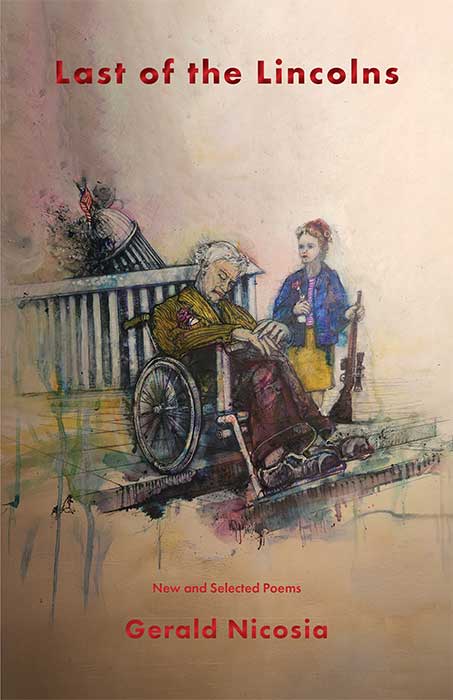
International Times talks to legendary Jack Kerouac biographer Gerald Nicosia about his new collection of poetry, Last of the Lincolns.
‘The Last of the Lincolns,’ described by original Beat writer Charles Plymell as ‘some of his best poetry in this important book of his generation,’ is your seventh book of poetry. Tell us about this new collection…
I had not published a poetry collection since Beat Scrapbook, which came out in 2020, right in the middle of Covid. There were no book parties for that book, only a couple of Zoom interviews. Prior to that, I had been publishing a poetry collection every few years, and I had been writing poetry all my life, since I was sixteen years old and had found my literary calling after reading Thoreau. But starting with Covid, my life got all blown to hell. My wife moved out, saying she had to help our son, but she never came back, and eventually told me she was divorcing me after 30 years of marriage. I had to sell our house, could no longer afford to live in California—where I’d lived for most of the past 45 years—and moved to Knoxville, Tennessee, because it was a cheap place to live, and I have a lifelong friend there, the singer/songwriter RB Morris. But I got there, found the new house full of fleas, tried to exterminate them myself, poisoned myself, collapsed, broke my back, hit my head, and stopped breathing. I would have died except that my friend RB Morris had just arrived, found me looking dead on the floor, and worked a miracle by resuscitating me. But even after I got out of Fort Sanders Hospital in Knoxville after a week, being treated for the poisoning, I had to deal with the broken back, and later with the blood on my brain, which nobody knew about until I collapsed again while recuperating at my daughter’s house in Cotati, California. I had brain surgery in Santa Rosa Hospital on Christmas Eve, 2022, to remove the blood from my brain—again saving my life.
I’ve endured a lot more cataclysms since then, but I’ll try to get this back to my poetry. My writing, especially my poetry, turned darker—which I remember Ginsberg saying happens to the writing of all American writers as they get older—and he cited Melville, Fitzgerald, even Kerouac. Sickness, disability, and death began to loom a lot larger for me as a person; and since my writing is a big part of how I deal with the world, those things entered my poetry as well. Some of the poems that deal with these things, which appear for the first time in Last of the Lincolns, are “The Things I’d Miss,” “On Turning 73,” “Poem for My Persimmon Tree and the Crows Who Visit It,” “Poem for the Three Giant Oaks in George Sandoval’s Backyard in Ojai,” and “Death Is a Gift Too” (a poem that was written earlier, but reworked several times over the years). I knew that I was writing important new poetry, but I was in Knoxville, a kind of cultural backwater (though it has produced two great writers, James Agee and Cormac McCarthy, and is probably best known as Hank Williams’ last stop the night before he died in the backseat of a limousine). There were no venues to read my poetry, and nobody that I could find interested in publishing it, so I was just putting poems in drawers. And my life had become kind of hermitic anyway—maybe hermetic too, in that living alone causes a lot of changes in your psyche, where you start to discard the connections to the outside world, and start to find your satisfactions more and more inside, in your own mind. In practical terms, if you’re a writer, you think less about publications and publication parties and readings, and start to feel it’s enough just to have the creative thoughts—that you no longer need to share them with anyone. It’s not a particularly healthy way for anyone to get, and probably most dangerous for a writer, since writers tend to live inside a good deal of the time anyway, and their relationship with the outside world can become more and more tenuous as they get older.
What pulled me back into the world, and got these poems into a new book, was, strangely enough, my continuing urgent medical needs. Perhaps because of all the stress I’d been through, I developed a serious and very painful autoimmune disease, for which treatments were still in the experimental stage. The doctors had been giving me large doses of prednisone, which was making me sicker and sicker (as well as fatter and fatter), and I was searching for a specialist who could help me—which is not an easy thing to find in Knoxville. Then one day I got an email from a fan, a young Surrealist poet named Kris Biernat in Chattanooga, telling me about a doctor near him who had helped his wife, and could possibly help me. I made the trip to Chattanooga and found the doctor, who did help me immeasurably, and I began spending a lot of time with Kris. It turned out Kris had started his own small publishing company, Lemures Books, and it also turned out Kris was a fan not just of my Kerouac biography Memory Babe and other Beat writings, but of my poetry as well.
One day we were riding around Chattanooga in Kris’s car, and we started talking about my poetry. And all of a sudden Kris started spouting a lot of amazing metaphors. I remember he said, “Entering your poetry is like entering into an abandoned Japanese temple. Though all of the people have gone, you can still feel their presence and their beauty, you can feel every breath they left there, like the history of the whole universe.” And I was just astonished! I told him that I had not published a poetry collection in a very long time, but that if he felt so strongly about my poetry, he should be my next publisher and publish my next book of poetry. He agreed on the spot. Since at my age (I’m now almost 77 years old) it might well be my last book of poetry, we decided it should contain new as well as old poems—poems that were written over my whole half a century as an American poet. That was how Last of the Lincolns was born.
Kris later had a personal tragedy that kept him from publishing the book himself—and after some false starts, the book landed finally with a distinguished poetry publisher in Oak Ridge, Tennessee, where the atom bomb was built! That is, Iris Press.
What are the major themes?
The major themes of Last of the Lincolns are the big ones: love and death. If death is one pole of human life, love is the other, and the poems in Last of the Lincolns vacillate between the two, just as most human lives do. There is a big section in the book about women, called “Wives, Mothers, and Daughters.” That is because, for me, women have always represented love. I suppose if someone wanted to psychoanalyze me, they could look at the fact that I had an extraordinarily loving, caring, and nurturing mother—many people thought we were too close, and we probably were—whereas my father was violent and angry for most of his life. My father loved me too, for sure, but the explosiveness of his anger always clouded that caring; and his anger finally killed him, high blood pressure and heart trouble, at age 62. So my gravitation has always been toward women. They give birth; they give life. Women’s love I see as a force that enhances and preserves life. Men with their wars are always killing other people, ending life.
One of the core poems in the book is “Rosie,” written to my third and current wife, a Filipina who is younger and in many ways vastly different from myself. The whole book is actually dedicated to Rosie. The poem lists many things I could not do without in my daily life. And it concludes with the fact that the image of Rosie’s face, which is imprinted in my mind, is the most essential thing of all for me, because the kindness and love in her eyes is a kind of a light, a beacon, without which I would never be able to find my way through “the thorny, dark thickets” of this world.
I hope my remarks about the opposition of love and death don’t sound too simple-minded, because obviously I see the complexity within that dichotomy; and the poems, I hope, reflect that complexity. You could see pain as a sub-theme in the book. I was raised Roman Catholic, but Catholics and Buddhists—whom I also respect a lot—both see life as pain from birth to death. There is a poem for my adopted Chinese daughter, now known as Amy, “Poem for My Daughter Wu Ji on Her First Birthday,” in which I talk about watching her discover the world. It is, of course, one of the joys of parenthood to watch your child discovering the many facets that make up our world: “you stare/ so hard at waitresses explaining the menu …/ or the way your grandfather lifts his fork.” But, like all parents, I realize that as my daughter gets older she’s also going to start apprehending things that are ugly and hurtful, and I felt the pain most parents feel at knowing we can’t protect or shield our children from the dark side of life, that the bad is part and parcel of the good:
there’ll come a day
when maybe you’ll be mad
at this whole big terrible world
I fathered you into
and wonder who betrayed you
by making you think that
love was the only force
that makes the sun rise
I don’t try to pretty that fact up. And in fact, I include a poem about my mother, “Surprises,” that balances “Poem for My Daughter” in the sense that it reinforces it. In “Surprises,” I tell how my mother, now confined to a nursing home after several strokes, tells me
“I always thought old age would be nice …
but it’s not—-
I was mistaken.”
Throughout the book, I try to create links or bridges between love, pain, and death, and for me that mediating or connecting factor is compassion, the single most important perception, awareness, emotion, state of mind—whatever you want to call it—that makes life on earth bearable. There are many poems in Last of the Lincolns written as tributes or memories of individual people—usually people I knew well–and one could say, “Nicosia is always writing about Beat people, beatniks, oddballs and misfits.” But the people I choose to write about are almost always people who embodied and showed compassion throughout their lives.
I’m curious about the title. It’s not the president, I now know, it is American volunteers who fought in the Spanish Civil War against Franco. What are you relating to there?
The poem “Last of the Lincolns” is about the American volunteer soldiers in the late 1930’s, who went to Spain with the Abraham Lincoln Brigade to oppose the fascist uprising against the republican government of Spain, led by Hitler’s ally Francisco Franco. Many of the Lincolns, as they called themselves, were Jewish, like my friend Eddie Balchowsky, who had lost his right arm in the crucial battle of the Ebro Valley. Although the death camps were not yet known of, the world was already aware of Hitler’s vicious persecution of the Jews; and in Balchowsky’s case, the civil war in Spain was a personal fight, because he did not want to see this kind of brutal racial hatred continue to spread in the world. Of course, it was also clear to the Lincolns that the fight between freedom and totalitarianism was coming to a head with the rise of fascist governments all over Europe. These young men were idealists, who were willing to put their lives on the line to keep freedom alive. And to get back to my earlier argument, they were also people imbued with an extraordinary compassion, who were willing to give their own lives so that other people would not suffer or die under the iron heel of a dictator.
I used to go to the annual reunion of the Lincoln Brigade members in Oakland, as they were rapidly dying off of natural causes at the start of the 21st century. Each year the survivors would look more frail and decrepit; and at the 2005 reunion, which I write about in the poem, many of them couldn’t even get out of a car or even out of a chair without the help of wives and friends. What struck me as poetic, as the subject for poetry, was that you could see by the fierce gleam in their eyes that the same compassion that had led them to risk death in Spain almost 70 years earlier was still alive in their hearts; in their faces you could still see the flame of idealism and quest for justice that was in them as young men, which had never died. That struck me as a poem; and once I saw it, I knew I had to write it.
What recurring images or emotions are you drawn to in your poetry?
As for emotions, I think I’ve already answered this in part—clearly love and compassion are emotions I’m drawn to. But I also deal with fear. Fear is kind of the antithesis of compassion; fear is what kills compassion, prevents it from growing or gaining ground in a person’s life. In the poem “Death is a Gift Too,” I talk about how nature has always been healing for me, but I suddenly realize that at some point in old age nature’s healing grace is going to be taken away from me—I’m going to be locked away in a seniors apartment or, worse, a nursing home like my mother ended up. I think about two of my heroes, Henry Thoreau and John Keats. Thoreau, who had spent so much time outdoors, was confined in the parlor of his family’s big frame home in Concord the last few months of his life, incapacitated by tuberculosis. I visited that house. I also visited the small apartment on the Spanish Steps, the Piazza di Spagna, where Keats died, also confined to his bed by tuberculosis. I was seized by a real fear of being similarly confined—cut off from my love of nature–when death approaches. But what saves me in the poem—as indeed in real life—is my love of other people, my realization that in giving to others, the pain and isolation of death are countered, even “redeemed”—though that might prove to be a poetic exaggeration.
Your question was also about images. I’m a very visual person—I love photography—and my head is always filled with images. But I guess a recurring image for me is the indomitable countenance on so many people—people I’ve known, people I’ve only seen in photographs or movies—who refused to be cowed by the troubles and horrors in life, who refuse to be held back by the darkness. It is that face you see on human beings determined to keep marching forward no matter how many obstacles and forces attempt to hold them back. That is, in essence, what my poem about Jan Kerouac is about, “On the Way to Kerouac’s Funeral.” I saw Jan wearing that face so many times, as kidney failure weakened her body, as the people who had stolen her father’s estate used all their money and power to crush her and her late-in-life fight for legal justice. I write about her
… high seriousness,
and dignity too, when people challenged you.
I admired that so much
just as I did your iron will
to face down death
with no chips left to bet against him.
Who are your greatest poetic influences and why?
I have so many poetic influences it would be hard to list them all. But I like the simple narrative poets like Carl Sandburg, Edgar Lee Masters, and Vachel Lindsay, who tell human stories in their poems, who care about the people they write about, and who celebrate the simple human virtues like hard work that perseveres for a lifetime, the iron determination to oppose injustice, or courage in the face of certain defeat. I learned a lot from poets who make music with their words, like Dylan Thomas and, of course, Jack Kerouac, who felt his poems were jazz choruses. I love Frank O’Hara, because he finds poetic moments—what I guess Kerouac would call satori or sudden flashes of brilliant insight—in the most mundane circumstances of daily life. I also learned a lot, and was deeply influenced, by many of the poets I knew personally. Paul Carroll in Chicago was both a mentor and friend to me. He taught me that a poet must pursue every painful and shameful memory as far as he is capable of, because only in that kind of raw and, at times, horrible honesty can a great poem emerge.
I also learned specific things, approaches and techniques, from many of these friend-poets. Aram Saroyan taught me the importance of words sounding like they go together. He taught me this with a simple little ditty he wrote using his name: “Aram Saroyan—my arms are warm.” And Antler, who was a protégé of Ginsberg, was a very powerful influence on me. We’re still in touch by letter, though he now lives as hermitic a life in Milwaukee as I do in Knoxville. He taught me that any time you are startled by one of your own perceptions, you have stumbled upon a poem. The first time we had this discussion, we were sitting in my sunny apartment in Pacific Heights in San Francisco, around 1981, and he was marveling at the huge stack of manuscript, over a foot high, that would eventually become Memory Babe. The discussion then moved on to Kerouac himself, and I told Antler how when I first came to Kerouac’s grave in Edson Cemetery in Lowell, I kneeled to pray, and suddenly had a vision of Kerouac’s bones only six feet beneath me. Antler suddenly exclaimed, “You’ve got to write that down! That’s a poem!” We subsequently talked about this for a while, because I was a little confused, to say the least. And that’s when Antler explained to me how we can’t let these kind of startling perceptions pass away, because these are really the seeds of the greatest poems we will ever write.
There were many other poets who have influenced me, and continue to influence me. I should also mention Joanne Kyger, who was for a time Gary Snyder’s wife—a devout Buddhist and also someone who kept away from the limelight, didn’t pursue fame. She lived most of her life in the remote California coastal town of Bolinas, and for the most part shared her poems with friends—though near the end of her life a beautiful collected poems, About Now, was published by the National Poetry Foundation. Joanne taught me that writing poetry doesn’t have to be a grave affair; it can just be fun. Although she had had more than her share of pain in life, she would often laugh, enjoying her own wit, while reading her poems.
What poetic techniques did you learn from your favourite poets?
Both Gregory Corso and Bob Kaufman taught me the importance of humor in poetry. Although I’m not the funniest poet you’ll ever read—I remember a young woman at Nicky’s Bar in Lowell accusing me many years ago, “Don’t you ever smile?” when I was wearing one of my usual worried faces—I have always been attracted to black humor, and it finds its way into some of the poems. When I heard that the English Cemetery in Rome was threatening to dig up Corso’s ashes because the money originally paid for his plot was only good for ten years, I couldn’t help laughing and remembering how many times the real, live Gregory Corso had been tossed out of places. So now even his ashes were about to get tossed out! As Antler would say, I knew that was a poem, and the black humor of it was a bonus.
Most of the time I use a more modest, tongue-in-cheek kind of humor, as in the poem “On Reading Some of the Dharma,” where I contrast children cutting the leaves off houseplants with scissors to the poets gathered in the other part of a living room, ponderously discussing the deconstruction of poems.
Corso also taught me about the value of the poet wearing masks—not writing a poem in his own person but often in the guise, or from the point of view, of another. Corso himself often wore the mask of a clown. I have not used the clown mask a lot myself, except perhaps in what I call my haiku. (I’ll skip the fact that haiku purists have complained that I don’t follow all the exact technical Japanese rules for haiku, but have turned haiku into my own sort of private three-line zingers.) In the haiku where I say, in a deadpan tone, that the kindest face I found in a certain California café belonged to a dog, I’m definitely playing the clown.
From Corso and Kaufman’s poetry I also learned not to be afraid to be outrageous—in fact, to push a poem as far as possible toward being outrageous. A lot of people have told me they think my poem “Wuji Faces Her Birth Place,” about my daughter preparing to visit the town in China where she was born and abandoned, is a great poem. And I think one of the things that makes that poem great—if indeed it is—is that it is both tragic and outrageous at the same time. I transcribe word for word dialogue from my small daughter that a lot of people would consider unmentionable. In her angry spiel, she rants
You’re my fake dad
Your penis is a fake
I can kick you in the balls because …
Your balls are fake too and
You won’t feel it!
Wuji’s words are outrageous, but it is their very outrageousness that marks them as authentic, and makes people pay attention to the poem.
I also keep in my mind Ted Berrigan’s words—“You need to lie more in your poems”—which was related to me by Berrigan’s friend Aram Saroyan. There is a paradox there, of course, in that I am a great believer in honesty in all writing. But I think partly what Berrigan meant was that you need to see things that may not be there, but that could be—see things that didn’t happen, but could happen, so that the poem opens wide to new riches like a melon you have slit open. I think this is true for a poem of mine like “Poem for the Three Giant Oaks in George Sandoval’s Backyard in Ojai.” The poem could simply have been about my sitting down in the quiet, sunny backyard of my friend George Sandoval, in the pretentiously wealthy California town of Ojai—a place where William Randolph Hearst was reputed to have spent time, and which has more recently been home to a number of New Age gurus. But I report that as I sat there, the whole world stopped moving, stood still, for a few moments that scared the hell out of me. Of course the world didn’t really stop moving, but I was trying to relate some meta-sensation I had—not paranormal, exactly—but rather to suggest how everything about that place and that moment in time put me into a kind of altered state. You see, I’ve now used a lot of words to try to describe it. Whereas by lying, describing something that didn’t actually happen–saying the world stood still, that all motion stopped–I captured the essence of what I felt in a lot more concise and, I think, more powerful way. Thank you, Ted Berrigan!
This recounting of influences from other poets could go on almost indefinitely, but I would like to add how I have been influenced by some of the great poets. Emily Dickinson taught me about the importance of surprise, especially surprise endings in a poem—so that you feel the same stroke of delight as if you’ve just opened a well-wrapped present. And Walt Whitman taught me about the use of repetitions and hypnotic rhythms to make the poem cast a kind of spell, catching the reader in a web of your words, which holds him in your world, keeps him from returning to his own world, to real life. When I put down Leaves of Grass, for example, I often feel like I am leaving a wholly different world and coming back to my own, like waking from a magical dream that held me spellbound. It takes a great poet to do that.
Like almost all modern American poets—or at least those in the Beat and post-Beat schools—I was deeply influenced by William Carlos Williams’ theory of the “variable foot,” of finding rhythms that are more in harmony with Americans’ actual speech patterns. I am always listening for the natural rhythms of American speakers, and I am often amazed—as Williams was—by the beautiful rhythms you often hear from ordinary speakers on the American street. I try to remember those rhythms, to recapture those rhythms, in my poems.
As is becoming obvious, most of my poetic influences are American. But I did my Master’s thesis on Wordsworth, and I’d be surprised if you didn’t find a few hints and shadows of that great British Romantic in my poems—especially in my preference for the natural world as opposed to things human. And I have always loved that decadent Frenchman Baudelaire. I couldn’t help but learn from him, from his Fleurs du Mal, and especially from his dictum about “epater la bourgeoisie”—shocking the middle class. I believe, like Baudelaire, that to be really good a poem needs to shock the reader, at least a little bit—jolt him out of his everyday awareness.
Last of the Lincolns includes a broad range of poetry: eulogies to friends, murmurs of aging and mortality, love lost and found and lost again, haiku that aren’t always strict with syllables, and the epic, titular final section. How has your poetry developed over the years?
I suppose the answer is that I have aged, I have lived, I have experienced more of life. My early poems were idealistic, romantic—a vision of the kind of heroic aspirations most young people have. And then as you get older you realize how complicated life is—how complex people are—that good and bad, heroic and shameful, saints and sinners—can’t always be easily separated. As a writer gets older he also reads more, and more different kinds of writing. You look for different forms that maybe will help you express that complexity better, or more fully, and so you start trying out things like odes and eulogies and even haiku.
Are you primarily a poet of the page or the stage?
I like to believe both. The Beats believed a poem wasn’t worth much if it couldn’t be read aloud. And I will always love to read my poems to a live audience, to get the immediate response of people’s facial expressions, their sighs or exclamations or laughter or applause. I believe poetry is communication of living people, of a bard telling stories or truths to the people around him. But I also love the intricacy you can create by the patterns of words on a page, a puzzle of black marks on white paper that readers can spend hours mulling over, extracting layer after layer of meaning, like peeling the layers of an onion. I always loved the story of a fan telling Robert Frost about a meaning he had discovered in one of Frost’s poems, and Frost responding, “Gee, that’s good! I never thought of that!” You can only keep extracting those kind of hidden meanings when a poem is written down; it would be hard, if not almost impossible, to extract those layers of meanings just by listening to a poem.
Many of our readers know you through your highly-regarded critical biography of Jack Kerouac, Memory Babe, or Home to War: A History of the Vietnam Veterans’ Movement, both significant tomes. How difficult is it to transition from scholar to poet?
That’s a good question, but in some senses a superfluous question. Because I’m the same person writing all those things, from biographies to scholarly histories to poems. I sat in on many of Ginsberg’s classes at the Naropa Institute (now Naropa University), and I remember Allen always stressing that it’s the quality of one’s mind that gives value to any writing. “Mind is shapely, art is shapely,” he liked to say. And I’m not trying to brag here, but I think it’s the fact that my mind is always thinking in poetic image and metaphor that helps make even my most detailed historical works easier and more pleasurable to read. A prominent Chicago professor of writing, John Schultz, once told me he felt that Memory Babe read like a novel, and I took that as a high compliment. If one has a poetic turn of mind—and I hope that I do—I think that adds richness to whatever one writes.
Let me give you an example of what I’m talking about. In Chicago I knew Studs Terkel quite well, and I think his works documenting the lives of ordinary people, like Division Street America or Working—are enormously important and seminal. Someone recently gave me a volume of local history about Door County, Wisconsin, Door to Door, written by an obscure but brilliant poet who spent most of his life hidden away in that remote, rural corner of the Cheesehead State, Norbert Blei. And they wanted to know if I thought Door to Door was on a par with Studs Terkel’s books about forgotten or overlooked Americans. And I surprised that person by saying, I think Blei’s book is better than those of Terkel! And I meant it. Because as good as Terkel’s books are, there is little or no poetry in them. But Blei’s book, recounting the stories of these ordinary townfolk, shimmers with poetic visions and insights—what Kerouac called satori—from start to finish. And it’s those poetic flashes, at least for me, that give the most pleasure in reading.
Fans of the Beat Generation will be pleased with the “Kerouac and Other Beat Heroes” section—Jack features several times, along with Gregory Corso, Jack Mueller, Jack Micheline—that’s a lot of Jacks—Neeli Cherkovski, Bob Kaufman, Allen Cohen, along with many others. Why do you think the Beats and their successors continue to resonate with us today?
Because in the past hundred years of literature in English, I don’t think there’s been another group of writers that stressed so much both honesty and compassion in their writing. We live in an age where official lies, advertising lies, government lies, are pervasive, and people are literally thirsting for honesty. They find that honesty—about everything from politics to money to drugs to sexuality, even to states of mental health or sickness—in the Beats, who struggled and suffered and lived more intensely than almost any other group of writers. In the words of that great writer Henry James, in The Ambassadors, they lived more than other writers, and so they had more true things to say.
The other thing people are thirsting for in today’s brutally cold, callous world is compassion. We’ve got this situation in America now of tens of thousands of decent, hard-working, family-loving immigrants being housed like animals, being treated worse than animals, in big warehouse detention centers. And most people don’t seem to bat an eyelash; they just accept it and look away. But the Beats force you to look at things like that, and they urge you to do something about it. Kerouac’s favorite definition of Beat was “sympathetic.” To be Beat, for Kerouac, was to care about everyone and everything—even though there might be a great personal cost for so much caring. And that’s something I think we all need to listen to a lot more right now.
Tell us one of your favourite pieces from the new collection. What does it mean to you?
I’m very attached to what I call my “people poems,” the poems that are eulogies or sometimes just simple remembrances of people who made a deep impression on me. These poems constitute a large part of my poetic oeuvre. The people I write about have not necessarily played a key role, or any significant role, in my life, but their life is to me a marvel—that human life can take such diverse shapes, and yet all seem to have a common attribute, which is a life-and-death fight against the overwhelming odds that being alive has thrown against them. We’re all literally fighting for our lives, and that both fascinates me and fills me with admiration—and sometimes sorrow too, for the ones who don’t make it. If I had to pick out one poem in the collection that I often read to myself over and over, it is the remembrance of Scottish-American Vietnam veteran John Mulligan, “Johnny We Hardly Knew Ye.” John came to the United States from Scotland as a teenager, only to end up in the U.S. Air Force in Vietnam, where he was traumatized for life by the brutality and legally-sanctioned mass killings. Back in America, in San Francisco, he spent ten years living on the streets out of a shopping cart, his brain heavily deranged by substance abuse, but he survived it all to write a really great book, Shopping Cart Soldiers. And then, irony of ironies, now an honored author, still in his mid fifties, with a loving fiancée and a seemingly bright future before him, he was killed instantly one night by a hit-and-run driver.
In the poem “Johnny We Hardly Knew Ye,” I try to capture what it was like to be this man’s friend, and also what it must have been like inside him. Some men spend their lives looking for the origin of the Nile or the origin of the Mississippi. I spend my poetic life seeking the origin of love, and I found it in this Scottish-American man, who even after writing an award-winning book couldn’t pay his rent, who was still drowning, he said, in the all-too-common “pain of the streets,” but who never stopped seeing all people as his brothers and sisters. John Mulligan wanted to be remembered, he said, not as a “famous writer,” but as one of
. . . those the Amazon tribes call
“the people of the heart,”
A title someone gave [him] one night at a reading . . .
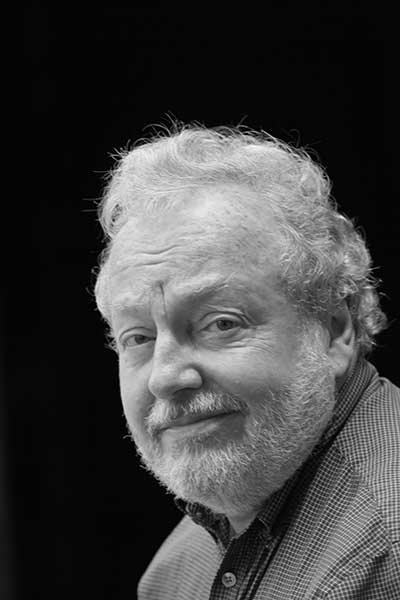
Photo by Ken Miller
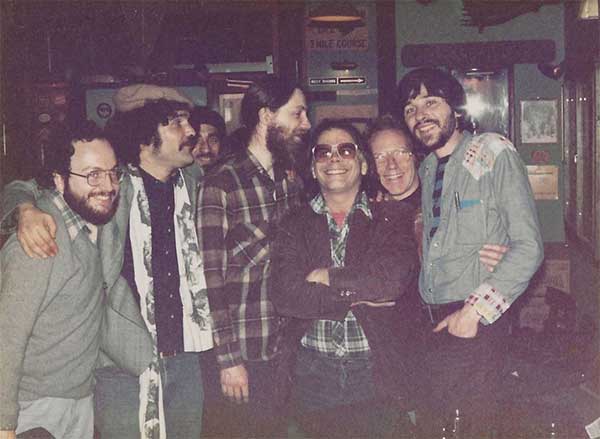 Post-Beat poets and artists gather in Spec’s Bar, North Beach, San Francisco, circa 1981. From left: Gerald Nicosia, Tony Seldin (known as The Vagabond Poet), Kush (in background), Antler, novelist Dennis Dunn, musician Phil Deal, and Jeff Poniewaz. Photo by Phil Cousineau.
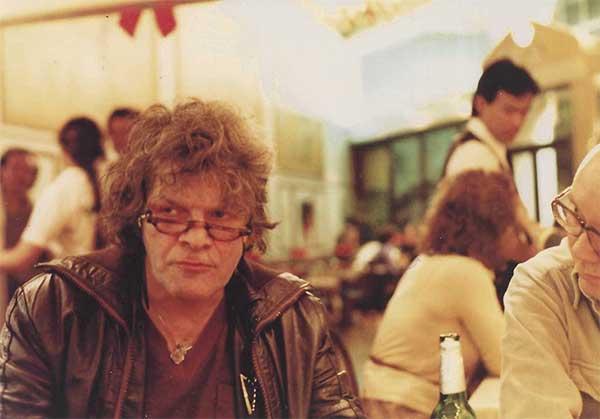
Gregory Corso, Caffè Roma, North Beach, San Francisco, circa Christmas 1983. Photo by Gerald Nicosia.
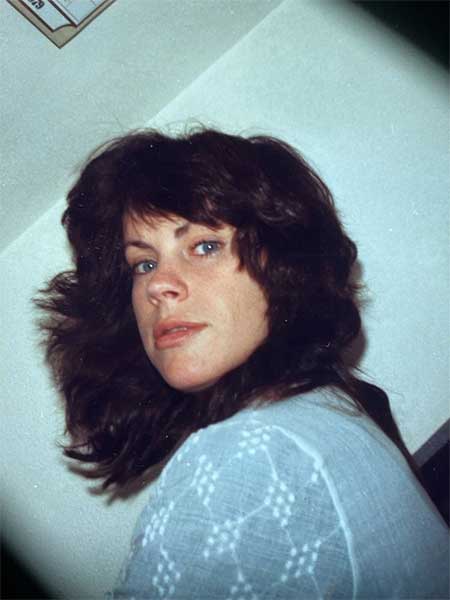
Jan Kerouac, San Francisco, 1979. Photo by Gerald Nicosia.
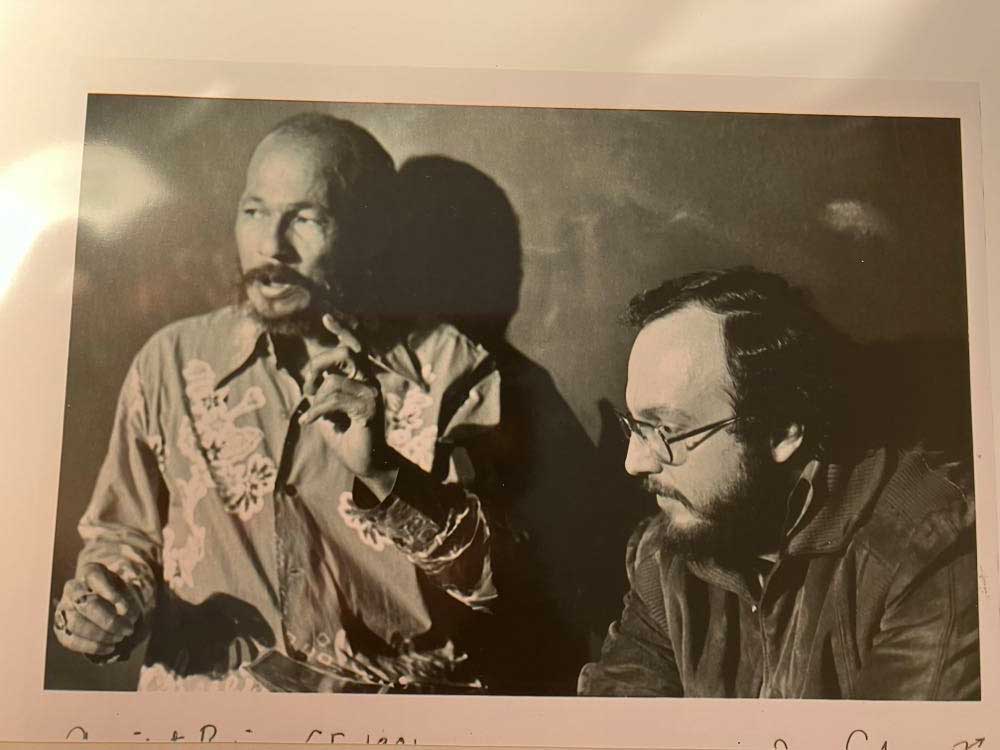
Gerald Nicosia and Bob Kaufman, party for Kaufman’s The Ancient Rain, Old Spaghetti Factory, North Beach, San Francisco, September, 1981. Photo by Ira Cohen.
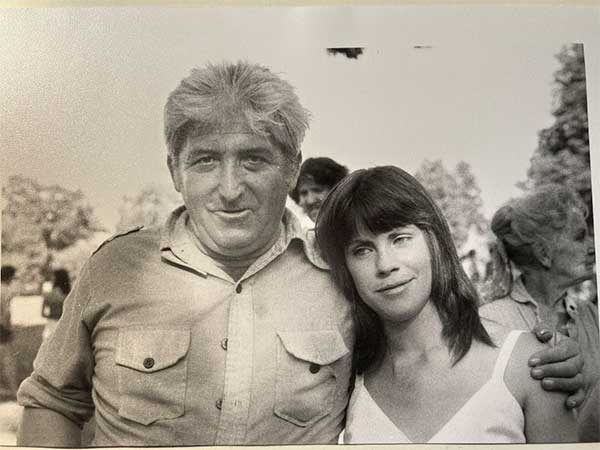
Jack Micheline and Jan Kerouac (both are subject of Nicosia’s “people poems” in Last of the Lincolns), Boulder, Colorado, July, 1982. Photo by Gerald Nicosia.
.
Leon Horton
Thanks for the interview. I learned a lot about the author and the role it played in birthing his poems. I am struck his luck in having a nurturing mother and how women have saved him in his life. I did not have a nurturing mother but women also saved me. Some of us just vibe to women. I am glad to hear of his recovery from his major health problems. He is young and I expect to read more works from him
Comment by Charles Tay on 1 August, 2026 at 11:22 pm