
«If there were a general persuasion that protectionism is an evil for the country that adopts it and not only for others, and that, if anything, the only advantage that can (it is not said that it should) derive from it is the reduction of the tariffs of other countries; if above all it were understood that the damage of the protective tariffs of others lies only in the consequent reduction of trade, and that by erecting further customs barriers on our own account we run the risk of obtaining only a further reduction of trade to be added to that already existing: then I do not doubt that many would be more cautious in extolling the use of this double-edged sword» [1904] [Americans do not study, do not study, do not study]
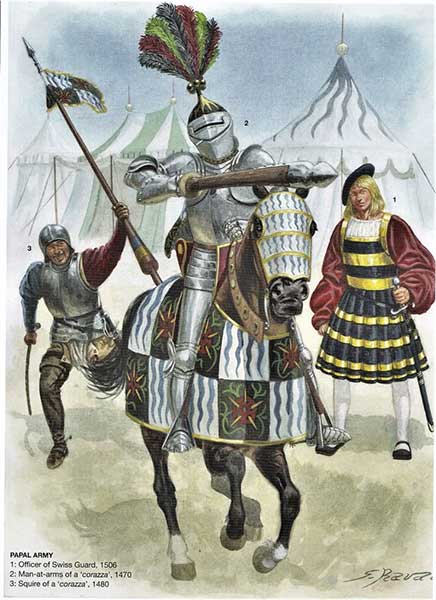
The etymological origin of the term «canon» is not at all sacred. The κανών -όνος (derived from κάννα «reed») is the rule of the mycenaean craftsmen, remembered in the proto-“Homeric” epics. Religions – like certain contemporary orphic «poetry» – managed to work magic: to trans-form craftsmanship into law, the rule into a ruler. Eusebius of Caesarea remains in literature, with his canon tables. Roman law does not know the concept of «canon» (in the Theodosian Code, canon means the ordering of the tributes in kind of the provinces, that is, the canon frumentarius or, in the ius civile, the rent). The Church, with its Papal State, began very late to oppose its “canon” to the νόμοι of the civil authority: canon law was, and remains, the law of a foreign national state, received in Italy by ecclesiastical law. Religious literature took possession of the concepts of “canon” and “tradition”, intersecting them: secular literature acquired the two denominations from Dante, and did not abandon them until the twentieth century, with the desecrating collapse of the modern in the late modern (many elegiacs, in the twenty-first century, have not yet noticed the change of “paradigm”, and continue, undaunted, to write like Luzi). Therefore jurisprudence is innocent; rea con-fessa is Italian literature, which borrows from the canon law of the Papal State, with its Pope King and its cardinals, the two notions of «canon» and «tradition», and all its tools/armamentarium. The endless discussions on «canon» and «tradition» have never developed, indigenously, abroad: Italy, with its Papal State, is canonical. The only solution is to conquer the Italian Papal State of art, which does not exist, and believes it does. I have gone, since 2005, with «[…] shears to cut the barbed wire of the «canon» and of the «Tradition» […]». Too bad that, sapper, sapper, I realized that the army, behind me, that was supposed to attack the enemy trenches, had dissolved: many doing their own dirty business, many bought and sold by the Papal troops, many prophesying from neighborhood newspapers. The sapper, under the snipers’ aim and on a suicide mission, got tired of waiting for an army of non-existent sharpshooters, crawled under the chevaux de frise, miraculously returned to the trench, and from there, launches interventionist harangues and hand grenades on the Papal troops and sharpshooters (which seem to me to be the same thing, as happened in historical reality). I have no intention of sacrificing myself against the Papal army or against the Savoy army: here the Austrians are worse than the Bourbons, and the Savoys could be worse than the Papal troops. I throw a hand grenade at the enemy trench and a hand grenade at the friendly trench. Just to be safe. The more damage i do, in Italy, the better: it is interventionist late modernism. To use a mouse from the economic sphere, I would say that […] in the stock exchange of twentieth-century and post- […] Italian poetry, with the failure of Lehman, no value is left (not even mine: after all, the anti-canon is a canon of the anti-canon, ad infinitum).
.
Ivan Pozzoni
.