
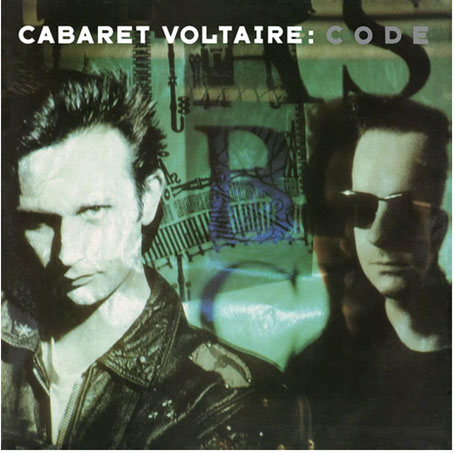
One of the most surprising recent developments in the world of post-punk music has been the sudden reappearance of Cabaret Voltaire. Two-thirds of the original line-up of the notorious Sheffield miserabilists – Richard H Kirk having passed away in 2021 – mounted a string of high-profile 50th anniversary American and UK gigs. These were very well-received, and the resulting live document, But What Time is it Really? presents them performing songs from throughout the group’s long career with dynamism and verve. This reissue will no doubt add to their revived profile.
First, a little context: as the 1970s gave way to the early 1980s, post-punk bands eyed what was then called ‘the mainstream’. Surely, with a little tweaking to their sound and image (and in some cases, line-up), they could sell a lot more records, making assaults on the Top 40 and the dancefloor? Bands like Public Image Limited and The Human League seemed to manage hits and critical acclaim, without watering down their essential elements; New Order were just about to jump from their greatcoated, grey past as Joy Division into the dancefloors of the UK and America with ‘Blue Monday’, ‘Confusion’ and a whole string of 12-inch singles. Cabaret Voltaire, cut’n’paste, sound collage denizens of Rough Trade records, suddenly wised up to this and through the good offices of Some Bizarre, pocketed a shiny new, well-funded record deal with Virgin.
The immediate fruits of this were the two albums The Crackdown (1983) and the follow-up, Micro–Phonies (1984). A warmer, percussion-heavy analogue sound resulted, along with near-hit singles ‘The Crackdown’ and ‘Sensoria’. Stephen Mallinder’s vocals became more foregrounded whilst Richard H Kirk’s collage beds became integrated into more melodic songs. These were ripe for remixing and danceable, whereas previously pieces like ‘Yashar’ and ‘Sluggin’ fer Jesus’ stopped short of immediate comprehensibility. This was a big step-change for the Cabs, as they were familiarly known to their audience. They still wrote pieces like ‘In the Shadows’ and ‘Badge of Evil’, both from the Crackdown album, but now songs like ‘Just Fascination’ and ‘Spies in the Wires’ were more accessible and melodic. Elements of dub and earworms abounded: ‘Sensoria’, in particular, seemed tooled for the dancefloor, especially in John ‘Tokes’ Potoker’s 12-inch mix.
This worked up to a point. Their old friends New Order, who had in their early days rehearsed and recorded demos at the Cabs’ Western Works studio, were, however, having much bigger successes with tracks like ‘Confusion’ and ‘Thieves Like Us’, and were collaborating with big-name producers such as Arthur Baker. So it came about that, by 1987 they were on the EMI label, ready for another crack at the mass-market, and Code, produced by Adrian Sherwood, was the result.
Like the previous Virgin albums, this didn’t quite become the huge success that EMI might have wanted, but it sold well, provided two near-hit singles, ‘Don’t Argue’ and ‘Here to Go’, and showed the Cabs edging closer to “normal” rock music. Adrian Sherwood broke down some of the densities of their sound and replaced it with a spare, percussive heartbeat that managed to remain avant-garde, but also, possibly, danceable. The album also featured guest musicians – Bill Nelson from Be-Bop Deluxe on guitar, and Dolette MacDonald on backing vocals. Nelson knew the band, and hailed from the same area: his choppy, restrained guitar-playing fits instinctively into the processed beats and carefully-assembled treated vocals. Macdonald had sung with the ten-piece Talking Heads – she can be heard on the 1980-81 disc of The Name of this Band is Talking Heads – and someone, somewhere had noticed the resemblance between some of the call-and-response vocals on the Code songs and Heads songs like ‘Life During Wartime’ and ‘The Big Curve’. It helped that the Cabs had written several of their most melodic songs: Code opens strongly with ‘Don’t Argue’, ‘Sex, Money, Freaks’, ‘Thank You America’ and ‘Here to Go’, and they all sound remarkably contemporary and polished on this remaster. The second half of Code is not quite so successful: ‘Trouble (Won’t Stop)’ and ‘No One Here’ seem to pale in comparison with the other tracks, although ‘White Car’ is a fast, brief song which reminds me of some of the earlier, Virgin-era pieces. The final track is the title piece, ‘Code’, another great piece addressing paranoia, deviancy and the coming digital age with prescience: it has weathered well.
Code didn’t quite make Cabaret Voltaire mainstream pop stars – they probably wouldn’t have wanted that, anyway – but it still sounds remarkably fresh and cutting-edge, and a real step forward from Micro-Phonies. This deluxe Mute Records reissue is to be welcomed, as the original album has been out of print for years, copies selling on eBay sell for ridiculously inflated prices. As an extra enticement, there are two further discs of alternate mixes and dance versions, under the guidance of ‘name’ 1980s producers such as John Robie and François Kevorkian. These will give you all the Code you could possibly want: there are, for example, seven different versions apiece of ‘Don’t Argue’ and ‘Here to Go’! Most of these non-album tracks have not been previously gathered up, although a few appeared on the Conform to Deform box set on Virgin in 2001. ‘Thank You America’, originally slated as a potential third single, pops up in a further five versions. How rewarding you find these depends on how much tolerance you have for the basic elements of a track (Stephen Mallinder’s voice, ‘found’ effects, drum tracks, keyboard riffs) being endlessly cut-up, extended and reshuffled. In amongst the twenty-four versions on discs 2 and 3, the John Robie dub mix of ‘Thank You America’, the ‘Who’s Arguing’ version and the eleven-minute ‘Hate and Destroy’ mixes of ‘Don’t Argue’ stand out. Perhaps most radically, the ‘Alternate Mix 2’ of ‘Thank You America’ removes all of Mallinder’s vocals and lets the backing vocalists take over: fun, and revealing of the commercial depths buried beneath the song.
This project was apparently instigated by Richard H Kirk several years ago, and the Cabs’ reappearance on the live circuit may be purely coincidental: it is worth observing that only one track from Code (‘Sex, Money, Freaks’) makes it to the new live album – a pity. Nevertheless, it is now easy to obtain Code and enjoy listening to music made at a time when radical exploration and development were near-neighbours to the colour and froth of the record charts.
.
M C Caseley
.