
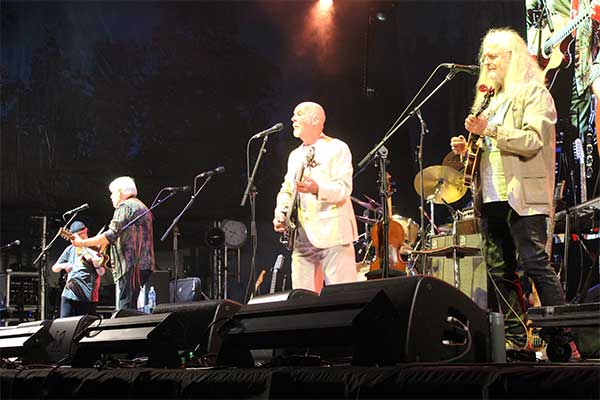
There are a lot of easy ways to approach Fairport’s Cropredy Convention – the annual gathering in the heart of England’s green and pleasant land which Fairport have been curating since the late 70s – and most of the ones you’ll see focus upon its coziness. It’s family-friendly, but with a core audience of ageing folk-rockers, the catering’s good and varied, the bar is well-stocked and busy, the facilities are plentiful and regularly cleaned, and everyone is remarkably polite.
If that all sounds a long way from the band’s heady early days, when they emerged from the same culture as International Times, where they’d rub paisley shoulders in scuzzy clubs with the likes of Pink Floyd and Soft Machine, and occasionally play in a field with a dodgy burger van and a couple of buckets (surrounded by curtains if it was a classy event), it’s because – well, because it is. The world changes, people grow old, and … but that’s a kind of obvious and reductive line to take.
Instead, let’s start with a few basics. Fairport Convention opened and closed the festival, with an acoustic amuse-bouche on Thursday evening, and a 2 1/2-hour epic on Saturday, in which a few friends joining here and there for guest spots, before finishing with every one of the 6000-ish attendees still standing joining in for the ultimate “summer anthem” as the youngsters say, “Meet on the Ledge”. Highlights included the apocalyptic 70s monster “Sloth” and a spine-tingling pairing of Chris Leslie’s “I’m Already There” and “Mercy Bay” reminding everyone that they’re not a nostalgia act.
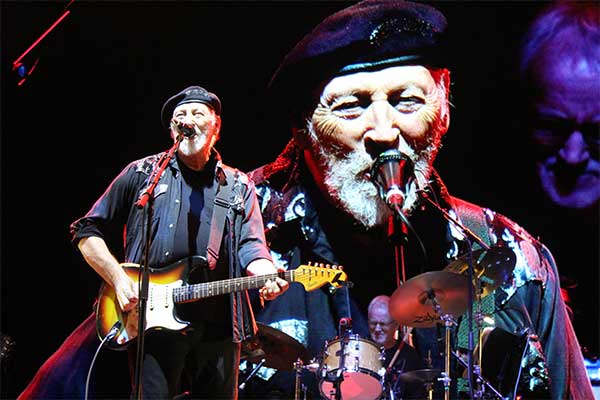
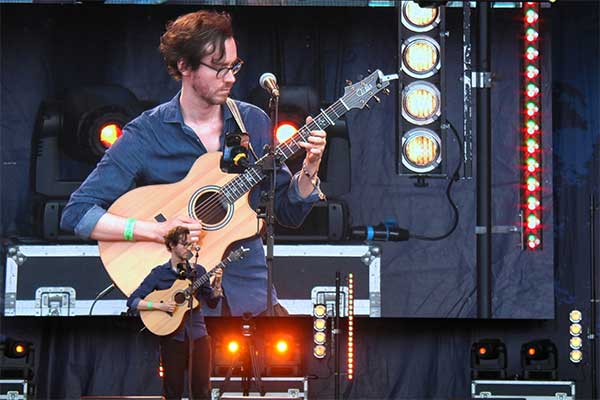
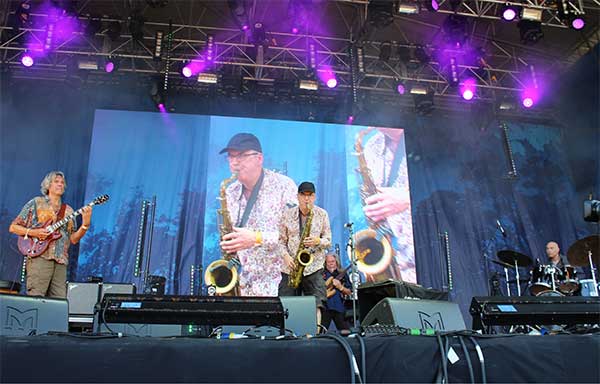
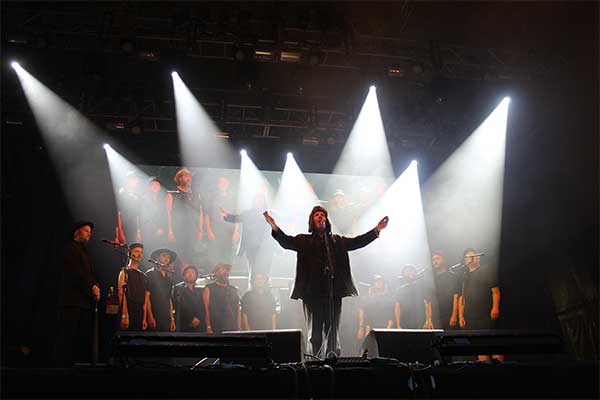
In between, there were too many musical delights to enumerate, but they included staggering guitar virtuosity in sets from old hand Richard Thompson and youngster Danny Bradley, a storm of Québécois Celtic/Cajun magic from Le Vent Du Nord, and simply beautiful (and frequently a bit silly) harmonizing from Spooky Men’s Chorale. Reminding us of the milieu from which Fairport emerged, the current iteration of Soft Machine continued to delight, baffle, and quite probably really irritate audience members in equal proportions, in a set that incorporated a lengthy bass-led improvisation when John Etheridge wandered off to find a replacement guitar string. And while Pink Floyd may not have brought their Technicolor Dream vibes, there was intergenerational representation in the form of Marshall Gilmour Webbs’ ethereal harmonies, while proud dad David G sat in the sunshine and watched from the barrier.
I mention this latter because, as far as I know, no one bothered him. It’s just not that kind of gathering, and while Messrs Peg, Nicol, Sanders, Leslie and Mattacks are happy to be collared at the bar, it’s a place where no one is a rock star. It is, if I can connect things back to the culture from which this all emerged, a place in which everyone is welcome and where everyone is a part of a bigger whole. And isn’t that what we wanted back in the 70s? Yes, a considerable amount of level-headed business sense goes into keeping it viable – the reduction of capacity from 20,000 to 6,000 last year saved Cropredy from the fate that’s befallen so many festivals in recent years and, in doing so, refocused the community vibe of the gathering – but no one gets ripped off or scammed here and, for a few days, people look after each other, whether they’re old friends or strangers. The reason why it’s so cosy is because it’s run by good people with good intentions, rather than as a cash cow to rinse the faceless punters.
And while we may have grown out of the simple slogans now, throughout the weekend there were varied reflections on, and responses to, the real trouble we’re facing – more realistic and nuanced calls to action, both individual and collective, in keeping with these complex times. We are not stardust, we are not golden, and we’re probably not going to tear down the walls, motherfuckers, but we are a community of individuals brought together by music, and I for one left the field heartened, restored, and refreshed, to carry on the daily fight against “The Man”.
.
Oz Hardwick
.