
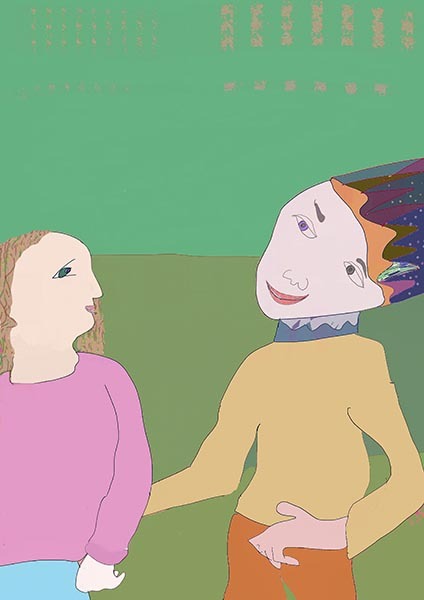
Skiffle inhabits a curious, almost whimsical corner of British musical history. Emerging in the 1950s, it was a musical form that seemed to be deliberately unpolished, almost self-consciously amateurish. Its instruments were often homemade, its rhythms rough and jagged, and its performers were frequently more enthusiastic than technically skilled. Yet this very awkwardness gave skiffle its charm and enduring cultural significance – it was music that thrived in imperfection.
Skiffle’s defining aesthetic is not its simplicity, but its productive failure to escape
it. What sounds like incompetence is in fact a democratisation of musical
authority, where error becomes a shared language rather than a deficiency.
– Dr. Sally Whitfield, Rough Harmony: Amateur Soundscapes & Songs
Rooted in American folk, blues, and jazz traditions, skiffle was the product of many influences filtered through post-war British creativity. A washboard could serve as percussion, a tea-chest could become a bass drum and a battered acoustic guitar strummed out simple but infectious melodies. The music had a raw, improvisational energy: it stumbled over its own rhythms, fumbled through chord changes and, somehow, still made a kind of poetic sense. Its lack of refinement was not a limitation but an invitation – an encouragement for anyone willing to make noise and join in.
The poetry of skiffle lies in this embrace of the everyday and the ordinary. Unlike the slick, orchestrated pop music that would dominate the decades to come, skiffle celebrated the beauty of imperfection. It was participatory rather than performative, performed in living rooms, youth clubs, and street corners instead of professional studios. The stumbles, uneven tempos, and improvised harmonies became part of the charm, adding texture and authenticity that could never be replicated in a polished recording. In a world striving for perfection after the chaos of war, skiffle felt like a breath of fresh air: messy, human, and vibrantly alive.
Beyond its sound, skiffle represented a cultural democratization of music. It suggested that music did not belong solely to trained musicians or the elite, but rather to anyone willing to pick up an instrument, however rudimentary, and try. For countless British youths of the 1950s and early 1960s, skiffle became a gateway into wider musical exploration. Many future stars of rock and pop, including members of the Beatles, began their journeys strumming along to skiffle standards in their parents’ living rooms. The awkward poetry of the genre – its rawness, its spontaneity, its joyful clumsiness – became a catalyst for innovation in the decades that followed. However,
One must resist the temptation to romanticise skiffle as “pure expression”. It is,
rather, a mediated poverty of means – an aesthetic born not of innocence, but of
social and economic constraint.
– Prof. Louise Kendrick, Scarcity and Sound: Social Musicology
Perhaps the most enduring lesson of skiffle is that creativity is not the product of technical mastery. Skiffle’s awkward rhythms and homespun instrumentation remind us that art can be thrilling even when it is unrefined. There is a form of honesty in its simplicity, a celebration of curiosity and communal experience. In the end, skiffle’s charm lies not in technical perfection but in its spirit, enthusiasm and unapologetically human. Its awkward poetry is testament to the joy of participation and the idea that music, at heart, is about connection more than precision.
Precision is a luxury of the trained ear; connection is the imperative of the human
one. Music begins where technique ends and social empathy begins.
— Gareth Hartley, “Communal Music-Making in Post-War Britain”
(from Episodes from an Alternative History of Music)
Jonathan Sinclair
Picture Nick Victor
.