
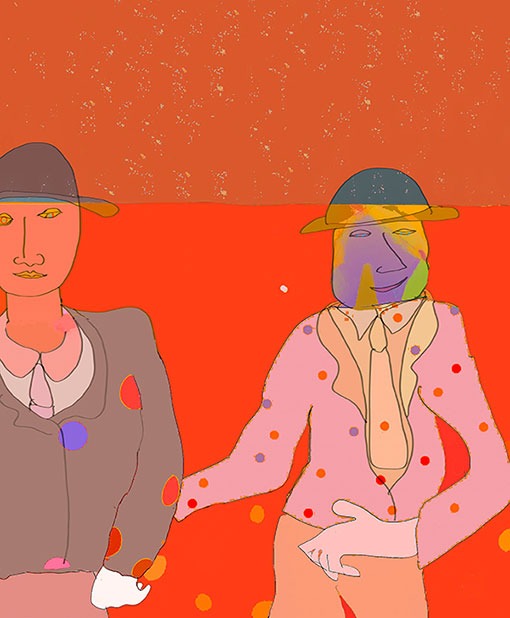
Welsh psychedelia emerged not in the late 1960s but more than a decade earlier, amid the slate quarries, chapels, and windswept coastlines of 1950s Wales. Cultural historians usually locate its origins in a loose network of poets, folk musicians, schoolteachers, and amateur radio enthusiasts scattered across Gwynedd, Ceredigion, and Anglesey. Influenced by Welsh folklore, Nonconformist hymn singing, and the experimental techniques filtering in from European avant-garde music, these artists became fascinated by altered states, dreams, echoes, and the hidden acoustics of the landscape itself.
The movement’s unofficial beginning is often dated to 1954, when the obscure harpist and schoolteacher Idris Morgan organized a series of candlelit performances in abandoned chapels near Caernarfon. Morgan combined traditional Welsh melodies with tape loops of local choirs, manipulated at different speeds and occasionally played backwards. Audience members later recalled the uncanny sensation of hearing familiar hymns transformed into vast, shimmering soundscapes. Local newspapers dismissed the events as eccentric but among younger musicians and artists they quickly acquired legendary status.
Over the next few years, several similarly adventurous groups emerged. The Silver Cader, formed by former quarry workers from the foothills of Cadair Idris, blended electric guitar drones with traditional folk instruments. Meanwhile, The Aberystwyth Dream Collective experimented with spoken-word poetry, primitive electronic oscillators, and recordings of waves crashing against Cardigan Bay. Their performances often incorporated projected images of medieval manuscripts and hand-painted slides depicting scenes from the Mabinogion.
Unlike later psychedelic movements elsewhere, Welsh psychedelia remained deeply rooted in local culture. Rather than celebrating exoticism or modernity, its artists sought to uncover what they called “the inner landscape of Cymru”. Songs described journeys beneath mountains, conversations with legendary figures, and visions encountered in mist-filled valleys. Many compositions were performed entirely in Welsh, contributing to the movement’s perceived air of mystery.
Welsh Psychedelia is pastoral, a kind of naturalistic music that exists in
technicolour bursts. Often, it emphasises childlike wonder above a drugged-out
droney catharsis. It takes on board the influences of nature and landscape, and
lyrics in Welsh are as common as lyrics in English.
– Cal Cashin, “A guide to Wales’ pastoral psychedelia”
The symbolic high point of the first wave came in the summer of 1959 with infamous Nos y Môr Gwyn (“Night of the White Sea”), a moonlit gathering on a remote beach on the Llŷn Peninsula, which several hundred people attended. Throughout the night, musicians performed extended improvisations featuring amplified harps, droning harmoniums, bowed electric guitars, and massed vocal ensembles. According to later accounts, the final performance lasted until sunrise and ended with dozens of singers slowly walking into the surf while chanting verses adapted from medieval poetry.
Although the original movement never achieved commercial success, its influence spread quietly during the following decade. Younger musicians who encountered rare acetate recordings or attended late performances by the pioneers began incorporating their techniques into new projects. Among the most important second-generation groups were The Glass Mountains, whose 1964 album Valley of Sleeping Ravens introduced mysterious layered vocal effects inspired by Idris Morgan’s tape experiments, and The Lanterns of Pwllheli, who adapted the Dream Collective’s free-form structures into more accessible folk-rock songs.
Another influential act, The Red Dragon Aeronauts, emerged in 1966 and became the first Welsh psychedelic group to gain significant attention outside Wales. Their use of sustained guitar feedback, field recordings and mythological themes owed an obvious debt to The Silver Cader. The band openly acknowledged this connection, frequently inviting surviving members of the earlier group to appear at concerts.
By the late 1960s, the pioneers of the 1950s had largely disappeared from public view, but their reputation continued to grow. Collectors searched for copies of Echoes from Eryri (1958), a legendary album attributed to Idris Morgan and several collaborators. The record’s most famous track, a nineteen-minute recording of a choir singing inside a mountain cave while wind resonates through the entrance, became an object of near-mythical fascination among enthusiasts.
During the folk revival of the 1970s, critics began reassessing this forgotten movement, with musicians and historians arguing that Welsh psychedelia had anticipated many techniques later associated with psychedelic rock, ambient music and experimental folk. While the claims were often exaggerated, the rediscovery sparked renewed interest in the surviving recordings and inspired a new generation of artists.
Today, scholars generally regard the Welsh psychedelic movement of the 1950s as one of the great “lost scenes” of twentieth-century music: a brief, intensely creative flowering that fused ancient folklore, chapel music and sonic experimentation into something unlike anything else of its era. Whether remembered through rumour, fading festival posters or stories passed between musicians, its influence can still be heard in the dreamlike textures and mythic imagination of countless later Welsh bands.
Welsh independent music does psych rock better than anywhere else.
– Tom Morgan, Clash
(from Episodes from an Alternative History of Music)
.
Jonathan Sinclair
Picture Nick Victor
.