
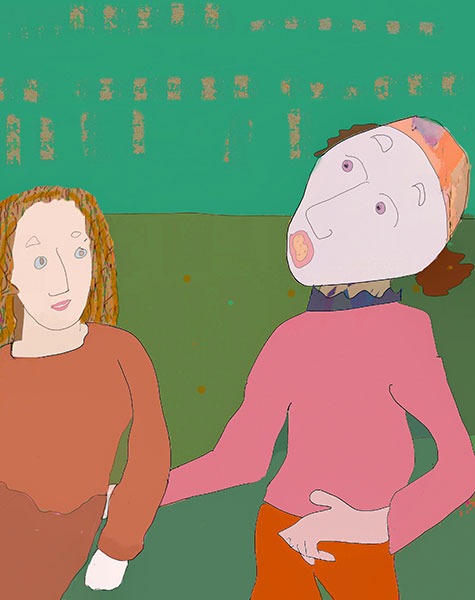
The Committee for the Regulation of Unsolicited Percussion was a bureaucratic entity established in 1902 the Municipal Council of Gloomhaven. Its primary mandate was to monitor and, where deemed necessary, suppress any unauthorized rhythmic activities occurring in public spaces. The Committee’s jurisdiction extended to but was not limited to spontaneous drumming, unexpected tapping and unauthorized clapping. The Committee ceased to exist in 1978, following a protracted dispute over the classification of The Hum.
The genesis of the Committee can be traced to a series of minor civic disturbances that plagued the central thoroughfares of Gloomhaven in the late 19th century. Pedestrians, often influenced by the recent introduction of mechanical metronomes and novelty clocks, developed a predilection for impromptu percussive displays. This was perceived by the Municipal Council as a threat to the city’s established atmosphere of deliberate silence. The Committee was thus formed, with an initial charter emphasizing the preservation of ambient stillness and the prevention of auditory encroachment.
The Committee operated with a small but dedicated staff, including Percussion Auditors and Resonance Officers, whose primary tool was the Sonometer, a device capable of distinguishing between legitimate percussive events (such as church bells or performances by the Municipal Band) and the proscribed variety. Citations were issued for violations, ranging from a formal warning to a fine of up to three Gloomhaven Pennies. In cases of persistent offenders, such as the notorious Rhythm Rioters in 1954, the Committee could recommend a temporary ban from public spaces or, in extreme instances, assignment to a sound-dampening facility
The true menace was never the overt drum solo, but the insidious tap-tap-tapping
of a bored clerk’s pencil, a sound that, multiplied by thousands, could erode the
very fabric of civic composure.
– Randall Anthony, The Whispering Onslaught
The Committee’s eventual demise was precipitated by the “Hum Controversy”. Beginning in the late 1960s, an increasing number of residents reported experiencing a pervasive, low-frequency hum. Initially categorized as an environmental phenomenon, the Committee, under its fifth chairman, Alderman Percy Treadwell, sought to classify it as a form of “sustained, uninvited percussion”. This redefinition blurred the lines between acceptable ambient noise and prohibited percussive acts, and opponents argued that the Hum lacked discrete rhythmic impulses. A landmark legal case, Gloomhaven v. The Hum, ultimately found in favour of the latter, declaring the Hum to be beyond the Committee’s remit. Now lacking a clear definition for its core function, the Committee was formally dissolved by the Gloomhaven Council Resolution 1978/B-4.
After decades spent policing everything from furtive finger-snaps to ill-advised
knee-slaps, the Committee found itself outmanoeuvred by a sound that was less
a rhythm and more a persistent sigh of resignation. It was, in its own way, a
fittingly anticlimactic end.
– Tara Jonson, The Chronicles of Gloomhaven
.
Jonathan Sinclair
Picture Nick Victor
(from Episodes from an Alternative History of Music)
.