
A brief musing from Alan Dearling
These days my base is in Calderdale. That’s in the Pennines of Yorkshire. About four miles distant, is the village of Heptonstall, perched on a rocky outcrop above Hebden Bridge. It’s an area redolent in myths and legends, not that far from Haworth and the moorlands brought to life in the writings of the Bronte sisters. But, these days Heptonstall is oft-visited as a destination in homage to American poet, Sylvia Plath, who is buried in the village graveyard. Sylvia was the estranged wife of Ted Hughes, who later became a popular poet laureate.
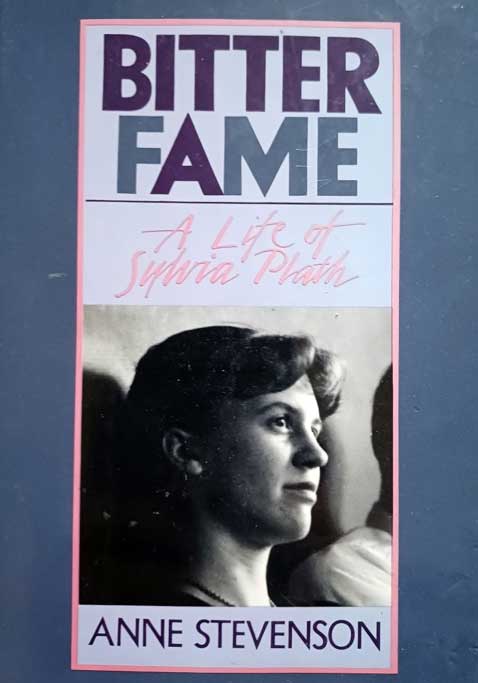
I am not offering here a ‘potted’ version of life and death of Sylvia and Ted. That tragic tale has been recounted many times. Rather, this is a brief flight of whimsy based on the fact in the diaries of Sylvia Plath she wrote that Leonor Fini was the female artist she most admired. A kind of muse. Sylvia Plath is probably best known for being married to Ted Hughes and her tragic suicide, perhaps rather more than for her writings such as ‘The Bell Jar’ and ‘Ariel’. I read about the connection in ‘Bitter Flame’ the detailed biography of Sylvia Path by fellow American writer, Anne Stevenson
In 2012, when Patti Smith came to perform at The Trades Club in nearby Hebden Bridge, Patti made a bee-line, personal pilgrimage to visit Sylvia Plath’s grave. She has always regarded Sylvia as her muse.
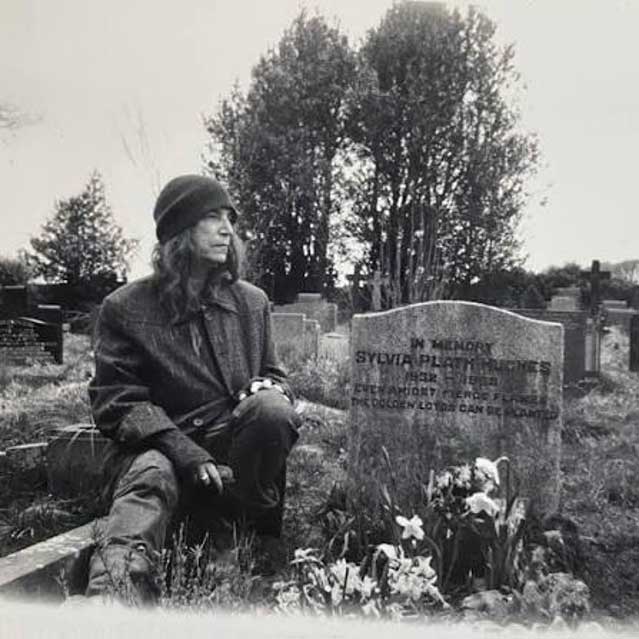
Patti Smith in Hepstonstall, West Yorkshire, visiting Sylvia Plath’s grave, in 2012. Photo: Tony Shanahan.
On-line, I learned more about the connectivity between Patti and Sylvia:
“Patti Smith does indeed maintain a deep, lifelong artistic reverence for Sylvia Plath, frequently citing her as one of her ‘literary mothers’. Smith has spoken extensively about how receiving Plath’s posthumous poetry collection ‘Ariel’ at age 20 fundamentally impacted her path as a writer.
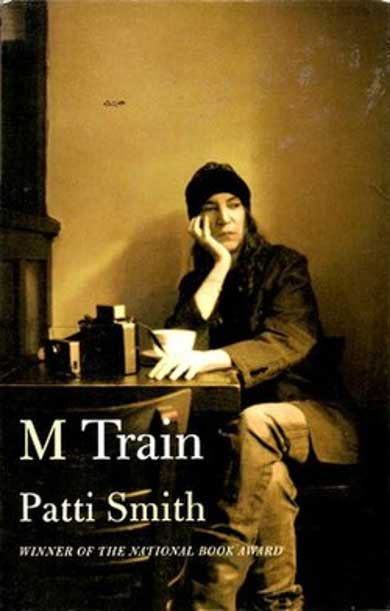
Reflecting on the collection’s immense influence, Smith recalled:
‘My copy of Ariel [was] given to me when I was twenty. Ariel became the book of my life then, drawing me to a poet with hair worthy of a Breck commercial and the incisive observational powers of a female surgeon cutting out her own heart.’
Plath’s raw vulnerability and sharp imagery heavily influenced Smith’s own writing, leading Smith to reflect on Plath in her memoir, ‘M Train’ and record haunting audio readings of Plath’s poem ‘The Moon and the Yew Tree’.”
Here is the link to that reading of Sylvia Plath’s poem, in spectral form as recited by Patti Smith (“The Moon is No Door”): https://www.youtube.com/watch?v=Bq564YmsL3s
This is a performance of quiet, powerful intensity.
When Patti Smith played at Trades Club, it was to around 190 people, making it one of her smallest live performances in years.
‘Because the Night’ at Trades Club 2012: https://www.youtube.com/watch?v=NIpoqI7bBME
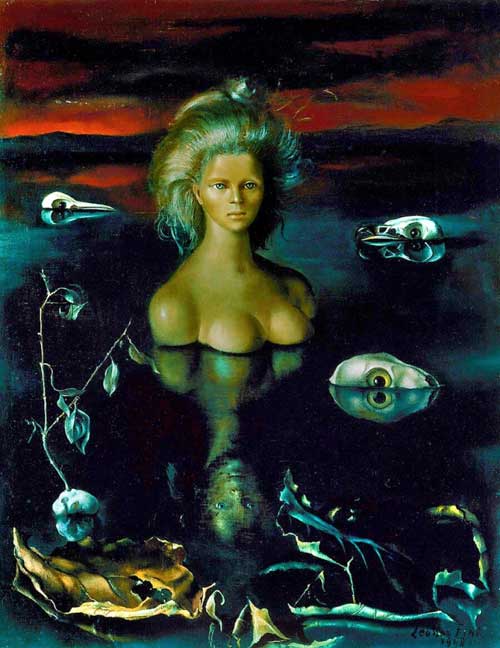
Leonor Fini and Patti Smith. Here’s where I hold up my hand to conducting a personal experiment using on-line Artificial Intelligence for what comes next. Leonor Fini is likely to be one of the most influential and controversial surrealists, who you have never heard of. Unconventional, bold in her life and art. She was an Argentinian-Italian. Well worth checking out. I put in the names of Leonor and Patti into Google search to see what information would be generated. Here is the result. I’m impressed.
“Leonor and Patti are iconic, non-conformist cultural figures from different artistic realms – Fini as a radical surrealist painter and self-mythologizer, and Smith as the punk-poet musician. They share a symbolic lineage of fierce independence, fluid identity, and the rejection of traditional female submissiveness. They inhabited overlapping bohemian avant-garde circles (such as mutual connections to figures like Brion Gysin), and are frequently invoked together in contemporary art discourse as matriarchal archetypes of creative autonomy.
Shared Artistic and Cultural Parallels
- Rejection of Conventional Roles: Both women refused to be passive muses or fit into tidy patriarchal boxes, instead claiming complete authorship over their work and public personas.
- Self-Fashioning: Fini treated her entire life, dress, and theatrical presence as a living artwork, much like Smith shaped her own raw, gender-defying aesthetic and poetic identity from the start of her career.
- The Mystic and the Misfit: Fini’s paintings of sphinxes, witches, and dominant figures mirror the raw, visionary, and counter-cultural spirit that Patti Smith brought to rock and roll.”
Leonor, Patti and Sylvia are definitely all muses. Here’s what Andrea Kollnitz says in the introduction to, ‘Becoming Leonor Fini: Theatrical Self-Performances between Art and Life’, which is due for publication in December 2026:
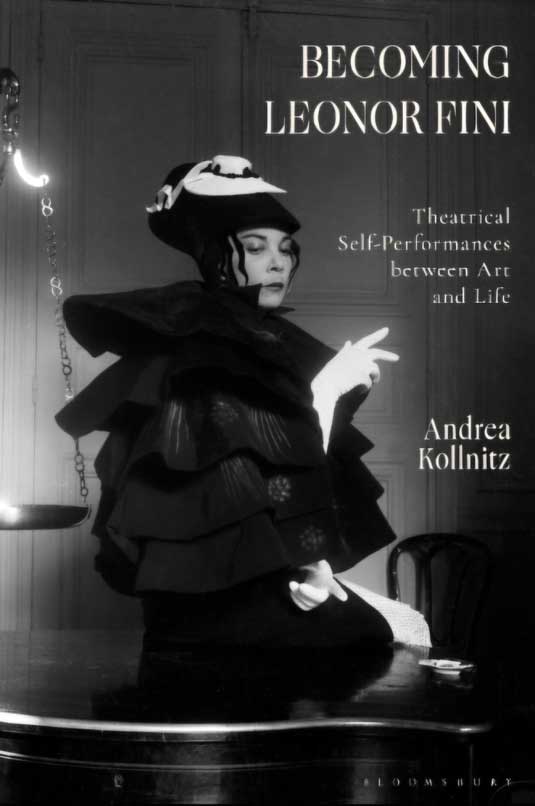
“Italian-Argentine artist Leonor Fini (1907-1996) can be seen as the original artist-celebrity; her self-mythologization was promulgated by some of the 20th century’s most prominent photographers, from Henri Cartier-Bresson to Dora Maar.
Exploring her self-fashioning and dressing-up practices in light of recent theories of performativity, this book highlights how Fini’s extension of artistic creative practices, from painted artworks to her self-creation through costumes, masks and fashion, allowed her to become a living artwork to be created and recreated on daily basis. Applying a multisensory methodology, the book explores Fini’s personal theatricality, photographic self-portraits and self-transformative, genderbending, transgressive dressing-up games in relation to surrealist practices, showcasing the hybrid identities that made up Fini’s overall character.
In three thematic sections – exploring her theatrical performances at balls, her self-fashioning in photographic and painted portraits, and her becoming-other through dressing-up – the book charts the artist’s personal and creative development, the interaction between her paintings and self-creation and her increasing self-empowerment through dressing-up. With over 100 visually-striking colour illustrations, the book analyses and highlights some of Fini’s most outstanding performances together with her paintings and self-portraits. Kollnitz argues that the way these identities were represented in the celebrity press compromised Fini’s critical reception as an artist, and how more broadly patriarchal objectification of fashionable women artists has the potential to jeopardise their professional agency. In contrast, this book showcases Fini’s self-fashioning as a tool of artistic and personal empowerment as well as an intrinsic part of her art production. In doing so, the book gives voice to the significance of self-mythologisation for artists to whom identity is fluid and plural.”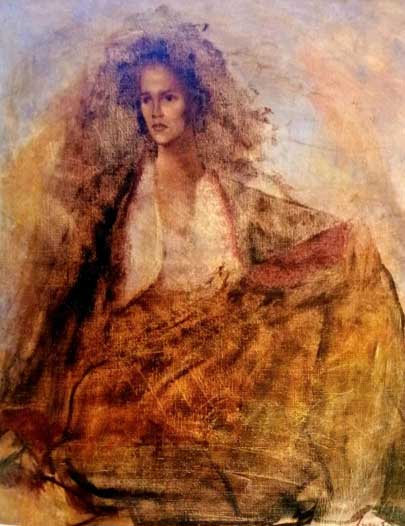
If Sylvia Plath was Patti Smith’s favourite poet/writer… Leonor Fini was Plath’s favourite artist. Exploring transgender, androgyny, melancholy, darkness, separateness, dual forces of good and evil, death and ‘otherness’.
After a struggle, I’ve found this film with English subtitles. It’s rather beautiful, haunting and crammed full of often unsettling images and sounds. Cats are always a bit creepy as are witches!
‘Leonor Fini’, directed by Chris Vermorcken: