

Martin Newell is founder of the cult English lo-fi pop group the Cleaners from Venus, and a leading figure in the history of cassette culture and godfather of DIY music-making. He talked to his neighbour MW Bewick about home recording and how his music is influencing a new generation.
MW Bewick (MWB): Almost every day you’re writing or recording. What’s the best thing about being able to live like that?
Martin Newell (MN): Well, I do actually treat it as a job, roughly like a 9 to 5. Get up, have a walk, have a bit of breakfast, start work about half nine, finish about half five or six, with a little bit of break for lunch. The fact I’m able to do it in my own home is quite good. And the fact that I’m not working with people who I might not necessarily get on with. I’ve always worked by myself.
MWB: So there are no engineers checking in or studio managers moving you on, which means really it’s up to you how and when you work. But you never work in the night or anything like that, do you?
MN: It’s rare these days. In the early days of the Cleaners from Venus, I did. I was doing a washing-up job four days a week. I would come home and get straight onto the desk – the Portastudio. I remember when they invented the Portastudio. Before then, when I just had a tape recorder and a guitar and knew three chords. I remember thinking, wouldn’t it be great if there were four of me and I could clone myself and do a little bit of bass. Once the Portastudio came along, my first thought was, in theory, that I now had the same facilities as the Beatles did up until about the end of Revolver. I didn’t have their singular talent, or their quadruple talent. I didn’t have George Martin. But in theory I had the same basic stuff. Some reviewer in a fanzine called the Cleaners the ‘DIY Beatles’. I found I could run the tapes backwards and do what I wanted. It was homemade stuff. Cheap mics can be good as well. I took a cheap mic into a very expensive studio once to record ‘Ilya Kuryakin Looked at Me’. I wanted it to sound like the Tannoy at Liverpool Street Station. It was a bridge too far for them and they said “Martin, we really can’t use this thing”.
MWB: I know there are people who take really expensive guitars to the studio and the engineer instead suggests playing on some battered old cheap guitar, saying that they’ll get a sound that cuts through the mix better.
MN: That’s because they know how to get what they want. There’s a story about the Rolling Stones going into the Tamla Motown studios and asking to move all the gear around. And they get told “No, that’s how we always have it set up.” All the Motown records are set up with the bass in this place and the drum kit in that place, and they always use the same mics. They found the winning formula and that’s what they use and that’s the brand. It was a pretty good formula. There are things I do to get the sound I want, and I prefer recording at home.
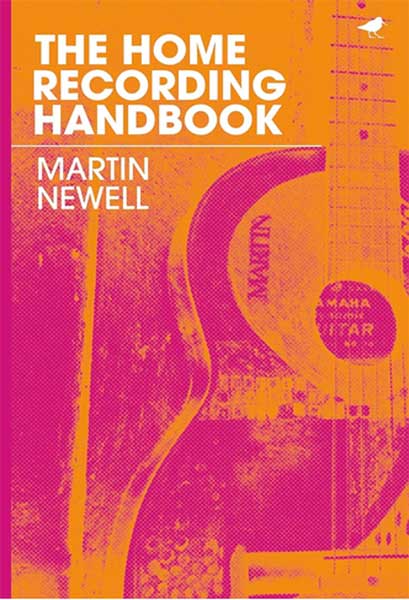
MWB: What was your intention when writing The Home Recording Handbook?
MN: Well I’m a wily old writer now and good at telling stories. So I didn’t want it to be one of those beardy bespectacled books, saying “make sure that you have exactly nine decibels”. I just wanted to tell a few stories – but, by the way, if you are thinking of putting a guitar in, try direct injecting it. It’s not a ‘how to’, but there is a bit of ‘how to’ in it.
MWB: So there is some technical stuff in the book.
MN : Oh yeah, there is.
MWB: But it’s more like an ethos thing, isn’t it? Like how to be a home recording person, and why you might be like that.
MN: The main thing is to get up and do it. It’s the same with writing. The first rule? Start to write something. I go to it with all the alacrity of a schoolboy on a Saturday morning. He’s just got his pocket money and he’s got the whole weekend ahead of him and he’s going to build a den. It’s like that. It’s building a den.
MWB: That sounds like fun.
MN: Yeah.
MWB: What’s the best part of recording this way, at home?
MN: I can take my time. I think it’s best to have a basic idea or two. Those ideas, when you initially get them, don’t happen again. So you note them down sonically. You keep it. And that always remains the nucleus. Once you start changing it, it might not be as good. I lost a song recently like that. When I’ve got a bunch of ideas, I think, “Oh I’ve got a luxury of two or three days recording.” I go through the list. I think, “Well that sounds quite promising. But it hasn’t got a middle eight? Never mind. We’ll start on that.” And then I’ll put a beat down and then strum it down and then put a guide vocal on it just to see how it comes out.
MWB: Do you miss anything about those sessions where you’ve been in a big professional recording studio?
MN: The really good thing about working in a recording studio is as you get to know the engineers and the tape op. Then the jokes turn up. All that stuff is bonding. So I sometimes miss the company. I’m a very sociable animal. I like being part of a gang. I liked it when it was just me and Lol in the early Cleaners. We had a right laugh.
MWB: If you’ve been working at home on your own all day, you’ll break off and go to the pub for an hour, right?
MN : That’s exactly what I do. Same as if I’d been in an office. I go and I sit at a pub table with four or five other people who also have been working. And we moan a little bit about the day. It’s kind of like the office drink.
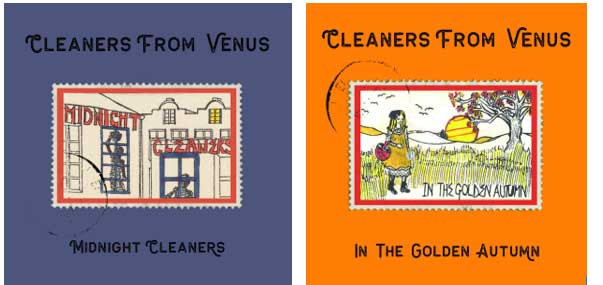
MWB: The classic Cleaners songs have a distinctive sound, but it’s developed over the years. You’ve got a slightly more, I don’t know, slightly more mature sound now in some ways, with maybe some jazzier chords and things like that coming into it.
MN: I do like to experiment. I know I could go and do a standard Cleaners song tomorrow. Sometimes I might. But I’m always interested in new ideas. A lot of the younger people who listen to my records prefer the original roughhouse versions of ‘Victoria Grey’, ‘Julie Profumo’ and ‘Mercury Girl’, although that’s not to say they ignore the versions we did in the studio because the posh version of ‘Mercury Girl’ is really popular too.
MWB: It’s a great sound.
MN: Yeah, I’m surprised someone hasn’t taken it and done something with it. That’s a proper hit record. I wrote it for my former bandmates in Gypp who’d got an American contract. I said, “Well, I could write you some songs.” I think ‘Victoria Grey’ and ‘Mercury Girl’ were from a batch of songs I wrote for them, not for me.
MWB: ‘Mercury’ with the full-blown sound is on Going to England, isn’t it?
MN: Yeah, ‘Mercury’ goes on that. But it’s beautiful. We did a great job. When we finished it we sat around and it was late. We were working late at night. We listened to it. All just sitting there. What year was that? 1986.
MWB: It’s got a really 80s classic pop sound.
MN: One reviewer said it sounded like ‘Every Breath You Take’, that sort of thing. But I thought “OK, maybe”. But it’s a very different sort of thing. I got sleigh bells and we rattled them then put them through a giant reverb. We sat there listening to it and thought, “Wow, that sounds classy.” At one point the Mercury telephone company were looking to use it. Do you remember Mercury?
MWB: Yeah, the company that gave the name to the Mercury Music Prize.
MN: Yeah. Of course, it never happened.
MWB: We’ll it hasn’t been picked up yet, but you never know.
MN: The tracks that get the Spotify ratings in the millions, are often the cheap ones I did at home as a demo. I’ve been described as lo-fi but I’ve been mid-fi for some years now. Somebody said that once I’d got the 8-track, I’d gone mid fi. So I’m definitely mid-fi now.
MWB: Some home-recording artists buy more and more kit – different plugins and reverbs.
MN: It goes on and on and on. I don’t want to confuse myself. I’ve got bits of kit that I’ve occasionally bought. There’s a vocal echo unit and I nearly never use it.
MWB: So you are happy in a mid-fi place?
MN: Yeah. There’s nothing extra I really want anymore. If I really wanted some luxury, I think I would possibly hire a string quartet. I might need someone to help me mic them up. It’s all very well for me mucking about with my string sounds on the keyboard, because I use them as accessories really, like necklaces and handbags. But if you wanted a full suit of clothes, you would need to get a string quartet.
MWB: If you were going to get a dream piece of kit, what would it be? I guess a string quartet might count.
MN: It might. I’ve got most of the sounds I want. I’ve got a Rickenbacker 12-string. That was the absolute apotheosis of a ‘When I’m a big boy, I’m going to wear long trousers’ type of guitars. So I’ve got one and it’s like an expensive sports car stuck out there in the garage for a sunny day if I want to impress someone. And I’ve got a Hofner Verythin. That was the last object of desire I wanted. And a Hofner bass. I’d always wanted one of those. They’re really neat. I’ve got too many guitars in a way, and I haven’t got as many as you probably. I haven’t got as many as most people who’ve got guitars. I’ve got about three or four acoustics, maybe another 12-string acoustic. They’re very good songwriting tools. I played a 12-string acoustic for years.
MWB: What about keyboards?
MN: I really like my Kurtzweil. It’s great. And once a bit of kit’s got my heart, I think I’ll have another one of them. I live in a tiny house, so having a room where I could just leave the kit set up might be a luxury. But then I’d have to employ someone to dust it or put the dust covers over it. But I need to put everything away at the end of the day. And really, when I’m recording, I have a keyboard day, then a guitar day. And once I’ve finished with the bass, that goes away. Which is a shame as it’s a lovely thing to look at, but it keeps the dust off it.
MWB: Have you never fancied getting a drum kit?
MN: No, because I can’t play a drum kit. I owned a drum kit for about four months. It might have been a Broadway. I gave my best shot to learn how to play the drums but found out I didn’t have the simple coordination. I couldn’t keep a beat. And that’s the beginning of the discovery of my dyspraxia. And I can’t play an accordion either. It seems to be about anything that requires me to do three or more things at a time.
MWB: But you can play piano…
MN: I found my way around it. I use it as a composing instrument.
MWB: Songwriter piano? But you’re better than that. Maybe you just found your way around it in an unorthodox way.
MN: Well, you wouldn’t trust me with it. When in doubt play less. A lot of pianists play too much. Sometimes you only need one hand in the studio. But I can do an impression of jazz. What else can’t I do? Yes, the accordion. You’ve got buttons, keys, and then you’ve got to push this thing out very slowly. That’s three things. The same goes for a cello or violin. I can’t play any bowed instruments. I can’t do something fast and something slow at the same time. And I’m not sure I could sing and at the same time play bass very well either.
MWB: I think a lot of people find that kind of thing tricky. Whereas guitars are alright somehow.
MN: Yeah. Anyway, I’ve got the hand of cards I’ve got – and I play them as best I can.
MWB: A younger generation of people are still discovering the Cleaners. Why are they still so popular?
MN: Well, they weren’t ever so popular, especially not with my own generation. When I first started playing and making my first experiments – the kinds of things that are getting millions of streams now – people were like, “What are you doing here?!” They either thought it was rubbish or just bloody odd. Of course, we were punk-rock age people. They should understand. I actually didn’t really like a lot of punk rock. A lot of it was just a bloody racket. What it did though, was that it fired up the idea of a three-minute song. And in on its coat-tails came people who were writing songs again.
MWB: What about when the Pistols gave way to PIL, Public Image Ltd, and their experiments in sound?
MN: I had Metal Box. I got that the week it came out. I didn’t like most of it. I thought it was a fucking racket. I just didn’t understand it. I liked ‘Public Image Limited’, the single. But really I like pop. I’m a pop fan. What do I think people see in the Cleaners? I think they just hear something that sounds real. It hasn’t been compressed to fuck. There isn’t some fascist of a beat going ‘boom’ all the way through. I think Cleaners music works very well in a bed if you’re feeling a bit lonely, worried about nuclear war, not having a great time with your girlfriend, boyfriend, or something else. It sounds real.
MWB: How do you feel your current work relates to that earlier stuff?
MN: That’s really difficult. I think some of it’s still quite similar, but on the other hand, I’m trying to avoid self-parody or repeating what I’ve already done. I know I could go and make a Cleaners-by-numbers track tomorrow, but I’m constantly looking at doing something else. I don’t want to get too much into the jazz way of things. That’s music with a beard really, isn’t it?

MWB: What’s in the pipeline?
MN: We’ve got this new album coming up. I wrote a stack of songs for it. Then I agonise about which ones to put on the record. It’s seems a reasonable problem to have. I’ve also got some weird stuff. There’ll be a separate album after this. A bizarro album, a Broken Biscuits album. I don’t want the songs hanging around for years. But I’m well pleased with some of the more recent stuff. It’s great to get into fresh material and it’s cheerful. I think we need to be cheerful. At the time when the Cleaners started, Mrs Thatcher had just got in. There were strikes. There were riots in Brixton, Bristol, Manchester, Birmingham. All the cities went up. In fact, we did a song about it called ‘F.U.N.’ We were very aware of all that. And ‘Union Lads’, which is a really spiky song. And then the Russians walked into Afghanistan.
MWB: That’s right.
MN: People were wondering if there was going to be a nuclear war. There was a picture in the Evening Standard of Jimmy Carter who was President at the time, and a great big headline saying ‘Biggest threat to peace since World War Two’. Everyone was really jittery. There were marches by the concerned classes. And this went on for most of Thatcher’s reign. And there was also the beating of hippies at the Battle of the Bean Field, where she actually sent the cops in. That was just one step beyond, even for the British people. Out came a bunch of vicars and country people with flasks and blankets for the hippies. That’s what you were facing all through the 80s. But on the news you saw these people in London drinking cocktails, and it looked like one big party – these wankers who liked Spandau Ballet and the Blitz club. We didn’t see them as working-class people partying it up in cheap clothes. I just saw it as a bunch of London twats. And the Cleaners were set up against that really. The whole DIY movement wasn’t political as such, it was sociopolitical. When I got my first record contract, we were up in a record company office and there was a bunch of quite expensively dressed kids in leather trousers with flutes of Champagne lurching around the stairs. I said “What’s going on out there?” It was Dexys Midnight Runners having a party. They’d just signed another deal. They’re drinking Champagne while I’m writing a song called ‘Young Jobless’. Searching for the new soul rebels? Fuck that. And so we wrote a song about all that called ‘Be an Idiot Pop Star’. So yeah, we were quite rebellious.
.
MW Bewick
The Cleaners From Venus on Bandcamp.
The Home Recording Handbook is published by Dunlin Press.
.