
According to the marketing blurb for Cherry Red’s latest post-punk 3-CD compilation, Armagideon Time – When Punk Met Dub (1978-1984):
‘In the wake of punk rock, as artists began to express their eclectic tastes and broaden their sound palettes in ways unimaginable just a few years before, the scene’s love affair with Jamaican reggae and dub blossomed. The resulting crossover saw punk rock groups begin to adopt dub rhythms and production techniques into their sound and established reggae and dub producers begin to work with punk rock bands.
‘Oozing liquid, analogue echo, sparse reverb-laden vocals, heavy duty basslines and laid back rhythms, ‘Armagideon Time’ journeys into the dub-punk crossover in the UK and further afield, bringing together raincoat-adorned working-class bands, Jamaican producers, British reggae pioneers, die-hard punks and London-based future dub exponents in an unlikely soundclash adventure across 3CDs. With scene-setting notes by low-end legend Jah Wobble and band-by-band biographies, this is a must-hear sequel and companion piece to our highly regarded ‘Roots Rock Rebels’ punk/reggae set.
‘For fans of post-punk, dub and reggae, and the socio-political scene of late 70s and early 80s multicultural Britain.’
I was 26 when, in the summer of 1979, a young man walked into my record shop in Hastings old town with a box of singles under his arm. The young man was David Lloyd George. The single was The Force is Blind by Alternative TV, Mark Perry’s seminal Brit punk band (Perry was also responsible for legendary punk fanzine Sniffin’ Glue, a spiritual successor to classic-period IT). The Force is Blind was a radical departure from the band’s punk roots – experimental art music, chaotic and unsettling. If Perry had wanted, out of frustration with punk at that time, to alienate his original core audience, this would do the trick. Dave asked me if I wanted the box of singles to sell. I said yes. We subsequently became friends.
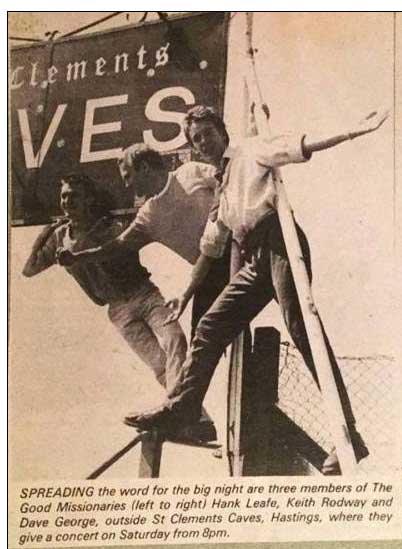
Meanwhile, Perry had accelerated his post-punk agenda and had renamed ATV The Good Missionaries, inspired by a track from the band’s second album, Vibing Up The Senile Man. Shortly after that he decided to move on again and explore other avenues. The original Good Missionaries released a live album, Fire From Heaven, but, sadly, no studio tracks. Dave George, with Perry’s blessing, took on the name. In September 1979 he invited me to join his nascent band as bass player. I told Dave I was flattered but had never played a note in my life. Dave replied that that was the whole point – he wanted someone coming fresh to the entire scenario. Trained musicians came with baggage. He would teach me the basslines he wanted. I said yes. Four months later, in December 1979, we began recording the album that was to become Pylons, with Perry stepping in to replace our original drummer – who, in true rock and roll style, had quit on the eve of our first London gig – on six tracks. We released a single, Deranged in Hastings, and worked on more material with a new line-up during early 1980. After the band split nine months later, all the recorded material intended for Pylons languished in a drawer on a pile of cassette tapes – the original master tapes long lost – until 2019: a chance encounter at a boot fair in Rye, a small market town in East Sussex, led to a version of the album being released on Color Tapes, an independent record label based in Hastings. Rock and roll knows no boundaries.
Dave came from what seemed to me as a newbie in the rarefied world of the arts to be a creature from an exotic realm. His sister, Sara, is an acclaimed author, feted for her novel The Journal of Mrs Pepys. His father, Peter, was also a writer. His 1958 Cold War thriller novel, Red Alert, was adapted into a screenplay by Peter George together with American author Terry Southern, and became the classic Stanley Kubrick movie Dr Strangelove, starring British comedian and actor Peter Sellers. Going to Dave’s modest terraced house in Hastings old town was a surreal experience. On the shelf above the fireplace, among more mundane objects such as a framed family photo and a mantel clock was the Hugo award for Dr Strangelove [Dave later had an open invitation from Hollywood production company Miramax to write a sequel to Dr Strangelove. He never accepted their offer]. During the Bay of Pigs crisis in 1962 a stand-off between American president John F Kennedy and Russian supremo Nikita Krushchev brought the two superpowers to the brink of nuclear war. Dave’s mother, Margaret, told me that she could recall her husband, along with Kubrick and Sellers, discussing, if the bombs went off, holing up in St Clements Caves, an extensive network of underground tunnels and caverns once used by smugglers in old Hastings. They would take enough food and water for 3 weeks. This was heady stuff to a young lad from a lower middle class family for whom the arts at this level was unknown, if not hostile, territory.
There was, however, a family tragedy that cast a shadow over all this and led to a decline in Dave’s mental health later in his life. One day in 1966, when his son was 8 years old, Peter George locked himself in his study in the family home, put a shotgun in his mouth and pulled the trigger. Dave never recovered from the shock. The song The Final Solution, a track from Pylons, is a testament to this, and can be difficult to listen to.
For the release of Pylons in 2019 I picked 8 of the 11 tracks recorded by Grant Showbiz – later known for his work with The Fall, The Smiths and Billy Bragg – in his Street Level Studios in London’s Maida Vale, assisted by engineer Keith ‘KifKif’ Dobson. I combined these with two later-period songs recorded in rehearsal. Due to Brexit, a CD release that was to combine the original album with extra tracks was abandoned by Color Tapes due to new import/export duties being imposed by an alienated European Union. Thanks Brexit.
On Friday June 26th 2026 Cherry Red Records released Armagideon Time – When Punk Met Dub (1978-1984), the latest in their extensive catalogue of post-punk classics and rarities. The release traces elements of the intense period of experimentation from punk to post-punk between the late 1970s and early 1980s. The collection features the Pylons track Bending a Border. The song, inspired by Irish-American actor Roma Downey, Dave’s girlfriend at the time, is about the Troubles, the 30-year ethno-nationalist conflict in Northern Ireland that ran from the late 1960s until 1988. To mark this release, an expanded version of Pylons is now available on Bandcamp. It features the Color Tapes release in its original sequence, the tracks featured on Deranged in Hastings, four previously unreleased tracks featuring Mark Perry released as a limited-edition lathe-cut in 2022, plus an extra 7 recordings including rehearsals, an alternative version of Bending a Border and an unreleased song recorded live at the Alhambra in Brighton – a pub later demolished to make way for a corporate suite of offices and a hotel. Two tracks feature the line-up of ATV that recorded The Force is Blind – Dave and Mark plus bassist Dennis Burns. Hailed on its initial release as a long-lost post-punk classic, Pylons traces the development of The Good Missionaries Mk 2 over its 10-month span from late-period British punk, bristling with attitude, to something more mercurial. It stands as an indication of what might have been, had the band survived. In retrospect, having said that, it would most likely have struggled for survival anyway, as did many such bands at the time, with the rise of American music TV channel MTV. Even such initial punk die-hards as the Damned and Siouxsie and the Banshees fell back at that time on cover versions of songs by the reviled old guard – The Beatles’ Dear Prudence for Siouxsie Sue, Alone Again Or by Arthur Lee’s Love for the Damned, and – more bizarrely – their cover of Eloise by 1960s pop-crooner Barry Ryan. Faced with the dawning of a new world – MTV, CDs, digital recording technology, the rise of what became known as conspicuous consumerism – the dynamic was simple: adapt or die. How this would have affected someone like David George, who prized above all else in his music honesty and authenticity, we’ll never know.
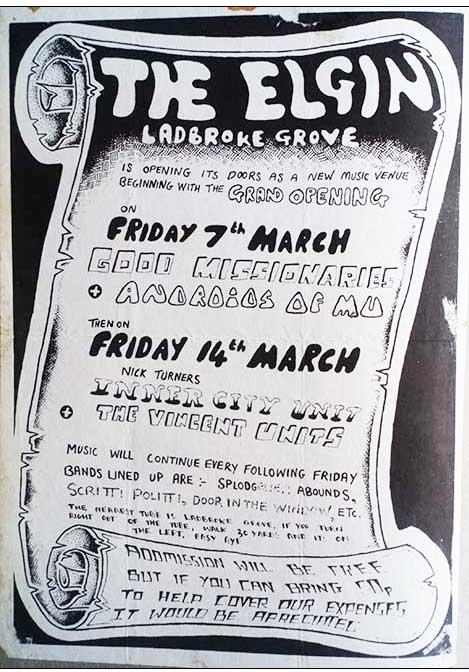
Musician Martyn Griffiths, who knew Dave during their time as students at Brighton Polytechnic – now Brighton University – recounts his memories of their friendship during that period.
The Sadness of Dave George
Dave George was a charismatic kind of fella. When he walked into the refectory of Brighton Poly he was noticed. He had a seemingly quiet confidence. In lectures he spoke calmly and with self assurance. This was backed up by Dave being a nice, approachable quiet guy. But more importantly, he was in a band, a band that put out records and did gigs in London. And yet, there was a sadness about Dave.
I quickly got to know him. I vaguely knew musicians who Dave worked with, so Dave knew who I knew, but for him it was on a different level. It wasn’t long before Dave got together with Roma Downey, the best-looking girl in the college, who went on to become a stellar Hollywood actress. On one occasion Dave told me his band were playing in the Art College in central Brighton. I attended but was left bemused. Dave was playing in a different key to the rest of the band. Also, what was the point of two bassists playing exactly the same chords? I couldn’t understand any of it . And Dave played only one or two identifiable chords during the entire night.
The crowd seemed to enjoy it.
Dave always gave me new recordings of his work. A couple of terms drifted by. I regularly spoke to Dave – we got on well. And then…he left. His relationship with Roma fizzled out and he returned to Hastings. After that I saw him once or twice, and then never again. Three decades later I decided to reconnect with him. To my sorrow and surprise he had died: essentially, it seemed, he had drunk himself to death.
But in all this, here’s the great mystery to me personally. Dave’s father, Peter George, was a famous author. He was from the small Rhondda Valley town Treorchy, where I was from. My parents would have known him. Peter committed suicide when Dave was very young. Dave never got over it. I recognise that now. We discussed just about everything apart from background or place of origin. I later learned that his full name was David Lloyd George*. I am the most Welsh of Welshmen so to me this was all the more significant.
* David Lloyd George, 1st Earl Lloyd-George of Dwyfor, was a Welsh aristocrat and liberal politician who served as Prime Minister of the United Kingdom from 1916 to 1922.
https://thegoodmissionariesmk2.bandcamp.com/album/pylons-expanded-edition
The Good Missionaries: Keep Going Backwards, from double-A side single Deranged in Hastings https://youtu.be/CAKrq_8W2YQ?si=a3Hg34V1bZFTJWYh
For an exhaustive history of all things Mark Perry and Alternative TV, see Richard Johnson’s book Lost in Room: Mark Perry, Alternative TV and Related, 1977 – 1981, available here from Norman Records, price £17.49 https://www.normanrecords.com/records/199432-richard-johnson-lost-in-room-mark-perry
Armagideon Time – When Punk Met Dub (1978-1984) is available direct from Cherry Red, and from major outlets online (and, hopefully, some minor ones in the real world also).
Pylons Expanded Edition is dedicated to the memories of David George and Keith ‘KifKif’ Dobson. RIP.
David George died of cancer in 2017. All proceeds from sales of the expanded Pylons on Bandcamp will go to cancer research. We hope prospective buyers will give generously.
By Keith Rodway
.