
An Examination of Negativland and The Letter U and the Numeral 2
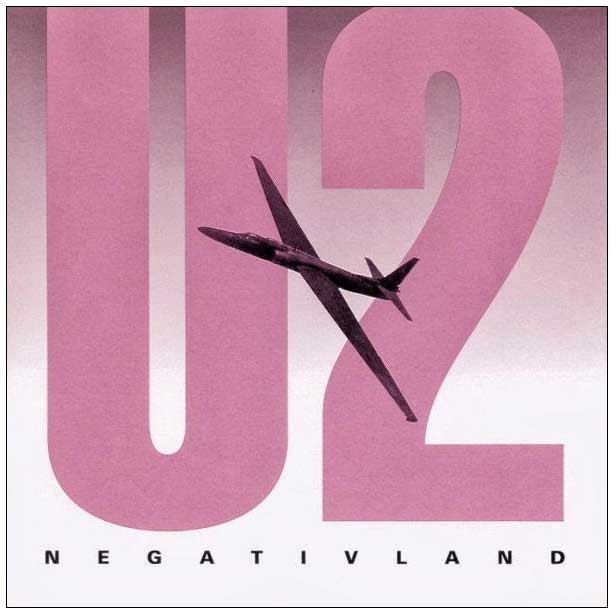
Among the countless experimental recordings produced during the closing decades of the twentieth century, few have generated as much controversy, intellectual debate, artistic admiration and legal scrutiny as The Letter U and the Numeral 2 by Negativland. Released in 1991, the recording occupies a singular position within the histories of experimental music, media criticism, copyright law, sound collage and cultural theory. It is simultaneously a musical work, a conceptual artwork, a satire, a political statement and a challenge to prevailing assumptions regarding ownership and creativity.
The recording remains one of the most discussed examples of artistic appropriation in modern culture, continuing to inspire debate among musicians, legal scholars, media theorists and cultural critics. Its significance has endured across multiple generations, ensuring its place as a landmark work within the histories of experimental music, copyright discourse and media criticism.
The story of The Letter U and the Numeral 2 is therefore not merely the story of a recording. It is the story of competing ideas about creativity itself. It concerns who owns culture, how meaning is created and whether artists possess the freedom to transform existing media into something new. To understand its significance fully, one must examine not only the finished recording but also the people who created it, the technologies they employed, the legal battles they encountered and the intellectual questions they raised.
Negativland emerged from the experimental underground of Northern California during the late 1970s. From the outset, the group resisted easy categorisation. They were neither a traditional rock band nor an academic electronic ensemble. Instead, they occupied a peculiar territory between popular culture and avant garde experimentation. The collective developed a reputation for creating works assembled from recordings of everyday life, radio broadcasts, advertising slogans, found sounds, spoken word fragments and manipulated audio excerpts. Their approach drew inspiration from earlier traditions including musique concrète, tape experimentation and electronic composition. Yet unlike many experimental composers working within academic institutions, Negativland embedded their work firmly within contemporary media culture.
They were fascinated by the language of television, radio and advertising. Rather than treating these phenomena as disposable entertainment, they viewed them as cultural texts worthy of analysis and deconstruction. Their recordings frequently exposed contradictions within media systems, revealing how corporations, broadcasters and advertisers shaped public perception. Humour became an essential element of their methodology. While their work often addressed serious issues, they preferred satire to solemnity. Comedy functioned as a mechanism through which cultural assumptions could be questioned and destabilised. By the late 1980s Negativland had established themselves as one of the most inventive and provocative groups operating within the American experimental underground.
The Letter U and the Numeral 2 emerged during a period of profound transformation within popular culture. Mass media had reached unprecedented levels of influence. Satellite broadcasting expanded international communication. Music television transformed musicians into global celebrities. Corporate branding became increasingly sophisticated. Simultaneously, technological developments allowed artists and consumers to manipulate recorded media in ways that had previously been impossible. Sampling technology was particularly significant. Devices capable of capturing and replaying audio fragments became increasingly affordable. What had once required extensive studio resources could now be achieved with comparatively modest equipment.
This technological democratisation generated both excitement and anxiety. Artists embraced new creative possibilities while copyright holders worried about the implications of unrestricted reproduction. Within this environment, U2 represented one of the most powerful cultural brands in the world. The Irish group had achieved extraordinary commercial success and possessed a carefully cultivated public image combining political engagement, artistic seriousness and stadium scale popularity. To many listeners, U2 symbolised the very concept of global rock stardom. Negativland found this phenomenon fascinating, not because they necessarily opposed it, but because it provided a compelling example of how cultural symbols are constructed, distributed and protected.
An equally important component of the project involved radio presenter Casey Kasem, one of the most recognisable voices in American broadcasting. Kasem had spent years cultivating an image of professionalism, warmth and reliability. Through his nationally syndicated radio programmes he became a familiar presence in countless households. However, circulating within broadcasting circles was an infamous recording containing outtakes from one of Kasem’s sessions. During these moments, away from the polished public broadcasts, Kasem expressed irritation, frustration and anger while attempting to complete a recording. For Negativland, the contrast between public image and private reality was irresistible. The recording revealed something profoundly human. It demonstrated that media personalities, despite their carefully managed personas, remained vulnerable to ordinary emotions. Negativland recognised that this material could function as a powerful commentary upon the nature of celebrity and performance.
The conceptual foundation of The Letter U and the Numeral 2 was remarkably sophisticated. Rather than producing a direct attack upon U2 or Casey Kasem, Negativland sought to explore broader questions regarding media construction, celebrity mythology and cultural authority. The title itself represents an important artistic gesture. By reducing U2 to its constituent linguistic elements, the group transformed a globally recognised brand into an abstract combination of symbols. This process simultaneously references and destabilises the original name. The title functions almost like a conceptual artwork. It asks listeners to consider how language acquires cultural power and how simple symbols become associated with enormous commercial value.
The production of The Letter U and the Numeral 2 reflected Negativland’s broader artistic philosophy. Unlike conventional music production, which generally begins with original performances, Negativland worked primarily through collection, selection, manipulation and juxtaposition. The process involved gathering numerous audio sources from broadcasts, recordings and other media materials. These fragments were then edited, rearranged and layered through extensive studio experimentation. At the time, such work required considerable technical effort. Digital editing systems were not yet as sophisticated or accessible as they would later become. Much of the manipulation involved painstaking tape editing, analogue processing and early digital technologies.
Modern listeners accustomed to sophisticated computer based recording systems often underestimate the complexity involved in creating such a work. Every second of audio had to be considered carefully. Fragments were cut apart, repositioned and recombined. Timing relationships were adjusted repeatedly. Vocal excerpts were transformed into rhythmic components. Musical passages were isolated and placed within entirely new environments. The resulting compositions emerged gradually through accumulation rather than traditional songwriting. Every edit altered meaning. Every juxtaposition created new associations. Every interruption challenged expectations. The recording became less a collection of songs and more a form of sonic montage.
The studio itself functioned as a creative instrument. Rather than merely documenting performances, it became a site of investigation. Layers of sound were assembled with extraordinary attention to detail. Equalisation, repetition, distortion and fragmentation were all employed not simply for aesthetic effect but as tools of analysis. Negativland understood that changing the context of a sound could radically transform its meaning. A familiar voice might become unsettling. A respected public figure might appear absurd. A celebrated musical phrase might acquire entirely different implications when placed beside unexpected material.
This approach reflects a broader artistic tradition rooted in collage. Just as visual artists discovered that existing images could be combined to produce new interpretations, Negativland demonstrated that sound could function in a similar manner. Their work suggests that culture itself operates as a collage. Advertising slogans, news broadcasts, popular songs and celebrity interviews circulate continuously throughout society. Individuals encounter countless fragments of information every day. Negativland merely reorganised those fragments in ways that exposed relationships that might otherwise remain invisible.
The importance of editing within this process cannot be overstated. Sampling is frequently misunderstood as an act of simple duplication. In reality, the creative labour often resides in the decisions surrounding selection, arrangement and transformation. The timing of an interruption, the duration of a pause and the placement of a repeated phrase can dramatically alter interpretation. Negativland displayed remarkable sensitivity to these possibilities. Their editing often resembles cinematic montage, with tension, humour and surprise emerging through carefully calculated sequencing.
The visual presentation of The Letter U and the Numeral 2 became almost as significant as the audio itself. Negativland understood that cultural products communicate through packaging as well as content. The artwork deliberately engaged with issues of recognition, branding and identity. It extended the conceptual concerns of the recording into the visual realm. Questions concerning ownership, representation and interpretation were embedded directly within the object itself. What might have appeared to some observers as playful graphic design carried substantial conceptual weight.
It was this combination of audio content and visual presentation that contributed to the legal controversy that followed. Objections were raised concerning both the use of copyrighted material and aspects of the release’s packaging. Legal pressure ultimately resulted in the withdrawal of the recording from distribution. For Negativland, the consequences were significant. The dispute demanded considerable time, energy and financial resources. Yet it also propelled the group into a far wider public conversation than they had previously occupied.
The controversy rapidly evolved into one of the most important copyright disputes associated with experimental music. Supporters of Negativland argued that quotation and transformation were essential components of artistic expression. They maintained that culture advances through reinterpretation and dialogue. Critics countered that creators possess legitimate rights over their work and that unauthorised use undermines those rights. The disagreement revealed fundamental tensions within modern cultural production.
The questions raised by the controversy extended far beyond a single recording. Can creativity exist independently of influence. Is originality possible in a world saturated with media. How should legal systems balance artistic freedom against intellectual property rights. At what point does borrowing become infringement. Such questions remain unresolved and continue to shape contemporary debates concerning digital culture, artificial intelligence, remix practices and online communication.
The reception of The Letter U and the Numeral 2 varied considerably. Some commentators regarded it as a brilliant act of cultural criticism. Others viewed it as an unnecessary provocation. Within artistic and academic communities, however, the work earned substantial respect. Musicians, media scholars, legal theorists and cultural critics recognised that it addressed issues extending far beyond the immediate circumstances of its release. The recording became a case study in the evolving relationship between creativity, technology and power.
Its influence extends well beyond experimental music. Contemporary internet culture is filled with practices that rely upon adaptation, quotation and transformation. Memes, mashups, remix videos and digital collages all operate according to principles that Negativland explored with extraordinary sophistication. The group anticipated cultural developments that would later become commonplace. What seemed radical at the beginning of the 1990s now appears remarkably prophetic.
Academic interest in the recording reflects its unusual richness. Scholars from numerous disciplines have examined its significance. Media theorists have explored its treatment of celebrity and branding. Legal scholars have analysed its implications for copyright law. Musicologists have investigated its compositional techniques. Cultural historians have considered its relationship to broader social developments. Few recordings inspire such extensive interdisciplinary engagement.
At its deepest level, The Letter U and the Numeral 2 concerns the nature of meaning itself. The recording suggests that meaning is never fixed. Instead, meaning emerges through context. A sound acquires significance because of its relationship to surrounding sounds. A celebrity acquires significance because of cultural narratives. A brand acquires significance because of collective recognition. By altering context, Negativland alters meaning. This principle lies at the heart of the entire project.
The recording demonstrated that sound collage could function as serious intellectual inquiry. It proved that humour could coexist with rigorous cultural criticism. It revealed how media systems shape public understanding while simultaneously exposing the fragility of those systems. Most importantly, it challenged listeners to think critically about the cultural environment surrounding them.
The Letter U and the Numeral 2 stands as one of the defining artistic statements of the late twentieth century. Through its inventive production methods, sophisticated conceptual framework, provocative use of sampling and willingness to confront powerful institutions, Negativland created a work whose influence continues to reverberate across music, law, media theory and popular culture. Its achievement lies not merely in its controversy but in its ability to transform controversy into inquiry. Every aspect of the project, from its title and production techniques to its packaging and legal aftermath, invites reflection upon how culture is created, circulated and controlled.
.
by Ade Rowe
.