
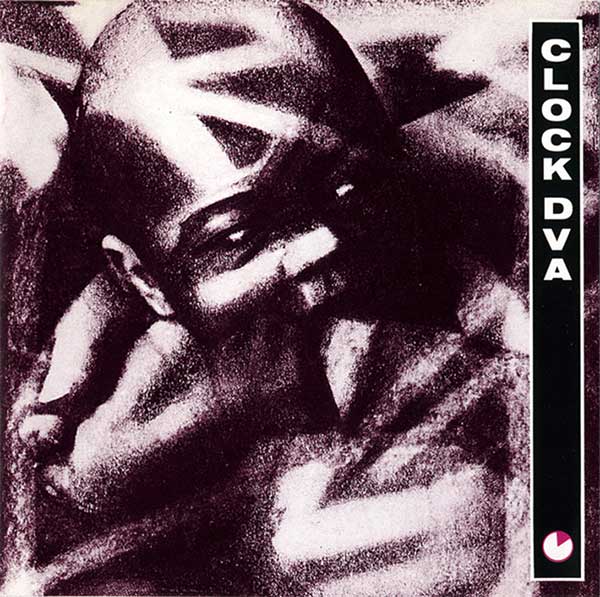
White Souls in Black Suits, Thirst, Advantage, Clock DVA (Mute)
‘Nag, Nag, Nag’, What Time Is It Really?, Cabaret Voltaire (Meme Tune)
‘Knock Knock.’
‘Who’s there?’
‘It’s the 1980s.’
‘Weren’t you here a few years back?’
‘Not me guv.’
‘I remember you, I’m sure. Big shoulder pads, big hair, jangly guitars.’
‘Not me guv. I’m the other 80s, the independent one. You know, a bit of attitude, bit of politics. Experimental, me.’
‘Aaah. Long grey coat, Crass or Psychic TV t-shirt, partly shaved head, DMs, William Burroughs book in your pocket?’
‘No need to take the piss.’
‘I’m right though, aren’t I?’
‘Errr, yes.’
It’s 1980 in Sheffield. Clock DVA have been making strange music since 1978 and releasing their own cassettes of electronics, loops and noise overlaid with saxophone and guitar, but now they are in touch with Throbbing Gristle, who release White Souls in Black Suits on their Industrial label. It’s a disturbing, murky group of mood pieces, edited from hours of improvisation and mixed by Stephen Mallinder and Richard Kirk of Sheffield’s Cabaret Voltaire. Mute have now added Clock DVA to their Grey Area list and have started a reissue campaign.
By the following year, Clock DVA had started writing songs. Strange and unusual songs, dark and experimental songs, it’s true, but songs nonetheless. 1981’s Thirst is a highlight of the band’s career, the missing link between naive sonic exploration and the weird stab at a more commercial sound that would appear on 1983’s Advantage, their one record released by Polydor.
Thirst was on Fetish records, and the music fits right in with the deconstructed post-punk funk of labelmates Bush Tetras, 23 Skidoo and Richard Mallinder’s solo work. The stand out track is ‘4 Hours’, which was also released as a single: it’s driving beat and layered vocals drive it relentlessy on and on, and it’s catchy as hell. ‘North Loop’ plays a similar trick on the listener, whilst ‘Piano Pain’ and ‘Blue Tone’ are pieces of over-the-top emotional angst. Meanwhile, the closing track ‘Impressions Of African Winter’ isn’t a million miles away from the likes of Japan’s impressionist instrumentals.
Despite the slight layer of sonic dirt and sleaze that hung over Thirst, Polydor clearly thought they could brighten up Clock DVA’s sound and sell them to the masses. Advantage would feature bright sounding brass, female backing vocals and added a glossy sheen to the music, turning it into a noir detective novel rather than pulp sexploitation. It was and is a great record but it wasn’t as unnerving, original or powerful as Thirst. The band broke up soon after, and when they reformed at the end of the 80s they focussed on – to these ears – dull electronic music with the aid of computers and samplers, often on the back of pretentious theorizing.
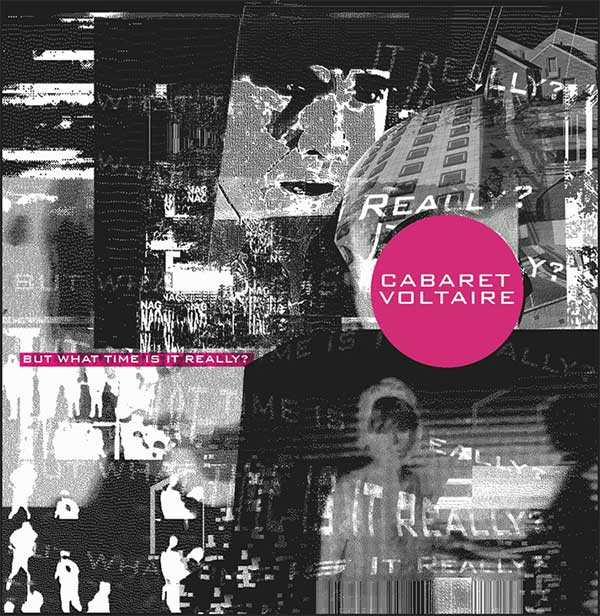
Cabaret Voltaire, who were also Sheffield based and had got together in 1973, also made weird sonic collages and improvisations and released them on cassette. They were initially prone to turning gigs into provocative ‘happenings’ (or as we call them, fights), and made clever use of film, samples and loops in their music and concerts. They built their own recording studio, Western Works, which other bands such as the Human League, New Order and Clock DVA made use of whilst still allowing the Cabs as much time as they wanted to compose, mix and practice.
Original member Chris Watson left in 1981 to start a career as a BBC sound engineer, and the remaining duo of Kirk and Mallinder made a decision to make more commercial music. Their albums became funkier and dancier, with both albums and singles charting, and gradually the band moved into something akin to House and Techno, an avenue they would deliberately explore, particularly through remixes. They also released solo albums, in Kirk’s case under a bewildering number of names, in a confusing number of styles.
In the mid 1990s the duo separated, with Mallinder moving to Australia and starting an academic career. Cabaret Voltaire were, it seemed over. However, Kirk resurrected the name in 2014 and released three albums before his untimely death in 2021.
Fast forward to 2025 and we find Mallinder and Chris Watson on tour as Cabaret Voltaire to celebrate the band’s 50th anniversary, working with other musicians to recreate and refresh some classic Cabs tracks and an unfamiliar piece of Watson’s. In 2026 the band will tour again, but after this the band will cease to exist. There are rumours of new studio work but official confirmation of an imminent live album from the 2025 tour, What Time Is It Really?, and a single version of ‘Nag Nag Nag’ has been released as a taster/promo. (You can hear it here) I for one, can’t wait until April 24th and the album’s release.
Rupert Loydell
.