
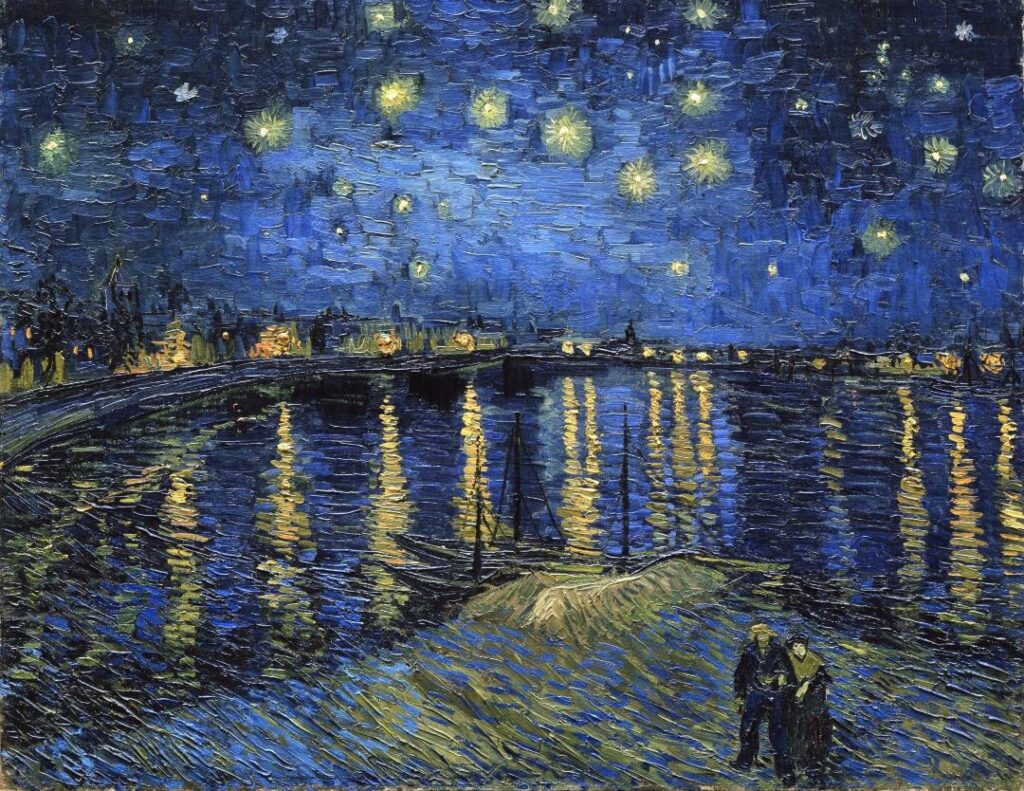
Starry Night over the Rhone by Vincent van Gogh 1888
https://en.wikipedia.org/wiki/Starry_Night_Over_the_Rhône
Stargazing 观星
The first Voice: All of you, your loves, hates and thoughts,
in the eyes of the stars, they’re meaningless, not even dust,
even the Earth, where you place all your hopes, is just a speck of dust,
dancing briefly in the light, vanishing without a trace.
The second Voice: Get lost, go to the stars, pick any one,
you devil, whether you’re called Mephistopheles or Satan,
with achievement comes destruction, so why bother creating?
you’ve long been inciting this, and you’ve long faced defeat.
The third Voice: Ridiculous, a grand nation
believing in nonsense for thousands of years, calling it spiritual vision.
since no one can become a star,
stop speaking from the height of the stars.
Poet: One gets dizzy from staring at stars too long,
you’ve been arguing without stepping outside for a day,
swords and flames, nightingales and roses,
though just words, they can bring comfort to an old man.
Response Poetry by Ma Yongbo 马永波
Response Poetry Translation by Ma Yongbo 马永波
观星 Stargazing
第一个声音:你的一切,你的爱恨和思想
在星星看来,都毫无意义,连灰尘都算不上
连你寄托一切的地球都只是一粒灰
在光中舞蹈上片刻,就消失无踪
第二个声音:滚吧,滚到星星上去,随便哪一颗
你这魔鬼,无论你叫靡非斯特还是撒旦
有成就有毁,又何必创造
你早就这样教唆,也早就惨遭失败
第三个声音:可笑,一个泱泱民族
几千年信的竟然是鬼话,还当作什么境界
既然没有人可以成为星星
就别再以星星的高度说话
诗人:星星看久了也会头晕
一天没下楼,你们还是吵个不休
刀剑与火焰,夜莺与玫瑰
虽只是词语,却可以把一个老叟安慰
2021.9.25 马永波
First Published
https://masticadoresusa.wordpress.com/2026/04/09/stargazing-by-yongbo-ma/
星辰的无知——抑或星辰仍在惦念着诗人
(致永波,与其诗作《观星》相应和)
the ignorance of stars—or stars still thinking about poets—for Yongbo in response to his song ‘Stargazing’
yes, this little dust is us—the planetary blustery day
is microcosm thin, and in the whirling we found our beginning.
We, the stars that have names have been wondering about poets,
the unconditional naming of poets and whether we can become them.
They rule our aspirations with their energy. And constant viewings
of poets bewilder us; we have become the largest category of romance,
even our dust is sacred. And when we fall to earth and leave our
wreckage we are revered again as broken mirrors for them
23rd May 2036
Response poetry by Helen Pletts 海伦·普莱茨
Response Poetry Translation by Ma Yongbo 马永波
星辰的无知——抑或星辰仍在惦念着诗人
(致永波,与其诗作《观星》相应和)
the ignorance of stars—or stars still thinking about poets—for Yongbo in response to his song ‘Stargazing’
是啊,这微尘便是我们——行星风起云涌的一日
缩影单薄,辗转浮沉间,我们寻得自己的本源
身为有名讳的星辰,我们始终惊奇于诗人
随性赋予的命名,惊奇于自己能否化身为诗
他们以能量牵动我们的渴望。对诗人的恒常凝望
让我们心怀迷惘;我们已然化作浪漫最磅礴的意象,
即便我们的微尘播散。当坠落大地,留下残痕
我们依然,如同碎裂的明镜,再度被世人敬仰
2036年5月23日 海伦·普莱茨
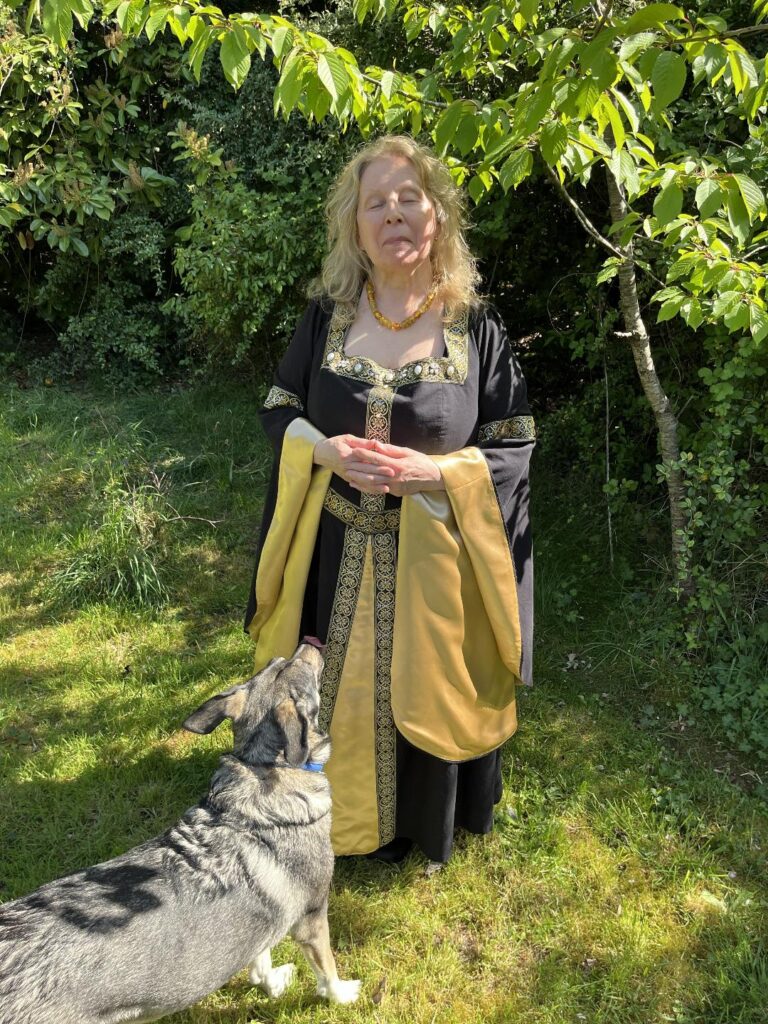
Helen Pletts 海伦·普莱茨 in Medieval Costume, having fun with Sasha, a rescue dog from
the Ukraine, in her garden 1st May 2026, Cambridge, UK, Planet Earth, The Universe
Helen Pletts 海伦·普莱茨
www.helenpletts.com is the English co-translator of Chinese poet Ma Yongbo, her official Chinese translator. She is a committee member of CB1 Poetry, the established monthly poetry reading event in central Cambridge UK, which has organised poetry readings for many years. Her work has been translated into Chinese, Bangla, Greek, Vietnamese, Serbian, Korean, Arabic, Italian, Albanian, Romanian and Spanish.
Helen and Ma Yongbo are co-creators of the ongoing series of Response Poetry Volumes of the transnational dialogue featured in the ‘Ma Yongbo Poetry Road Trip – Summer Tour 2025’ published by International Times since 10th May 2025.
海伦·普莱茨 Helen Pletts
海伦·普莱茨是中国诗人马永波诗歌的英文合作译者,CB1诗歌协会的委员会成员,这是英国剑桥市中心一项历史悠久的每月诗歌朗诵活动。海伦的作品已被译为汉语、孟加拉语、希腊语、越南语、塞尔维亚语、韩语、阿拉伯语、意大利语、阿尔巴尼亚语和罗马尼亚语。海伦与马永波共同创作了正在进行的“马永波诗歌公路之旅 – 2025 年夏”系列档案,2025年5月10日起由《国际时报》发表。
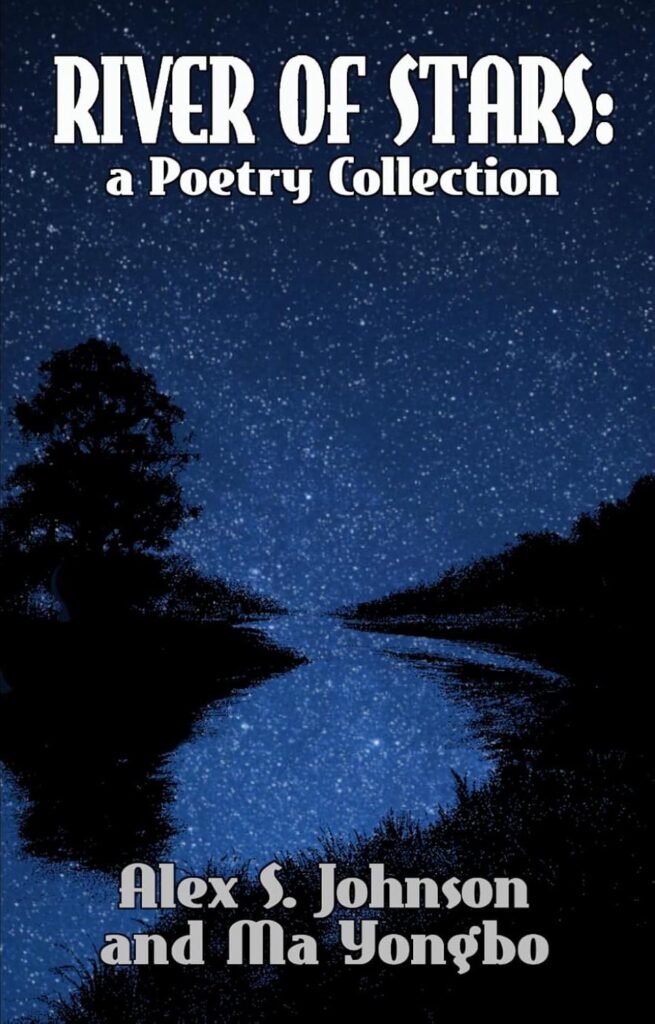
‘RIVER OF STARS: a Poetry Collection’ by Alex S. Johnson and Ma Yongbo
马永波, A NOCTURNICORN BOOKS release, 2026
RIVER OF STARS
The new poetry collection by Alex S Johnson 亚历克斯·S·约翰逊 and Ma Yongbo 马永波 . Available in paperback from
https://www.amazon.co.uk/dp/B0H2LMJH6C
A NOCTURNICORN BOOKS release
Two oceans meet in this landmark collaboration between Alex S. Johnson—author of The Doom Hippies and Doctor Flesh, hailed by John Shirley as “the Baudelaire of our time”—and Ma Yongbo, one of China’s most influential Avantgarde poets, founder of polyphonic writing and objectified poetics, and a major translator of AngloAmerican literature.
Helen Pletts writes that Ma’s imagery is “so beautiful that it stays with you long after reading, until the phrases seem to have an elevated existence of their own.”
Ma Yongbo 马永波 adds: “Our poems are like two states of the ocean—Alex surging and passionate, my own hiding turbulent undercurrents beneath a calm surface. Together, these forms create a new expression that transcends language and national boundaries.”
RIVER OF STARS is where those currents converge—East and West, storm and stillness, two visionary voices shaping a shared sky.
Now from A COLLECTIVE PAW.
Cover design by Adrian Baldwin
Whitman’s Sleeves
Like Walt Whitman’s sleeves
draped over the quarterdeck
Like leaves of sass, we begin anew
Forged in 21st Century tears, an international joint venture
Chinese, American, but neither
Forgetting Ezra Pound but preserving his protease stripping of
The Waste Land to riddles
Preserving Eliot but damping the strings of the world guitar
Strumming cosmichords we penetrate the elite with poetic gifts that
Outstrip politics, transcending mutilated knowledge
Where matter rises like a Colossus to shake itself off
A dog-eared fable of empire no longer applies
The lies they told us about ourselves must die in paroxysms of glitter
Where the old man and the seizure’s salad days are over, yet they begin a nude dessert
For the beauty of woman and man balks account
But the animals aren’t bad either
And going beyond the well-thumbed Tarot pack Sylvia Plath
With Daddy kicked to a storm system of glitter dust
His big shoes to fill with dialectic healing bullets
His corkscrewed scenes inside the data mine drilling even deeper down
To the redemptive core that rises through kundalini ships crashed on the shores of time
To starboard, and matching hells in a wet loop
Ahab gives the orders to hunt for a new fish…
By Alex Johnson
惠特曼的衣袖
像沃尔特·惠特曼的衣袖
垂挂在舰尾甲板
如莽撞的叶子,我们重新开始
被二十一世纪的泪水锻造,这国际合资企业
中国的,美国的,却都不是
遗忘埃兹拉·庞德却保留他蛋白酶般
将《荒原》剥解成谜题的技艺
保存艾略特却调弱世界吉他的琴弦
我们拨动宇宙和弦,以超越政治的诗歌天赋
穿透精英,跨越残缺的知识
当物质如巨像升起,抖落自身
帝国那卷边的寓言已然失效
他们为我们编织的谎言必将在炫光的阵痛中死去
当老人与癫狂的青春岁月终结,却以赤裸甜点重新启程
因男女之美抗拒被丈量
但兽类也并非丑陋
超越西尔维娅·普拉斯那磨损的塔罗牌阵
将《爹爹》踢进闪尘的风暴系统
他遗留的大鞋填满辩证疗愈的子弹
数据矿脉中螺旋的场景向更深处钻探
直达救赎的核心——随昆达里尼航船
在时间海岸搁浅时升腾
向右舷,在湿漉的环中匹配地狱
亚哈船长下令猎捕新的鱼种……
亚历克斯·S·约翰逊 马永波译
Translation by Ma Yongbo 马永波
The Last Room—to Old Aged Whitman
Daytime elapses. How can a life be entrusted
The dark suddenly descends outside
Raindrops hanging in rows on silver wire wait to fall
A small narrow room, quiet like a tomb
The raging swan is already dancing on another lake
Plastic wrapped wet flowers in the room
The ship-shape room, the crafty ship of old age
Silence hit the battle field with no gunpowder smoke
Violet and white lilacs seem to be blooming shyly
A floating log giving off fragrance
Which has gone through all seas and oceans
And many a deserted shore
Only for bringing the little soil in its crack, Ah
The nearly invisible tiny seed in the soil
To this room
You build darkened smooth wood of all times
Into rows of white bird nests upon the clips of wall
Those albatrosses, seagulls and swallows, those frigate birds
As well as nightingale defeating death and trampling hunger
A plaintively crying thrush not to be captivated
Despite wave keep surging towards the sky
Returning to the nests one by one, their songs pause for the moment
Pressing tight on the blazing thunder and resting upon your clip
How to start a life and how to end it
You’ve forgotten the first room, the constantly rocking cradle
In mother’s arms, nobody including you
Is able to know the last room, all your life
The last form of all your belief, love and hatred
This room is the altar-like beach rejected by Columbus
The land over your head is enclosing in
I see you in such a large chilly room
On a lonely little bed, with your big feet uncovered
Above black iron stove in the middle, the tin plate chimney
Reaching swirling up into the frost of still midnight like the obstinate neck of a swan
The backless chair, wood case used for dining and writing
Yet yourself is the most valuable piece of furniture, your sandy white body
Resembling a pine table bleached by scrubbing
You murmur words that startle even yourself
That are full of autocratic in-disputability and noble arrogance
And directness and explicitness of the populace, mixed with mystery
You are the ship whipped by surge billows and meanwhile the billow itself
Life, let it be, who really understand it
As to love, you know for sure than anybody else, that companionate love
That welds the scattered lands together
And welds the lips of man and woman together at dawn
So laugh, you are simply contradictory, wilful and stubborn
Thoughtful endurance, limitless mothering love and gentleness
Unshakeable frankness after penetrating into everything
You love all including even your enemy, how absurd
The boundless sympathy in your nature
Is actually originated from happiness of love you never experienced
It’s winter again, you will still slip back from cold to the classroom of
the same freezing cold and emptiness, go drink a cup of gin alone
So come on, my brave teacher of grey beard
Let’s make a deal, feed coal blocks into the furnace
Let the inner flames of crown shine and blaze
For the life I spent as unfulfilled as yours
Never convinced whether my poems have survived
Let’s drink from the jar as we used to
Drink from bottle, with looks of hawks
Because the daytime has passed, its glory has plunged down the clip
Because of your frustration and struggle, so we
The countless off springs of you the handsome bachelor
Will be able to let out distinct and powerful syllables
Let poems distilled from poems vanish forever
It’s because of you, saps of life
Will step on the path of gale painfully and ascend toward daybreak
Ma Yongbo马永波
Translation by Ma Yongbo 马永波译
最后的房间——致暮年的惠特曼
白昼消逝了。一生如何寄托
在突然暗下来的房间外面
雨滴一排排挂在银亮的铁丝上等待坠落
小小的狭长的房间,安静有如坟墓
那愤怒的天鹅已经在另一片水面上起舞
这房间里塑料裹着的湿漉漉的花
这船型的房间,这狡猾的老年之船
这没有硝烟的战场突然寂静下来
似乎有紫色的白色的丁香羞怯地开放
似乎有漂流木的芳香
它经过世界上所有的大洋
越过所有荒凉的海滩
只为把它裂缝中的一点点泥土,啊
还有泥土中微小得看不见的种子
带到这个房间
你用这属于一切时代的发黑的光滑的木头
在墙壁的悬崖上造了一排排白色的鸟巢
那些信天翁,海鸥和燕子,那些军舰鸟
还有那只战胜了死亡践踏着饥馑的夜莺
还有那只任海浪反复跃向天空
也始终捕捉不住的哀鸣的画眉
都一个个回到这巢穴,暂时停止歌唱
紧按住闪亮的雷霆,栖息在你的悬崖上
一生如何开始,又如何结束
你已忘记那最初的房间,那动荡不息的摇篮
母亲的怀腹,也没有任何人,包括你
能够知道那最后的房间,你全部生涯
全部信仰和爱恨的,最后的形式
这房间就是哥伦布被抛弃的祭坛般的海滩
你头上的大地正在闭合
我看见你在一个大大的寒冷的房间
一张孤零零的小床,你的大脚露在外面
房中央黝黑的铁炉子上白铁皮的烟囱
像天鹅执拗的脖子弯曲着伸向午夜寂静的严霜
一把没有靠背的椅子,吃饭写字用的木头箱子
而你自己,就是这一片贫穷景象中
最为贵重的家具,上下一片沙白的身躯
像一张因擦洗得发白的松木桌子
你咕哝着连你自己都吃惊的话语
它们充满专制式的不容置疑和贵族式的傲慢
又有平民式的直接和清晰,间杂着神秘
你就是波涛抽打的船,也同时是波涛本身
生活,且不去管它,又有谁能真正懂得生活
至于爱,你比任何人更明白,是爱,伙伴之爱
把分散的大陆焊接在一起
把男人女人黎明的嘴唇焊接在一起
嘲笑吧,你就是自相矛盾,任性,顽固
深思熟虑的忍耐,无限的母性般的爱和温柔
因洞察一切而坚定不移的坦率
你爱一切,甚至你的仇敌,真是悖谬啊
你的天性中那巨大的悲剧因素
却源自你从未享受过爱情的幸福
又是冬天了,你还会因为寒冷而溜回
同样寒冷空旷的教室独自去喝杜松子酒吗
那么来吧,我的灰胡子的勇气教师
我们来定个协议,我们把煤球再添进漆黑的炉膛
让它闪耀起内在王冠的火焰
为着我曾像你一样度过了失败的一生
从来不能确定我的诗,是否还活着
让我们依然像过去那样,从水缸里喝水
从瓶子里喝酒,带着野鹰般的神情
因为白昼已经消逝,它的光辉跌落悬崖
因为你的挫折和斗争,我们
你这漂亮的老鳏夫的无数后代
才能得以发出清晰有力的音节
才能让那从诗里蒸馏出的诗永远消失
正是因为你啊,生命的汁液
才能疼痛地踏着大风向着黎明上升
马永波
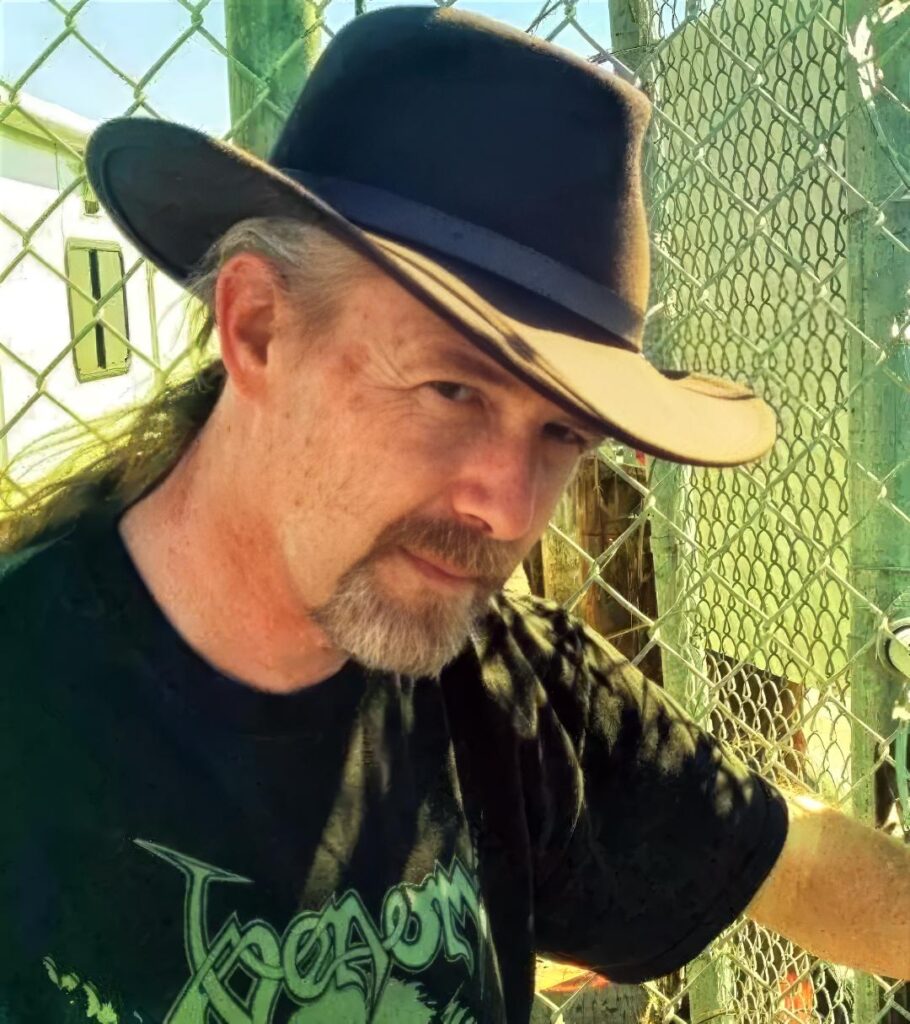
Alex S. Johnson 亚历克斯·S·约翰逊 California, USA, Planet Earth, The Universe
Alex S. Johnson 亚历克斯·S·约翰逊 has been dubbed “the Baudelaire of our time” by John Shirley, Bram Stoker Award-winning author, songwriter for Blue Oyster Cult and primary screenwriter of the 1994 cult classic horror film The Crow. His work is archived at Harvard University’s Widener Library and taught at such institutions as Syracuse University and SUNY (State University of New York). A retired English Literature professor who formerly worked at Marymount University and Cal State Dominguez Hills, Johnson is a human rights activist, fine artist, journalist, editor and publisher of Nocturnicorn Books. Among his contributors are such cultural icons as Ellyn Maybe (author of The Cowardice of Amnesia, her fans include Iris Berry, Henry Rollins, Greil Marcus and Viggo Mortensen), David J. Haskins (Bauhaus, Love and Rockets, songwriter of “Bela Lugosi’s Dead”), Bram Stoker Award-winning authors such as Jonathan Maberry, Graham Masterton, Lucy Taylor, Edo van Belkom, L.L. Soares, Ramsey Campbell, John Palisano, Christi Nogle and Anna Taborska and Outlaw Poet Ron Whitehead, Nobel Prize for Literature nominee and collaborator with His Holiness, the Dalai Lama. Johnson has additionally been endorsed by Punk Rock Royalty Iris Berry, World Fantasy Award finalist Anna Tambour, actor/author/journalist and New York Times bestselling author Tom Sullivan, hip-hop metal luminary Tairrie B. Murphy, Lemmy Kilmister (Motorhead), Ray Garton (author of Live Girls), science fiction master Seb Doubinsky, Weird Fiction master Caitlin R. Kiernan and Exquisite Corpse author Poppy Z. Brite (Billy Martin). A journalist published in such famed venues as Rolling Stone and Metal Hammer, Johnson wrote the canonical Friday the 13th spinoff novel Jason X: Death Moon with “Queen of Cyberpunk” Pat Cadigan, which has become a modern classic. Johnson’s influences include Walt Whitman, Bram Stoker, Stephen King, Henry James, Fritz Leiber, H.P. Lovecraft, Poppy Z. Brite, Arthur Rimbaud, Peter Straub, Edgar Allan Poe, Ramsey Campbell, Charles Baudelaire, John Shirley and Caitlin R. Kiernan. He lives in Carmichael, California with his family.
亚历克斯·S·约翰逊被约翰·雪莉誉为“我们这个时代的波德莱尔”,约翰·雪莉是布拉姆·斯托克奖获奖作家、“蓝牡蛎”乐队词作者,以及1994年邪典恐怖电影《乌鸦》的主要编剧。
他的作品被收藏在哈佛大学魏德纳图书馆,并在雪城大学、纽约州立大学等学府中被用于教学。
约翰逊曾是一名英语文学教授,先后就职于玛丽蒙特大学和加州州立大学多明戈斯山分校,如今已退休。他同时也是人权活动家、美术家、记者、编辑,以及“夜独角兽书系”的出版人。
为他出版社供稿的文化名人包括:
艾琳·梅比(著有《失忆的怯懦》,她的读者与支持者包括艾丽丝·贝里、亨利·罗林斯、格雷尔·马库斯和维果·莫腾森);
大卫·J·哈斯金斯(“包豪斯”与“爱与火箭”乐队成员,《贝拉·卢戈西之死》的词曲作者);
多位布拉姆·斯托克奖获奖作家:乔纳森·梅贝里、格雷厄姆·马斯特顿、露西·泰勒、埃多·范·贝尔科姆、L.L.索阿雷斯、拉姆齐·坎贝尔、约翰·帕利萨诺、克里斯蒂·诺格尔和安娜·塔博尔斯卡;
“亡命诗人”罗恩·怀特黑德(曾获诺贝尔文学奖提名,并与达赖喇嘛尊者合作)。
此外,约翰逊还获得以下文化名人的支持:
朋克摇滚名流艾丽丝·贝里;
世界奇幻奖决选者安娜·坦布尔;
演员、作家、记者、《纽约时报》畅销书作家汤姆·沙利文;
嘻哈金属先锋塔莉·B·墨菲;
莱米·基尔米斯特(“机车头”乐队);
雷·加顿(《活色生香》作者);
科幻大师塞布·杜宾斯基;
怪奇小说大师凯特琳·R·基尔南;
《精致尸体》作者波比·Z·布莱特(比利·马丁)。
作为记者,他的作品曾刊登于《滚石》《金属之锤》等著名刊物。他与“赛博朋克女王”帕特·卡迪根合著了《黑色星期五》系列衍生小说《杰森X:死亡之月》,此书已成为当代经典。
约翰逊的文学影响包括:沃尔特·惠特曼、布拉姆·斯托克、斯蒂芬·金、亨利·詹姆斯、弗里茨·莱伯、霍华德·菲利普·洛夫克拉夫特、波比·Z·布赖特、阿尔蒂尔·兰波、彼得·斯特劳布、埃德加·爱伦·坡、拉姆齐·坎贝尔、夏尔·波德莱尔、约翰·雪莉,以及凯特琳·R·基尔南。
他与家人现居加利福尼亚州卡迈克尔。
‘Alex’s poetry vividly embodies the Kantian distinction between the sublime and the beautiful—the terrifying sea versus the delightful stream. His work isn’t crafted for easy admiration but to shock and reconstitute the self, brimming with rebellious energy that critiques invasive external forces encroaching upon personal and collective spaces.
He excels at constructing anarchic atmospheres through vivid imagery and dazzling cultural hybrids, akin to submarine ecosystems where interdependent forms—intertwined, contradictory, and metamorphic—coexist in primordial chaos, reminiscent of cosmic genesis.
His “stream-of-consciousness rhapsody style” achieves a metaphysical-secular quantum entanglement by fusing slang, delirious utterances, and liturgical chants across disparate contexts.
With surgical precision, he exposes our era’s spiritual plague, dissects the masked revelries bred by consumerism, and challenges taboos, dragging poetry from ivory towers back to the streets and the masses.
Oscillating between destruction and reconstruction—he shreds civilisation’s hypocritical veils while preserving redemptive possibilities for shattered souls—Alex Johnson delivers yet another incisive diagnosis of humanity’s spiritual crisis.
I am delighted to have the opportunity to collaborate with Alex. In terms of poetic style, Alex and I differ greatly. I often feel that our poems are like two states of the ocean: Alex is surging and passionate, full of critical power, carrying on the tradition of Whitman, while my poetry hides turbulent undercurrents beneath its seemingly calm surface.I believe that the combination of these two forms will create a new kind of expression, reflecting the richness of the vast ocean. I am also confident that our collaboration will exert a beneficial influence not only on English poetry but also on Chinese poetry. It will be an important endeavour that transcends language and national boundaries.Here, I would like to sincerely thank Alex Johnson for all he has done for poetry.’ Ma Yongbo 马永波
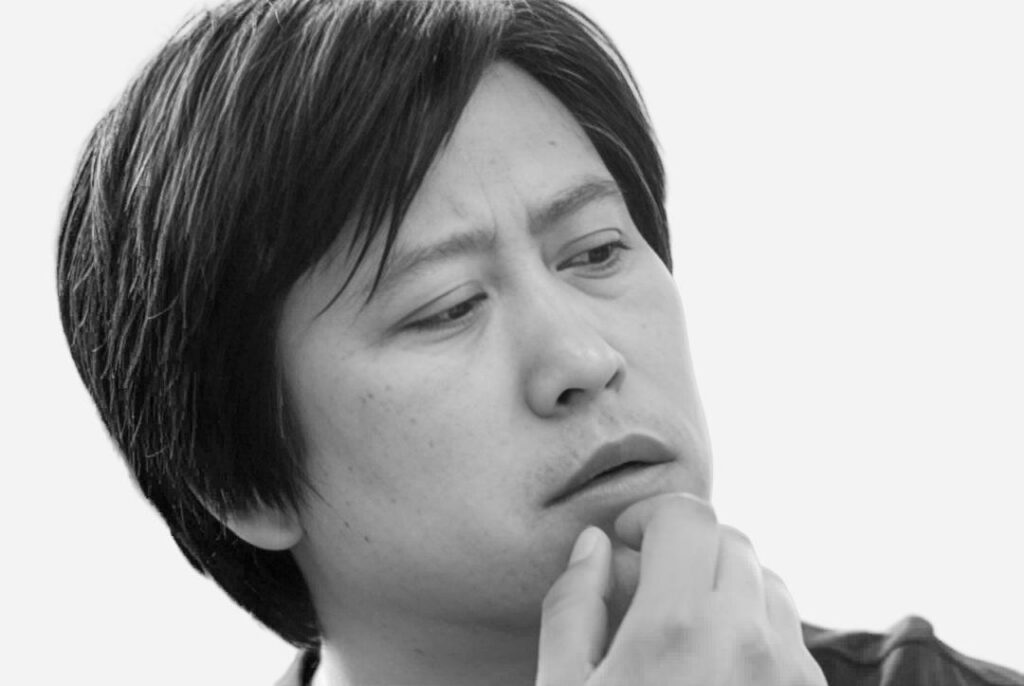
Ma Yongbo 马永波, Nanjing and Harbin, China, Planet Earth, The Universe
Ma Yongbo was born in 1964, Ph.D, representative of Chinese avant-garde poetry, and a leading scholar in Anglo-American poetry. He is the founder of polyphonic writing and objectified poetics. He is also the first translator to introduce British and American postmodern poetry into Chinese, making contributions that fill gaps, the various postmodern poetry schools in Chinese are mostly guided by his poetics and translation.
He has published over eighty original works and translations since 1986 included 9 poetry collections.He focused on translating and teaching Anglo-American poetry and prose including the work of Dickinson, Whitman, Stevens, Pound, Amy Lowell,Williams, Ashbery and Rosanna Warren. He published a complete translation of Moby Dick, which has sold over 600,000 copies. He teaches at Nanjing University of Science and Technology. The Collected Poems of Ma Yongbo (four volumes, Eastern Publishing Centre, 2024) comprising 1178 poems, celebrate 40 years of writing poetry.
马永波出生于1964年,文学博士,中国先锋诗歌代表人物,领先的英美诗歌学者。他是复调写作和客观化诗学的奠基者,也是第一个将英美后现代诗歌译介进汉语的翻译家,具有填补空白的贡献,汉语中诸种后现代诗歌流派多受其诗学与翻译的引领。
从1986年起,他已出版原创与翻译著作80余卷,包括9部诗集。他专注于翻译和教授英美诗歌和散文,包括狄金森、惠特曼、史蒂文斯、庞德、艾米·洛厄尔、威廉斯、阿什贝利和罗桑娜·沃伦的作品。他出版了《白鲸》的全译本,销量已超过60万册。他任教于南京理工大学。《马永波诗歌总集》(四卷本,东方出版中心,2024年)共收录1178首诗,庆祝他诗学探索40周年。
‘The breadth of Ma Yongbo’s poetry is fascinating in that it has popularity in both Chinese and in English, yet also satisfies intellectually. The fusion of his academic knowledge of both Eastern and Western literature produces some of the richest imagery that I have ever come across, woven with astounding philosophical discourse. His poetic phrases are so beautiful that they stay with you long after reading, until they seem to have an elevated existence of their own. His voice has been shaping Chinese poetry for over forty years and now here he is in English, leaving me in no doubt that his voice in English will shape the English landscape of poetry too, adding one more great voice that we all need to hear; the translated voice of Ma Yongbo, by himself.’
Helen Pletts 海伦·普莱茨, Co-translator of Ma Yongbo 马永波
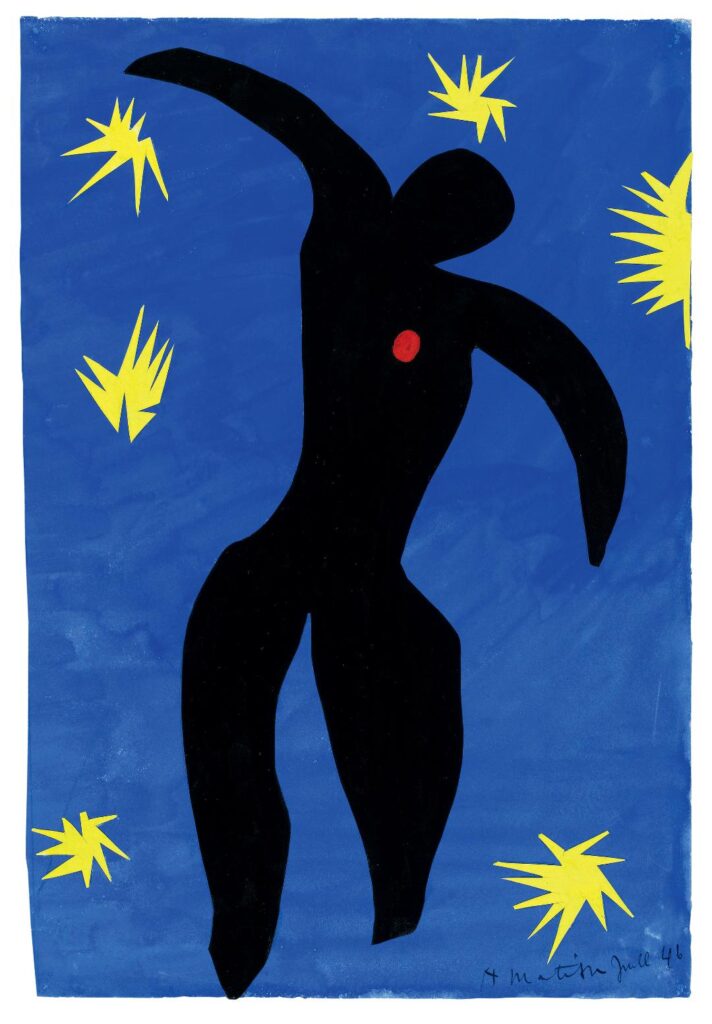
Icarus by Henri Matisse 1943-44
‘I think of Matisse cutting out these beautiful yellow stars—I have always loved the energy in ‘Icarus’. Helen Pletts 26th May 2026
Diagnosed with abdominal cancer in 1941, Matisse underwent surgery that left him chair- and bed-bound. Limited in mobility, he could no longer paint or sculpt. Instead, he cut forms from coloured paper that he arranged as collages, and decoupage which became known as the “cut-outs”.
https://en.wikipedia.org/wiki/Jazz_(Henri_Matisse)
All images and poetry under individual copyright © to either Ma Yongbo 马永波
or Alex Johnson 亚历克斯·S·约翰逊 or Helen Pletts 海伦·普莱茨
.