
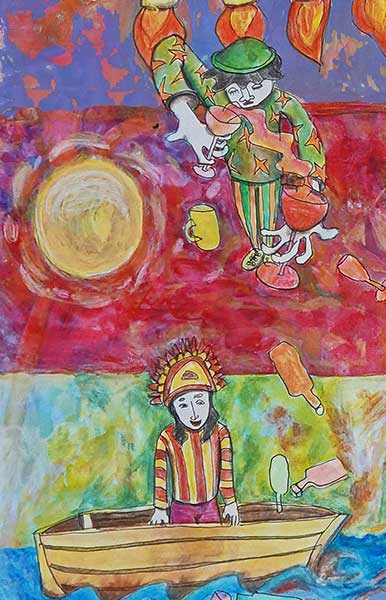
The children were bedazzled, and so were we. The electronical engineers filled the lane with their pyrotechnical displays, the strange and beguiling shapes of new technologies somehow crammed into Victorian-style boxes until they burst forth. It would have been fitting if any tensions arising from a misaligned meeting of minds had been relieved by an outburst of mindless violence, and the bloodbath be filmed for posterity. It’s a shame it didn’t and wasn’t. That is not how things normally are. It’s so normal now to be out of tune with other people and one’s time that it’s become worth examining from the perspective of one who is in tune with all of that. Perhaps then everyone would discover something they thought they knew but didn’t, or didn’t think they did, but do.
As for the performers, they were doomed from the start but there was some kind of pleasure and satisfaction to be had from their slow-motion disaster. And anyway, failing is another form of flying (according to some theorists; remember to cite reference). From atop the newly constructed archetype of our future shopping habitat, one could look down into the pit, and see from a startling perspective the sadness on their faces. Thank goodness the children were still able to see the funny side of everything. That, and the fireworks.
Our resident philosopher told us that there exists a vitiating filter through which everything is observed, which brings to the fore the subject of spectacles. I for one didn’t know what he meant. But in these days of endless narrative and constantly shifting points of view, it’s good to stand in front of something (or on top of, or beneath, or even next to) and not move, and to straightforwardly look. The musicians who yesterday pulled up outside our house in their van and proceeded to lug their equipment into the hall in readiness for the show looked very different on the night, but does that in any way change radically who or what they were? They were only musicians, after all, bogged down with all the usual grievances and torments. More importantly, they were incompetent, and if by accident they happened upon a decent tune they were very quick to mangle it.
In the 19th century it was common for what had to be said to be concealed beneath ornamental covers, out of sight of polite society. In more recent times, anything goes. That was what our resident social historian said. He probably had a point, but it may not have been relevant. The children had a marvellous time, but one day they would be grown-up and have to be reminded of the day of the show.
.
Conrad Titmuss
Picture Nick Victor
.