
by ANDREW DARLINGTON
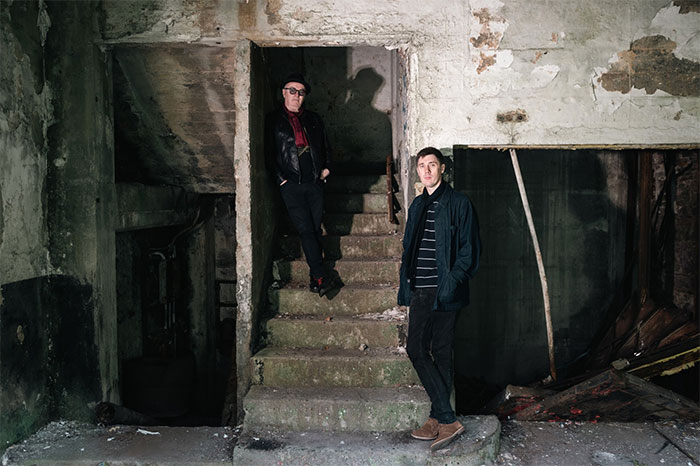
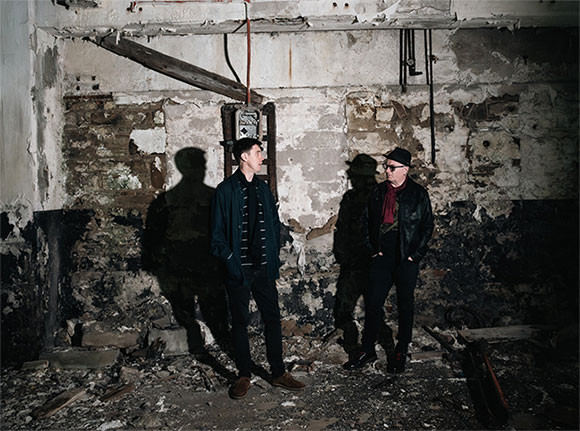
A Pillarstone is the ancient monument from more healthily pagan times, the tall monolith erected by neolithic peoples in ages past. But Pillarstone is also a collaborative project by Irish singer-songwriter Paul J Bolger, with Manchester-born musician/producer Alex Soikans based in Waterford, Ireland, but also featuring a revolving cast of talented Irish musicians drawing on contemporary Americana, Celtic Folk roots, and Indie Rock. Some bands sound like mating chainsaws, others play like virtuosos with a Bach concerto. But if any band ever had the art of making you listen, it’s Pillarstone. These are songs that move according to their own internal logic, crafting music that transcends genre – yet rooted in storytelling and the human connection
Debut single ‘September Sun’ was a mandolin autumn almanac of sweeping Gaelic lilt, with nostalgia for those they’ve lost, but who live on ‘in the words of this song.’ Then ‘Run Fox Run’ laps acoustic and bullwhip-sharp electric guitar into a metaphor for ‘some twisted sport and tradition.’ Didn’t Sweet and Manfred Mann also sing about a Fox On The Run? Is it a useful ‘fight or flight’ situation?
But Mono Lit – the debut album, is a softly reflective easy-on-the-ear work, based around acoustic guitar. ‘What In The World’ asks existential questions about faith and destiny, while the heavier ‘Hammer That Nail’ is a raw rootsy track that suggests an attack on religious orthodoxy. The cheating-song ‘All I Want’ is served up in two parts, slow and reflective then kicked up-tempo as it deals with the illicit romance of lovers ‘caught up in what some call a lie.’ The strongly country-tinged ‘Like A Fool’ adds nice fiddle, as he confesses to eating a slice of forbidden fruit.
The album closes with the reassuring anti-paranoia sentiments of ‘Call For Mercy’ – ‘change the channel, turn off the TV’ because ‘this old world is not out to get you,’ before it swells melodically into the long fade instrumental and gospel choir interplay. A track that reverses decades of edgy Rock music and dark JG Ballard-William Burroughs visions. An overwhelming album climax. Although surely there are also head-in-the-sand aspects to turning away from Gaza, the Iran conflict, climate change. Sometimes a degree of unease can mean healthy awareness.
‘Hi, can you hear me? How are you?’ Paul wears a dark cloth-cap and a stylish Ramones T-shirt. ‘It has to be done’ he jokes. ‘I’m grand, all good.’
Alex is not here yet, he lives ‘in another part of town. The other side of Waterford. He’s about twenty miles away from me,’ but brought together by the magic of Zoom!
1) At 09:30am, this has got to be the earliest Good Morning interview I’ve ever done.
‘I know, it’s a crazy day for me, because I’m also making a movie at the moment, so I’ve got to go for an edit after this. So I’m going to be stuck in there for the day, and then we’ve got the gig tonight. We’re launching the album tonight, here in Waterford. So, it’s kind-of a mad day, so the only time I could say to you – and to Gerry who organised it, is to do it was now, so I’m sorry for being so early.’
Don’t Rock Stars usually stay in bed until at least noon?
‘Rock stars, yeh! (he laughs). I don’t know what they do, but normally I have to get up early. We don’t know what Rock stars are.’
2) Congratulations on a fine album with Mono Lit. You must be very happy with it.
‘Oh, thank you. We were. It was an interesting thing… again, I can text Alex, I can start telling you about it. But I’d like him to be here as well. Yeah… I’m happy. We recorded it a while ago, it was one of those long processes. You kinda start something, and you’re dipping in and out, but we had an intensive week – I would say, about two years ago, where we laid the bones of it down, and then there was some stuff we recorded at Alex’s place and then we did bits and bobs, after a while, so it was a bit of a long process, but it was good, it was worth it… is Alex there?’
Alex in an open-neck shirt of fine vertical stripes: ‘Hello Andrew. Hello Paul’
3) It’s largely a relaxed easy-on-the-year set of songs with no indigestible chunks of discord.
David (laughs): Nicely put. Yeah, it’s interesting because, myself and Alex, I’ve been doing a bunch of stuff on my own for a couple of years, and we started – I got a few support gigs with kind-of well-known Irish bands over here, and I needed somebody to play the guitar properly, not just me, so Alex decided he’d give me a hand playing, and then we started writing stuff. I knew Alex from around here, from when he had his own band here years ago. I had a bunch of ideas and songs and he had a bunch of instrumental ideas, and I think we both kind-of leaned in – correct me if I’m wrong, Alex, but we both kind-of met… we obviously have our own different tastes, but we met in that early-seventies kind-of vibe. We both seemed to like Neil Young, we both seemed to like Led Zeppelin, we like the Stones… you know, the usual, but there was always other parameters, I guess, that we tapped into which would be a bit different. And it was as a result… I think I said to somebody onetime, we made music we’d like to hear.
4) David, your solo album, which I reviewed for RnR magazine, was more experimental than your Pillarstone production. I’m assuming there won’t be a ‘Disco Edit’ as there was for your solo ‘I Know What I Saw’?
David: Er, no – no! I don’t know. You might be giving us bad or good ideas there! I’m not sure. Alex, you’re not talking about doing a remix, are you?
Alex: Might do… but Disco? I hadn’t thought of that, Andrew. It’s definitely on the cards.
I could see, perhaps, ‘What In This World’ working in that context.
David: Yeh, yeh. ‘Call For Mercy’ was the one that we were thinking about. The last one, it might open itself to a remix. So yes, like I said, we’re going to launch it tonight, here in town. Then hope we do a few more gigs around the place in the next few months. It’s a bit of a part-time project for us as well. We’ve all got other things going on. Some of the people that played on the album were guests from other bands that we kind-of roped in. A few local people. One woman there from Nashville, she sang on it, Siobhán Maher Kennedy. She sang with the River City People back in the eighties and nineties in England (they had a hit single with ‘California Dreamin’ from 1989 album Say Something Good). That was nice. I kind-of got to know her through a friend of mine. So she guested on a track. We got people we know and liked, and are good, to come and help us and play… like the keyboards and the fiddle and things like that. They’re not, like, if we were to do it – I suppose, with everybody we had on the album, Alex, we’d have something like ten people onstage?
Alex: We would – yeah. They all contributed what was required. There was particular textures and sounds that we wanted, and we were lucky that we had great people, a lot of them were doorstepped locally that were able to help us out and really contributed well to the overall production of the album.
5) You’ve both enjoyed separate solo careers, how did you come to work together?
David: I’ll tell you, there is an interesting story to it though, it’s funny. By chance, I hadn’t played this gig in years and years, I was off doing this other stuff, I work in films sometimes a lot, and a friend of mine was putting on a gig with a guy called David Corley – an American singer-songwriter, and I ended up meeting his producer, and to cut a long story short I ended up in Canada working, doing meetings on a movie and Alex happened to be living in Toronto, and the guy said to me ‘do you want to record a record?’ – he’d heard some stuff I’d done, so I said to Alex ‘do you want to take a trip up?’, so he did, he came up and he played on a song… ironically, it’s a song called ‘Pillarstone’ (on 2020 LP Paul J Bolger), and we kind-of nicked the name, and when Alex moved back to Ireland we started jamming, and that’s kind-of where it came from. I hadn’t played with Alex before that… that was – what? Five or six years was it, Alex? And it kind-of grew out of that, us getting together, jamming (he mimes playing air guitar) and then me getting a few support gigs around the country, Alex sitting in, and the stuff just started to flow. So, that’s where it kind-of came from, really.
The word Pillarstone means part of a neolithic structure, such as Stonehenge.
Paul: Yeah, exactly. And it’s funny because it’s the name of my production company, and it’s also the name of the house here (he indicates over his shoulder), and we are using it everywhere we can. But I was looking for a name for a little company I have, and – it was funny, ‘cos we were going ‘what do we call this?’ (he fingers his chin thoughtfully), because it was originally going to be maybe my next album, but then Alex was putting in so much that we decided ‘I know, let’s make it a project, a band name’, but we couldn’t – we had a name called Blind Corner for a while, right…?
Alex: That was it, right.
Paul: Then we found out that there was a Rapper in America had it. So we went ‘oh, we can’t do that’. And then you (Alex) said to me ‘what about Pillarstone’ and I went ‘that’s actually not bad’, so we did this random search online and nobody had it, and we thought ‘that’s OK, we’ll take that then’. So, there you go.’
There’s a timeless sense to the name that links you into tradition and mythology.
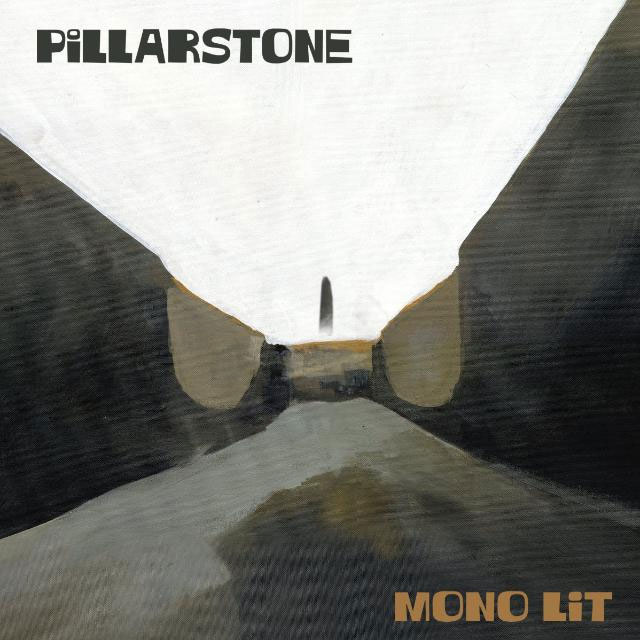
Paul: That’s it. And the thing with the cover on the album, that was a painting that I did, so I was looking at it… and we didn’t want to put our faces all over the cover and all that, we thought ‘let’s go for something a bit more vague, you know,’ so then I scanned that painting into the computer and I drew this standing stone and stuck that in the middle, so it’s an odd Stonehengey-kind of thing, but it’s a Standing Stone. I suppose, if you start to think about it, you could make up a whole story about why we did it, but… I think it’s just circumstance, accident…
So why call the album Mono Lit? I just can’t see that.
Paul: It’s a joke. A joke on the ‘Monolith’ , which is another name for one of those standing stones. But then I had this idea which is – I think I drive Alex mad with this stuff, but ‘mono lit’ is like stereo, so it’s lit-up mono… you know, it’s mono on fire. (He breaks down in laughter)… it’s a stupid wordplay, he just said ‘yeah yeah, whatever.’
6) Alex, you had hits with Kodakid. Where you ever part of the Manchester Indie scene?
Alex: No no, that kind-of predates me a little bit. I’m originally from Altrincham in the Greater Manchester, Cheshire, but my family moved over to Ireland late nineties, I suppose I would have been… I was grown-up and heavily influenced by the Manchester music scene, and that was something there in my playing and a lot of influences in music, it’s something that has always been there. But yes, Kodakid was one of the bands I played with in Ireland for a while, an original Indie kinda Blues-Rock band. We played all over Ireland, played a lot of Festivals here, released an album (EP Shake Skin, 2012), it was great, we had a lot of fun and good times on that project. But like every project it came to its end. It was there, it had stories to go with it. It was good.
There’s a sense of camaraderie with a full band line-up that perhaps you don’t get as a duo.
Paul: Well, it’s funny with this thing, I think we have a bit of band thing going on, because with drummer John Daly and bass-player Adan Power, that has become something of a fourpiece. Which we didn’t expect. It was all the extra people that are outside of it, but I suppose, we have unexpectedly got that, it’s become a kind of a band. Which is kinda cool.
Alex: Even with the approach to the recording, we wanted to have… we wanted to give it that band dynamic as well. So, having a lot more characterisation and musicality to it. So when we started rehearsing the songs for the album we had John Daly and Adan with us, and as Paul was saying that adds to the camaraderie, and that’s good, it gives a great dynamic to the players and everyone’s kinda working off each other, and hopefully that translates well to the music in the studio. I feel they’re important, to get those across, of course, it ultimately begins with a duo playing, it depends what the project is, but with the Pillarstone project it was nice to get more of that band feel across in the production.
Paul: And the two guys – Adan and John, really brought a lot to it in the arrangements and ideas that we hadn’t foreseen. It just happened in the rehearsal room, y’know? I think, when you’re writing as one person – or two people, you’re in this almost semi-acoustic singer-songwriter mode, but as soon as you bring in that extra element, it really does add dynamics that anticipates you…
7) There’s bodhran on ‘Fog Of War’, and there are other musicians who guest on the album, including Siobhán Maher Kennedy in Nashville on ‘September Sun’. How did that happen?
Paul: It’s an interesting thing. Siobhán did that. We had another girl over here – Aileen (Mythen), do a lot of the other backing vocals, then there’s a guy, Ronan O Snodaigh, from a well-known Irish world music band Kila. So, with Siobhán… I met her through a friend, I went over to Nashville a few years ago, and I did an album out there of my own stuff (2023, Beware Of Trains) – which Alex actually played on as well, but I got to know her. Her husband is Ray Kennedy, Steve Earle’s producing partner, which – talk about serendipity, but she’s an amazing singer, and she herself had done a lot in the early nineties until she had a family and moved out of music, but by the time I met her she was coming back into music and started doing a bit of session singing again. So I just cheekily asked her, she helped me out on the one I did in Nashville – which was great, and essentially she did just dial it in. We recorded the track over here, and she said ‘just send it out to me’, and her husband has a fantastic studio in Nashville, which I was in, it was a mind-blowing place – I didn’t record there, but it was amazing to see. And they just did it there. They recorded it for us, and sent us the track and we put it into the mix. The same with a couple of other people. Most people were in place, or in situ, but Siobhán dialled it in.
Isn’t technology wonderful?
Paul: Brilliant. It is amazing. Even within Ireland. The bulk of the album was recorded up in County Meath, just north of Dublin in a studio called ‘Jam’ with Martin Quinn, so the real ‘heavy-lifting’ of the album – let’s say, was done there, but then we went out to Alex’s place, he has a little set-up, and I think we recorded the violin, the keyboards and then Aileen, the other girl who sings on the record, she did it in another studio. So it was a bit of a mishmash. We were getting stuff sent to us, and then it would all go to Martin’s to navigate his way through this mess of files. But essentially – Alex, we did the bones of it live, didn’t we?
Alex: Yeah, I’d say so. The important thing was that the songs stood up in a format where it worked with just one instrument. I suppose, to me, that’s always important. The songs stand up first when you take everything else away. Then there was a lot of demo work on them, as Paul was saying. At ‘Jam Studios’ I’ve been working with Martin for a long long time now, it’s great when you’ve got a relationship with someone who is able to navigate you to where you want to get to, if you’re not able to explain it properly. He’s very quick, he’s great to work with in the studio. It was great, the whole assembly and production of the album itself was – as Paul says, was really interesting. After we did the demos, we had Adan and John in there for a few sessions, rehearsing the songs, a week in the studio and then, after that – yeah, it was all, we took those sessions away and added to them, took them back up to Martin. It’s not super-simple but it makes it a lot more accessible, to get people you can’t get to the studio to work with you, and mix them in the studio afterwards.
Paul: I think what really helped us though, in fairness to Alex, we really demo’d these heavily. So there was a lot of work put in before the additional musicians, let’s say, beyond the bass-player and drummer came on, it’s not like we dictated parts – but I guess we kind-of did in some cases, but in some places they kinda had a bit of freedom to move. But the thing was pretty-well structured, before we… and we did rehearse it a lot. We even played a couple of small gigs as a kind of, not necessarily to road-test the songs, but just to see what’s sitting and what’s not sitting. Should we tweak that or whatever. That was really worth doing, I enjoyed that. There’s a little-bitty venue near here where I live, I know the owner so he kindly gave it to us, so we got a bunch of us, people came to see us, and it was good fun, but it really showed us what was really working, and luckily – most of it did! It was an interesting way to do it. Because I’d done stuff before that was very bitty, where you go in and you’re with session guys, who are great, but everybody is not really a cohesive feeling for people coming in, doing a great job, and leaving. And then you’re kind-of stuck with that track. Whereas with our situation, we knew the people involved, so we were able to have a bit of a chat, send them the demo – ‘what do you think?’, when they come in you can kind-of mess around a bit. Sometimes you’re under pressure with session people – you only have them for an hour or two, you try and get what you can out of them. It was interesting on ‘The Fog Of War’ track actually. For Ronan O Snodaigh, that chap I was telling you about, he’s an amazing percussionist and bodhran-player with that band Kila, he’s a good friend of mine, and he was recording – by chance, in Wexford town, which is about an hour from here. But the little studio is another half-hour beyond that, and he was on his way home and I said to him ‘hey, listen’ and he went in, and he’s a gas, man he’s really funny, he turned up like a shaman, he comes in with all the bells, he had all these things strapped to him, the guy recording him showed me the video and there’s like this American Indian or kind-of Siberian-Irish shaman in the middle doing all this shish-shish drumming kind of stuff. It’s really cool. I just let him do it. I think he enjoyed it so much he just stayed there for about three hours doing it. That’s in the background of that song.
8) ‘Cry’ has a good-timey Rocker feel. Does it work well when you do it live?
Paul (laughter): We’ll find out tonight! That’s a funny one. That was almost done as a joke. I don’t think we’ve played it live before.
Alex: We did once, I think.
Paul: I had a really rough demo. Alex heard it and he said ‘why don’t we do this with the guitar?’ And I remember in the studio, that guitar… that’s a one-take song, exactly, what you’re hearing is all we did, that’s his guide-track, he didn’t do any more, amazing, right?
Alex: It was just the core band. There were no other players. That would be the most raw, stripped back, original, just the four core band members.
Paul: I remember that day. You almost had your jacket on ready to leave, and you said ‘I’ll put down a guide-track for tomorrow, we’ll come back to it,’ and we got it! It was great. It was good. I sang it the next day.
9) Is the track ‘Fox On The Run’ a metaphor for ‘fight or flight’?
Paul: It’s both. It is a comment on Fox Hunting which unfortunately is still legal in Ireland, I think it’s illegal over with you guys, right? It’s not banned here yet, which is a disgrace. But it’s also a metaphor for a character who being… hounded, let’s say. So it’s a bit of both.
Do you sometimes feel that way?
Paul: Oh no, not at all. I have friends who I always think maybe feel that way when I look at them. But no, I’m the opposite, I’m probably the hound! I’m probably pestering some poor sod. No, I don’t. When I wrote the words down it was just an idea I had, ‘cos I wouldn’t be an activist as such, but I would be very much anti-hunting and anti-cruelty, and all the rest of it. No… Alex said that night, he had the music, and we sat down and worked it out. I think I had the idea for the chorus. But he had this cool riff, and that nice way of playing that’s in the song. And it just developed, and I think it’s a nice track. We originally had it called ‘Tally-Ho’ or something, didn’t we? But there’s a funny story where the lyrics came from, though, because – when I used to collect comics a lot – I still collect comics, but when I was a kid I used to collect a lot of comics from a small newsagent in Waterford, where I am – I moved back home after years away, but I hadn’t seen the man since I was a child, y’know, and I went into the shop, obviously he was a lot older, but he kinda recognised me and he said ‘I know your face, did you used to come in with your friends and buy magazines?’ and ‘Yeh, yeh’ and we got chatting about Rock magazines and comics and all that, then he made this funny comment to me, I said ‘it was time to come home’ and he said ‘a fox always circles before returning to his den’. That always stayed with me, and that’s the opening line of the track. I nicked it from him.
Was it Judge Dredd comics you used to buy?
Paul: Yes, yes – big time. All of the stuff. I wasn’t mad into the American stuff so much, superheroes and that, I did like the British comics – Judge Dredd, ‘2000AD’!
10) ‘Call For Mercy’ is an anti-paranoia song that goes against decades of edgy Rock music and dark JG Ballard/William Burroughs visions.
Paul: It is a bit. I think I’ll let Alex talk to you about the music, ‘cos that has an interesting…. But just lyrically, ‘Call For Mercy’ is also about feeling that might be going on a bit in the world where these leaders, we won’t mention anyone in particular living across the Atlantic, but it’s this idea of this victimhood that they’ve created for themselves and they create this fake… like you’re always against me, like a fake ‘call for mercy’ where it’s not really a call for mercy, the people you’re oppressing are trying to call for mercy. So you’re right, it has that metaphorical feeling of what you were saying about those guys, the darkness and all that, but for me, when I was writing it, it was like ‘shut up! Stop talking! You’re talking through your arse!’ You don’t have a call for mercy, the people you’re hurting are the ones that need the mercy. And where the song came from – it’s a very short lyric, and really what happened was that I had half of a song, about a minute long that – I think, Alex liked, then he played this instrumental track which I thought was really good, we were sharing tracks, and we found they were in the same key, and we said ‘let’s join them up, and see’. So he had a chance to have the instrumental and I got my chance to have my song, and we joined it together, and it became a great track. It’s a really interesting track. There was a lot of work put into the editing of it, and playing around with it, we even tried a little looping and backwards editing. I’ll let Alex explain more about the thinking of that, ‘cos I just did the first part…
It’s a great track to close the album on, with its long instrumental ‘Hey Jude’ fade…
Paul: Thanks for that.
Alex: We’ll take that. The whole album in particular, for me, was an opportunity to do more organic acoustic work, ‘cos previous projects, the predominant textures were more electric guitar driven so it was nice to work with different textures and instrumentation, so that one – the original demo for the tune on the back end of that track was just playing around with my Dad’s twelve-string, on a demo from a few years ago, which is what I was showing Paul. And then, after that we were saying ‘well, maybe the riff can have a violin on it?’ and then we got the choir on it… which Paul can tell you about…
Paul: With me being a megalomaniac. Alex still gives me grief over that.
Alex: What’s great is, it’s a chance where, I suppose, it ties up the album where the music, the instrumentation makes a final reprise, the violin comes back in, the keyboard the piano and organ, everyone has their little moment, and it closes off nicely, hopefully in a positive way that captures the full essence of the album. Maybe Paul can tell you about the choir element now…
Paul: That was just me being silly. To this day, I think you’d want to take it off the album. But there’s a friend of mine, girlfriend of my wife who runs a little local choir, and I was playing something in a local festival and they were on before us and I just thought ‘that might work’ and you (Alex) were ‘I don’t know’, so we went into this church and you recorded it – remember? It was a bit of a madness. I don’t mind. It’s kind-of weird and vague and gives it something extra. But it came from a crazy idea, and you just let me off, whatever…
There are really good acoustics in a church.
Paul: Yes, but it’s kind-of a modern Dublin Catholic churches where they tried to get modern with the architecture, it wasn’t those old-fashioned huge tall churches. It was the opposite of that austere, it was a brightly-coloured hexagonal room, it doesn’t have a really high ceiling. But the choir practiced in there, so we just went in there and he set up a couple of mics. But it was good, they are good at what they do, it’s a fond little thing that this woman does with twenty-thirty other people. But I thought it added kinda a nice texture. Yes, it’s being a bit bombastic, I hold my hand up, never again…
Alex: It was a kind of seventies-style church. The experience of recording it was really interesting. We should have mixed it a big gothic cathedral.
There’s nothing wrong with being bombastic once in a while.
Paul: Yeah… I think that’s it. Because there’s a lot of peaks and valleys, and kinda shade on the album. There’s a lot of differences, I think, that’s what I like about the set, because there’s a couple of nice slow almost country-ish songs, and then you get into this big heavy Rock thing with ‘Hammer That Nail’ and then it goes into that choral thing on ‘Call For Mercy’. Somebody said to me – not to be comparing ourselves to anybody ourselves, but they said the song was a weird mix of Planxty and the Stone Roses, and I went – Oh! OK. I didn’t hear that, but I’ll take it. So yes, it is a funny one. When I listen to it, it has elements of everything Alex was talking about there, the stuff he grew up on, the stuff I grew up on, and then it goes into a great guitar solo which almost taps into early-seventies Allman Brothers Rock, but then it taps back into funky… underneath – what I love about it is that there’s a dancey feel to it, which is something I’ve never done. I’ve never been near that kind of music, so you can actually feel that groove, and – in fairness, I think, you had it in the demo, but John the drummer and Adan they brought a kind of nice vibe to it. Just unexpected, it was good.
Alex: I’d played with Adan previously. Actually, when you bring musicians in, you know what they’re going to bring to the proceedings. He’s got a very funk-orientated groove in the way he plays. So I knew that would lend itself well to playing that in the studio, and playing it live. You have to have a good handle on, and he’s brilliant at it. John’s got natural groove and swing in the way he plays too.
11) It says ‘change the channel, turn off the TV if you don’t like what you see.’ But surely, sometimes a degree of unease can mean a healthy awareness, which is preferable to the head-in-the-sand aspect of turning away from Gaza, the Iran conflict, or Climate Change?
Paul: Yes… but it’s also, but I saw it slightly from another angle too, that the people who bitch about ‘fake news’ – let’s say, just because you’re in your bubble, or you don’t agree with something, doesn’t mean it’s not happening. So it could easily be head-in-the-sand or it could be head out of the sand watching stuff you don’t like and complaining about it. Like, for example, I’m always nervous talking about touchy subjects, but people who are against – say, trans people, who are just sitting at home going ‘WWHOA!!!!’, or a racist or whatever, it’s a thing like – you can always look away, if they’re not harming you, if it’s not directly affecting you, what’s bugging you???? OK, on a bigger picture, there might be social issues, but all I was trying to say – a bit of what you just said there, also a bit of just live and let live a little. Stop putting your fears and anxiety and hate or whatever you want to call it on top of other people who are not bothering you! There’s a bit of that. And I suppose I’m a very live-and-let-live person. I just kind-of get out the way of people unless they directly hurt someone else, mentally, physically or emotionally. It’s always… sometimes you write those words down, and they can be taken so many ways. I don’t know, I just write them down. I’m sure that anyone who ever wrote a song will tell you ‘well, I didn’t mean it that way,’ then – if it works and people love it ‘oh yes, I meant it that way.’
Do you have anything to add to the interview that we’ve not already talked about?
Paul: Not really, no. We’re going to play a few gigs. We’re going to start writing, hopefully, some new songs. We hope people like the record. We’re happy. Job done.
Mono Lit
(Pillarstone Records CD-LP-DL, June 2026)
‘Forging bold new frontiers in Celtic-Rock, Soul and Americana’
(1) ‘Run Fox Run’
The lead single released in May 2026, a commentary on the horrendous ‘blood-sport’ of hunting foxes on horseback with hounds. Or could it be a metaphor for someone trying to get through the world their own way and feeling like there is either something or someone chasing and trying to stop them being their own person?
(2) ‘September Sun’
A warm paean to the changing of seasons and light, where the year – and for some, life slows down, changes colour and offers a time of rest and warm memories of childhood pleasures. A song about family and the best of times long gone by. With Siobhán Maher Kennedy backing vocals, recorded by Ray Kennedy at ‘Room & Board Studio’ in Nashville, Tennessee.
(3) ‘What In This World’
What if it’s all a fantasy and your god is the bad guy? and what if the so-called devil was on humanity’s side. A funky little questioning of accepted tropes and the impact of blind faith on the world. With Martin Quinn playing keyboards.
(4) ‘Fog Of War’
The lyrics point the finger at those who start wars and those who suffer from them. The video is a no-holds-barred reflection of the stark reality of conflict and the smokescreen of lies and hard truths that co-exist when war breaks out. With Ronan O Snodaigh playing bodhran & percussion.
(5) ‘Wise Up’
A positive empowering plea to those who are downtrodden or those who hold themselves back through fear of failure to stand up and be counted. Don’t let the liars of the world pull you down… ‘wise up and make a stand’.
(6) ‘Cry
An up-tempo percussive echoey good-time Rocker, that describes a jilted lover going in search of the one he loves, only to discover that the truth is worse than he feared. The significant other really did want to leave, and now that she’s gone, all he can do is search around town in vain.
(7) ‘Like A Fool’
Strongly country-tinged, as he pleads with the world to maybe forgive them their trespasses as they are not a bad person. Just a bit of a fool for loving too much and losing themselves in other people’s lives. With a talk-singing midpoint sequence.
(8) ‘Hammer That Nail’
A song about what it takes to live a lie and/or be cruel to others off the back of that lie, especially if the liar can’t back it up and cries foul when found out. A song about the illusion of power on a personal or maybe political level and what it means to get called out and not be able to stand over one’s actions or words. With Fritz Hazy adding second lead vocal, self-recorded in Hamburg, Germany, and Yuri Soikans lead guitar solo.
(9) ‘All I Want’
The closest thing to a love song on the album, but told from the point of a lover cheating on a spouse hoping they don’t get found out, but they can’t stop the affair and are hopelessly caught up in a whirlpool of attraction, emotion and betrayal, yet still they linger. ‘What’s a little lust between two friends?’ Tasty harmonica.
(10) ‘Call For Mercy’
A call to false victims everywhere to own up to their malice and put away their persecution complex, to turn the other cheek or at least admit their situation in life is more to them with their words and deeds than those of others. With the Harmania Indie Choir arranged by Roisin Nic Craith.
All songs written by Paul J Bolger & Alex Soikans, with sleeve design & artwork by Paul J Bolger.
Paul J Bolger: lead vocals, acoustic guitar
Alex Soikans: acoustic & electric guitars, harmonica
with
Adan Power: bass guitar
John Daly: drums & percussion
Plus additional musicians:
Killian Browne: keyboards, organ, piano
Fergal Kavanagh: violin
Aileen Mythen: backing vocals
Recorded, mixed & mastered by Martin Quinn at ‘Jam Studios’ in Kells, Ireland.
Fergal, Killian, Yuri and the Harmania Indie Choir recorded by Alex Soikans in Waterford.
Aileen and Ronan recorded by Brendan Carthy at the ‘Orchard Studios‘, Enniscorthy.
https://www.instagram.com/pillarstone_music/