
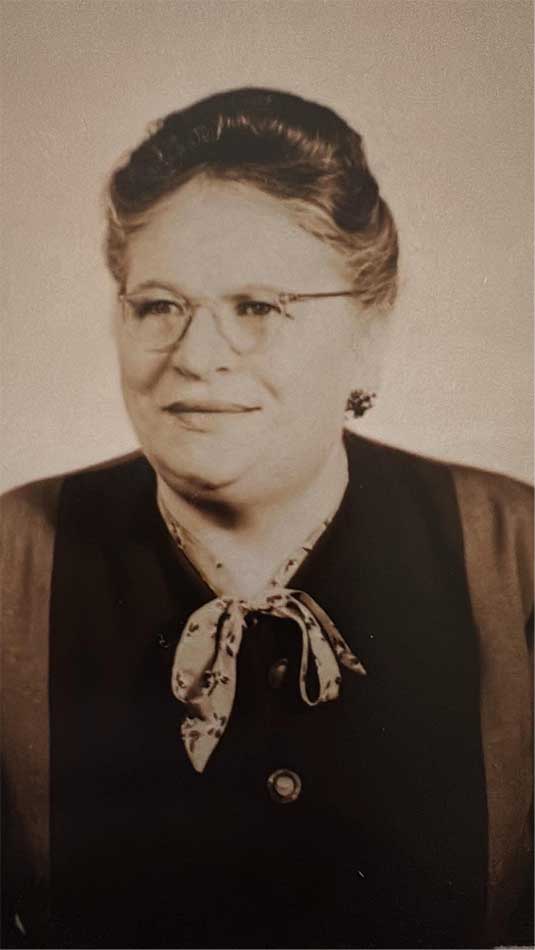
by Ade Rowe
Lucy Henschel, born on 15th January 1886 in Romania, and who died on 17th December 1948 in St. Louis, Missouri, USA, occupies an understated yet significant place within the history of American socialism. Although she has not received the level of scholarly attention afforded to more prominent political figures, her public commitment to socialist ideals during a period dominated by capitalist orthodoxy illustrates both personal conviction and political courage. As a resident of St. Louis, Missouri, and the wife of Edward Henschel, she became associated with a movement that sought profound economic and social transformation at a time when such views frequently attracted suspicion, hostility, and public criticism. Together, they raised four children: Rose, Leo, Eugene, and Joseph.
Born in Eastern Europe during a period of profound political and economic change, Lucy Henschel belonged to a generation that witnessed the rapid industrialisation of society, mass migration, and the emergence of organised labour movements across Europe and North America. Like many immigrants who settled in the United States during the late nineteenth and early twentieth centuries, she experienced a nation that offered opportunity while simultaneously exposing many working-class families to difficult living and working conditions. These experiences undoubtedly formed part of the wider social environment in which socialist ideas gained support.
According to family recollections, Lucy Henschel also participated in the campaign for women’s suffrage, marching alongside suffragettes in support of votes for women. This commitment to political reform continued beyond the suffrage movement. Family members also recalled that, around 1919, Lucy attended a Socialist convention in St. Louis, where she met Eugene Debs. At the time, Debs was one of the leading figures of the American socialist movement. A co-founder of the Socialist Party of America, he was widely admired for his advocacy of workers’ rights, organised labour, and economic justice. His principled opposition to the First World War resulted in his imprisonment under the Espionage Act, and he famously campaigned for the presidency of the United States while incarcerated. For Lucy, meeting such an influential and respected champion of social and political reform was a deeply significant experience and remained one of the most treasured memories of her political life. Although these aspects of her life have received little attention in published historical records, they reveal a sustained commitment to democratic participation, social justice, and political equality. Her involvement in the campaign for women’s suffrage, together with her later engagement with the Socialist Party, illustrates a consistent belief that both political and economic rights should be extended to all members of society.
The political environment in which Lucy Henschel lived was characterised by intense debates concerning the future of industrial society. The United States emerged from the Second World War as an increasingly powerful capitalist nation. Economic expansion was widely celebrated, private enterprise was presented as the foundation of national prosperity, and socialist doctrines were frequently portrayed as dangerous or fundamentally un-American. Within this atmosphere, individuals who openly identified with socialism often encountered social isolation, political marginalisation, and widespread misunderstanding. Consequently, Lucy Henschel’s willingness to stand publicly for socialist principles demonstrated a notable degree of conviction and personal courage.
n 1948, the Socialist Party nominated Lucy Henschel as its candidate for public office in Missouri. Her nomination reflected the enduring commitment of the party to democratic socialism and to the belief that economic resources should be organised for the collective benefit of society rather than for private accumulation. The Socialist Party advocated collective ownership of the principal means of production, encouraged the development of workers’ co-operatives, and opposed systems of economic organisation that it regarded as exploitative. The party also argued that essential public services, including banking, transport, and utilities, should operate under public ownership in order to reduce inequality and ensure that the interests of ordinary citizens were placed above private profit.
Henschel’s candidacy emerged during a period of considerable economic adjustment following the conclusion of the Second World War. Millions of servicemen returned to civilian life, industries shifted from wartime production to consumer markets, and questions concerning employment, housing, wages, and social welfare assumed increasing political importance. For the Socialist Party, these developments reinforced the argument that democratic control of the economy offered a more equitable alternative to unrestricted capitalism. Lucy Henschel therefore represented more than an individual candidate. She embodied a political philosophy that sought to distribute wealth more fairly, strengthen the rights of workers, and expand democratic participation within economic life.
Her decision to seek public office was especially noteworthy because relatively few women stood as candidates during this period, particularly for smaller political parties. Women in American politics still faced significant barriers, despite having secured the right to vote less than three decades earlier. Standing for election required determination, resilience, and a willingness to challenge established expectations regarding women’s role in public life.
Her nomination also reflected the historical significance of Missouri, particularly the city of St. Louis, within the broader American socialist tradition. During the late nineteenth and early twentieth centuries, St. Louis developed a substantial labour movement supported by industrial workers, trade unionists, and reformers who challenged entrenched economic inequalities. Socialist organisations found an audience among communities that experienced insecure employment, limited workplace protections, and significant disparities in wealth. Lucy Henschel’s political activity can therefore be understood within this wider historical tradition of civic engagement and organised labour activism.
The most remarkable aspect of Lucy Henschel’s public life was her determination to maintain her political convictions despite prevailing public opinion. In the late 1940s, support for socialism required considerable personal resilience. Political discourse increasingly associated socialist ideas with foreign ideological threats, while advocates of capitalism frequently dismissed socialism as impractical or incompatible with American values. This atmosphere intensified during the early years of the Cold War, when suspicion towards socialist organisations and individuals became increasingly widespread. To present oneself openly as a socialist candidate under these circumstances required moral confidence and intellectual independence. Henschel accepted that her campaign was unlikely to achieve electoral success, yet she nevertheless chose to advance principles that she believed would improve the lives of working people.
Her courage should not be measured solely through electoral outcomes. Rather, it should be evaluated through her readiness to participate in democratic politics while representing views that were frequently unpopular. Such actions illustrate an important feature of democratic societies, namely that meaningful political progress often depends upon individuals who are prepared to articulate alternative visions of society despite resistance or criticism. Lucy Henschel exemplified this tradition through her willingness to defend policies that prioritised economic justice, collective responsibility, and social equality.
The political landscape of 1948 also included other socialist organisations that advanced more revolutionary programmes. The Socialist Labor Party nominated Theodore Baeff as its candidate for the office of State Treasurer. Unlike the Socialist Party, which generally pursued democratic electoral participation and gradual reform, the Socialist Labor Party adhered to a more doctrinaire Marxist perspective. It rejected gradual political change and instead advocated revolutionary industrial unionism as the principal mechanism through which capitalism would be replaced. Baeff, who had previously contested elections, represented a political tradition that called for the abolition of the wages system, the nationalisation of industry under councils managed by workers, and the rejection of both major political parties as representatives of capitalist interests.
The coexistence of these organisations illustrates the diversity that existed within American socialism during the mid-twentieth century. While both criticised the inequalities produced by capitalism, they differed substantially regarding the methods through which social transformation should occur. Lucy Henschel’s association with the Socialist Party placed her within the democratic socialist tradition, which emphasised constitutional participation, electoral engagement, and peaceful reform rather than revolutionary upheaval.
Although historical records concerning Lucy Henschel remain limited, her political activity deserves recognition because it reflects the experiences of numerous individuals whose contributions have often been overshadowed within conventional political history. Democratic institutions are strengthened not only by those who secure office, but also by candidates who broaden political debate and encourage citizens to consider alternative approaches to economic and social organisation. Henschel belonged to this latter category. Her campaign contributed to the continuing presence of socialist ideas within American public life, even during a period when those ideas were increasingly marginalised.
Lucy Henschel’s life also demonstrates the importance of remembering individuals whose contributions existed outside the mainstream of political power. Many activists, campaigners, and community organisers never achieved elected office, yet they played an important role in shaping public discussions about equality, labour rights, and social responsibility. Women in particular have often been overlooked in historical accounts, despite their involvement in movements that transformed political life. Henschel’s participation in both the wider tradition of reform movements and the socialist cause reflects the determination of women who sought to influence society beyond the boundaries traditionally assigned to them.
Her personal journey from Romania to the United States, and her eventual involvement in the political life of St. Louis, represents a wider story of migration, adaptation, and civic engagement. Immigrants contributed greatly to American political movements during the late nineteenth and early twentieth centuries, bringing with them diverse experiences and perspectives on questions of justice, labour, and democracy. Henschel’s life formed part of this broader history of individuals who sought to create a society they believed to be more equitable and inclusive.
Lucy Henschel died on 17th December 1948 in St. Louis, Missouri, the same year in which she had stood as a Socialist Party candidate. Although her political campaign did not result in electoral victory, her willingness to participate in public life ensured that socialist ideas remained part of democratic debate during a challenging period. Her story serves as a reminder that political influence is not always measured by success at the ballot box, but also by the courage to present alternative ideas and advocate for principles that may not yet have widespread acceptance.
Lucy Henschel’s legacy ultimately rests upon her steadfast commitment to principle. She entered public life during an era when socialism faced substantial public hostility, yet she neither concealed nor moderated her beliefs for the sake of political convenience. Her example demonstrates that political courage is often expressed not through dramatic acts, but through the quiet determination to defend sincerely held convictions in the face of opposition. In doing so, Lucy Henschel became representative of a broader tradition of democratic dissent, intellectual independence, and unwavering dedication to social justice.
Today, Lucy Henschel deserves to be remembered as more than a candidate whose name briefly appeared on an election ballot. She should instead be recognised as a woman who possessed the resolve to advocate an alternative vision of society during one of the most politically challenging periods for American socialism. Her life illustrates the importance of conviction, perseverance, and democratic participation, qualities that remain worthy of scholarly attention and historical remembrance.